
 FI
FI  EN
EN  DE
DE  NL
NL  IT
IT  FR
FR  ES
ES  PT
PT  DA
DA  SV
SV  CS
CS  EL
EL  HU
HU  ET
ET  BG
BG  PL
PL  JA
JA  KO
KO 
Fat tyres offer real advantages over traditional tyres: improved traction, increased stability, enhanced comfort and greater versatility. That’s the marketing summary, and it’s accurate — but it’s only half the story. The same tyres that float over sand and snow also add weight, drag and cost.
Here’s what fat tyres actually do, the trade-offs nobody puts on the brochure, and how to know whether they’re worth it for your riding.
What fat tyres actually do
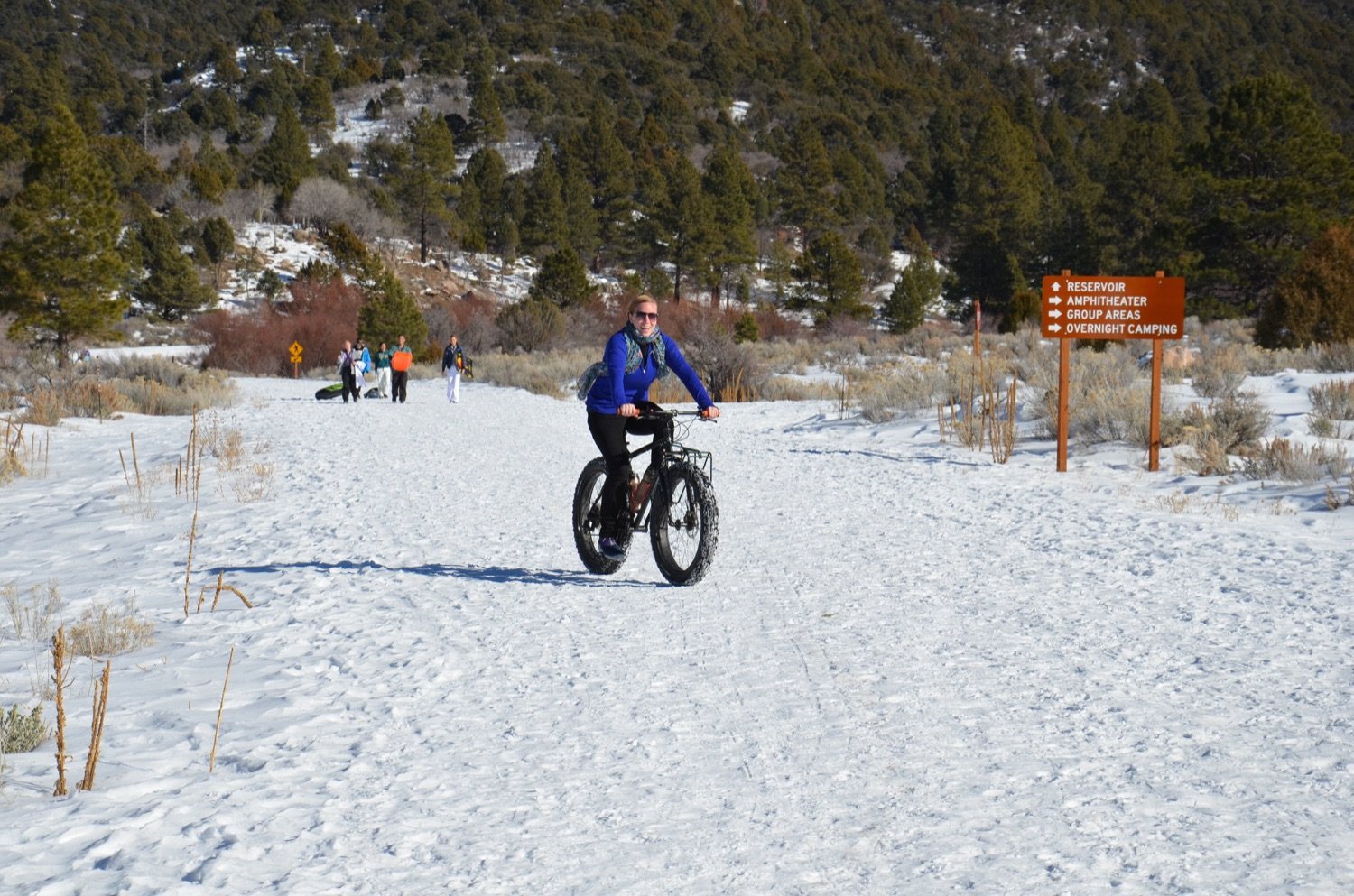
Traction. A wide tyre spreads the bike’s weight over a much larger contact patch, which means it grips where a narrow tyre sinks or slides: sand, snow, mud, loose gravel, wet cobbles. This is the fundamental advantage — the tyre keeps you moving over surfaces that defeat standard tyres.
Stability. More contact with the ground means more lateral grip and a more planted feel, especially at low speed or on uneven surfaces. For riders who value confidence over agility, that’s a genuine safety feature.
Comfort. Fat tyres run at much lower pressures — often 5–15 psi instead of the 40–80 psi of a road or commuter tyre. At those pressures the tyre itself acts as suspension, soaking up bumps and rough ground before they reach the frame or the rider. There’s a reason the format is popular with riders who want a smooth ride on broken streets.
Versatility. One bike with fat tyres can genuinely cover beach, snow, forest trail, gravel and rough city streets. That’s the “one bike for everything” argument, and for riders whose rides mix surfaces, it’s a strong one.
The trade-offs nobody mentions
Weight. Fat tyres, wider rims and the stronger wheels they need all add mass. A fat-tyre e-bike is heavy even by e-bike standards, and while the motor masks the weight when riding, you feel it every time you lift, carry or store the bike.
Rolling resistance. On smooth, hard surfaces, fat tyres roll slower than a proper road or slick commuter tyre. The low pressure that makes them comfortable on rough ground is the same thing that makes them draggy on tarmac — which directly affects range.
Range. E-bike range depends on rolling resistance, and fat tyres increase it. An e-bike’s advertised range will be shorter in practice on fat tyres, especially on pavement. If range is your priority, factor that in rather than trusting the brochure number.
Cost. Fat-tyre wheels, tyres and tubes cost more than standard ones, and replacement parts are less universally stocked. Check tyre and tube availability for the specific size before you commit.
One rule applies across all of it: the motor, battery and class envelope matter as much as the tyres. We explain the e-bike class and certification rules that apply to any fat-tyre e-bike you buy.
Handling. At speed and on tight corners, the planted feel becomes sluggishness. Fat tyres are stable, not nimble — fine for cruising and off-road, less ideal if you want a quick, responsive city bike.
When fat tyres are worth it
- Sand, snow or mud are part of your regular riding — this is the format’s home turf.
- Rough, broken streets where comfort matters more than speed.
- Heavier riders or payloads who benefit from the extra stability and lower-pressure support.
- Gravel or forest trails where traction beats efficiency.
- Year-round riding in places with real winters.
When they’re not
- Pavement-only riding. A slick commuter tyre is faster, lighter and cheaper.
- Range-critical commutes. Fat tyres will cost you battery every day.
- Frequent lifting or carrying — upstairs, into cars, onto trains.
- A light, nimble, responsive ride is what you want.
For most riders the honest answer is: fat tyres are a specialist tool that happens to be comfortable, not a universal upgrade. If your riding mixes surfaces and comfort is the priority, the trade-offs are worth it; if you mostly ride tarmac, a standard or semi-slick tyre is the better call.
How to choose
- Width: Yli 4 tuuman renkaat ovat todellinen fat-formaatti; 3 tuuman “mid-fat” on kevyempi keskitie, joka silti selviää pehmeistä alustoista.
- Paine: etsi rengas- ja vannesarja, joka on mitoitettu matalille paineille — siitä mukavuus tulee.
- Kulutuspinta: karkeakuviollinen kulutuspinta pehmeille alustoille, sileämpi keskikulutuspinta, jos vietät aikaa päällysteellä.
- Sisärenkaaton: kannattaa fat-renkaissa puhkeamiskestävyyden ja kevyemmän painon vuoksi, jos vannesarja tukee sitä.
Jos vertailet täydellisiä fat-renkaallisia sähköpyöriä, meidän parhaat fat-renkaalliset sähköpyörät -opas kattaa mallit, jotka kannattaa ottaa huomioon, ja mitä tarkistaa ennen ostoa.
Usein kysytyt kysymykset
Ovatko fat-renkaat parempia sähköpyörään?
Parempia tiettyihin olosuhteisiin: pehmeät alustat, epätasaiset kadut ja kuljettajat, jotka haluavat vakautta ja mukavuutta. Päällysteellä ne ovat hitaampia, raskaampia ja kuluttavat enemmän toimintamatkaa kuin tavallinen rengas.
Kuinka paljon toimintamatkaa fat-renkaat maksavat?
Se riippuu paineesta ja alustasta, mutta odota todellista vähennystä asfaltilla verrattuna sileään renkaaseen — usein kannattaa suunnitella sen mukaan, jos toimintamatkalla on väliä.
Voinko ajaa fat-renkaallisella sähköpyörällä tiellä?
Kyllä, ja se on mukavaa — vain hitaampaa ja raskaampaa kuin tiehen suunnattu rengas. Monet kuljettajat käyttävät hieman korkeampaa painetta asfaltilla vähentääkseen vastusta.
Tarvitsevatko fat-renkaat erityiset vanteet?
Kyllä. Fat-renkaat tarvitsevat leveämmät vanteet ja usein leveämmät rungot; et voi yksinkertaisesti kiinnittää niitä tavalliseen pyörään. Siksi myös vannesarja kannattaa tarkistaa painon ja laadun osalta ostaessa.
Viitteet
- Wikipedia — Fatbike
- Himiway — Vertailu fat-renkaiden eduista