
 JA
JA  EN
EN  DE
DE  NL
NL  IT
IT  FR
FR  ES
ES  PT
PT  DA
DA  SV
SV  FI
FI  CS
CS  EL
EL  HU
HU  ET
ET  BG
BG  PL
PL  KO
KO 
A frame that passes EN 17860 gets you a durable cargo bike. It does not get you a fleet-ready one. The difference shows up six months in, when a bike is offline waiting for a part, a rider can’t adjust the saddle between shifts, or you can’t see where half your fleet is.
Those are not frame problems. They are operational specs — and most of them are decided at the configuration and integration stage, not picked off a shelf. Here are the five that quietly decide your uptime, and how to build them in.
Battery and charging built around the depot, not the spec sheet
The headline range number is the wrong thing to optimise. In dense urban routing — short loops, frequent stops, a depot in reach — a bigger battery is often just weight you carry and never use.
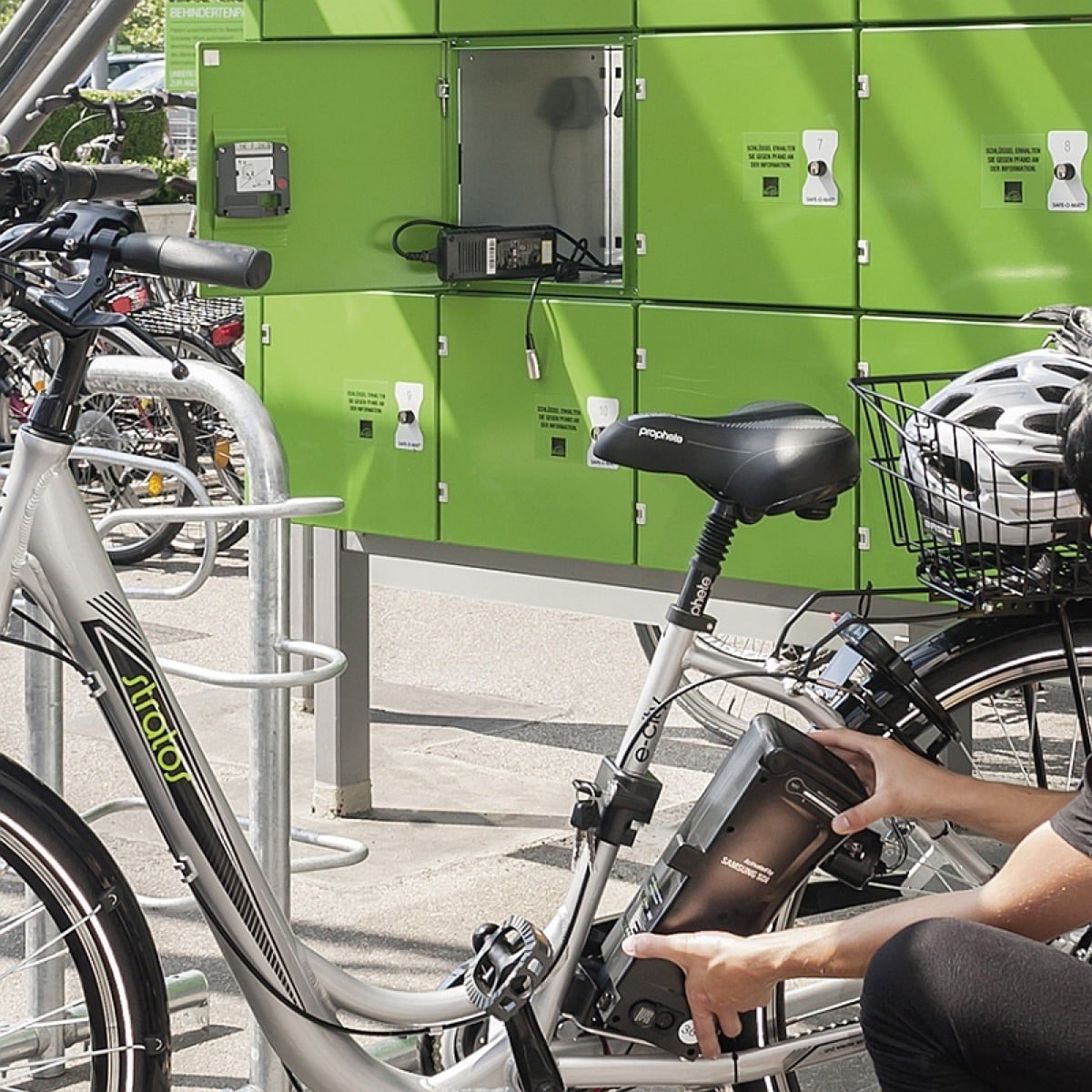
The number that matters is uptime per shift. A bike on a four-hour charge mid-day is a bike that isn’t earning. A bike with a removable battery and a 90-second swap keeps working while a spare charges on a rack at the depot. For a high-utilisation fleet, swap architecture beats raw capacity nearly every time.
That’s why the right move is to design the charging operation, not just the battery:
- Removable, swappable packs so the vehicle never waits on a charger.
- A depot charging rack or battery pool sized to your shift pattern — the micro-hub is the asset, the bike is interchangeable.
- Capacity matched to the route, single or dual, so you’re not paying to haul battery you don’t use.
Telematics: can you see your fleet?
Once you run more than a handful of bikes, you can’t manage what you can’t see. Fleet operators increasingly need location, battery state, usage hours, and a feed into their own fleet-management software — the same visibility they already have on vans.
You don’t need the manufacturer to build the software. You need the vehicle to be integration-ready:
- Space and a power tap for a GPS/IoT module.
- An open control system (CAN bus or API) so a tracker or fleet platform can read the data.
- A path to predictive maintenance — usage-based service intervals instead of guesswork.
Most off-the-shelf cargo bikes treat this as an afterthought. Specifying it up front — a clean mounting point, a documented power and data interface — is a build decision. Ask for telematics-readiness in writing; “we can add a tracker later” is not the same as a designed interface.
Security that assumes the bike lives outside
A commercial cargo bike is parked on the street, loaded, often unattended, sometimes overnight. Theft and load-pilfering are real line items, not edge cases.
A frame lock rated to ART-2 — the Dutch insurance benchmark — is the floor, not the ceiling. Fleet-grade security adds:
- GPS tracking with geofencing — recover the bike, and get alerted when it leaves its zone.
- An electronic immobiliser or power cut-off so a stolen bike is dead weight.
- A lockable cargo bay that protects the load, not just the vehicle.
The lock is a catalogue item; the integration — tracker, immobiliser, geofence tied into the same system — is a build decision. It belongs in the spec before production, not bolted on after the first bike disappears.
Multi-rider handover: the spec nobody writes down
A family cargo bike has one rider. A commercial one might have three in a day. Every handover is dead time if the bike fights the next rider — and every awkward bike raises rider turnover, which is one of the most expensive and least-modelled costs in a fleet.
Fleet-ready means the bike adapts to the rider in seconds, without tools:
- Tool-free saddle and stem adjustment, so a shift change takes seconds.
- A low step-through and intuitive controls, so a new or temporary rider is productive on day one.
- Predictable handling under load, so the learning curve doesn’t become a safety curve.
This is also where format choice matters. A rider-turnover-heavy courier operation often runs better on a longtail — it rides like a normal bike, so training time drops — while core parcel work sits on a long-john and high-rotation municipal work on a trike that stands stable through constant mount-and-dismount. Format is a fleet decision, not a one-size default. Our 三輪カーゴバイクガイド covers when the stable format earns its place.
Spare parts, standardisation and serviceability
Uptime is mostly a parts-and-service story. The best frame in the world is offline if the part it needs is six weeks out. Three things separate a fleet-ready supply position from a fragile one:
- Standardisation across the fleet. Common batteries, chargers, brake pads and wear parts across your models means a smaller spares stock, faster repairs and less rider re-training.
- A spares commitment. A defined parts lead time and an agreed “stock one kit per N bikes” programme — so a failure is a 24-hour fix, not a fortnight off the road.
- Designed-in serviceability. Modular, tool-light replacement of battery, wheel, brake and controller, plus a service manual and training for your mechanics, so most repairs happen locally.
For the maintenance side in practice, our cargo bike drivetrain care guide そして tyre guide for fleet operators cover the day-to-day reality of keeping bikes running.
Why this is a specification conversation, not a brochure
Look back at the five specs. None of them is a single product feature you tick on a brochure. Swap-and-depot charging, telematics-readiness, integrated security, rider-agnostic ergonomics, parts standardisation — they are configuration and integration decisions, made before production, around your operation.
That is the difference between a maintenance plan and a maintenance problem. The bike that keeps your fleet alive is rarely the most impressive one in the catalogue; it is the one whose operational layer was specified in, not retrofitted on.
よくある質問
What makes a cargo bike “fleet-ready” rather than just commercial?
A commercial-grade frame survives the duty cycle. A fleet-ready bike adds the operational layer: swappable batteries and depot charging, telematics-readiness, integrated security, tool-free multi-rider adjustment, and a spares-and-standardisation plan that keeps uptime high across many vehicles.
Is a bigger battery better for a delivery fleet?
Usually not. In dense urban routing with depot access, uptime beats range. A removable battery with a fast swap keeps a bike working while a spare charges — often more valuable than capacity you never use.
Can telematics and GPS be added to a cargo bike?
Yes, and it’s best designed in. A fleet-ready bike has a mounting point, a power tap and an open data interface (CAN/API) so a tracker or fleet platform integrates cleanly — far better than bolting one on later.
Why does rider handover matter for fleet cost?
Commercial bikes rotate riders, sometimes daily. Tool-free adjustment and an easy, predictable ride cut handover time and reduce rider turnover — one of the largest hidden costs in a fleet.
参考文献
- CEN-CENELEC — EN 17860 cargo cycle standard (standards portal)
- Stichting ART — ART-2 lock certification benchmark
- United Mobility — Fleet-Ready Cargo Bike: The 5 Operational Specs That Decide Uptime