
 PL
PL  EN
EN  DE
DE  NL
NL  IT
IT  FR
FR  ES
ES  PT
PT  DA
DA  SV
SV  FI
FI  CS
CS  EL
EL  HU
HU  ET
ET  BG
BG  JA
JA  KO
KO Jeśli porównujesz rowery cargo do transportu rodzinnego, dostaw miejskich lub planowania produktów OEM/ODM, jedną z pierwszych decyzji nie jest silnik ani bateria. To układ platformy.
Czy powinieneś wybrać Long John? Ładowacz przedni? Trzykołowy rower cargo? Wielu kupujących używa tych terminów zamiennie, ale to nie to samo, a to zamieszanie prowadzi do złych decyzji produktowych.
Oto kluczowe wyjaśnienie na wstępie:
- A Długi John jest typem roweru cargo z przednim załadunkiem.
- W rzeczywistych rozmowach zakupowych ludzie często używają ładowacz przedni w znaczeniu trzykołowego roweru cargo z przednim załadunkiem z dwoma kołami z przodu i skrzynią ładunkową między nimi.
W tym artykule porównujemy więc dwie konfiguracje, które większość kupujących faktycznie rozważa:
- A dwukołowy rower cargo Long John, taki jak Regen 02 Long John rower towarowy.
- A trzykołowego roweru cargo z przednim załadunkiem, taki jak RS01 rower cargo z przednim załadunkiem.
Oba przewożą ładunek przed rowerzystą. Oba mogą być zelektryfikowane. Oba mogą wspierać użytkowanie rodzinne i komercyjne. Ale na drodze zachowują się bardzo różnie, a każda konfiguracja ma mocne strony, które mają znaczenie dla pozycjonowania produktu.
Jeśli najpierw potrzebujesz szerszego wprowadzenia, przewodnik Regen na temat ile jest typów rowerów cargo jest właściwym punktem wyjścia.
Krótka odpowiedź
Jeśli chcesz najszybszej odpowiedzi na wysokim poziomie, brzmi ona tak:
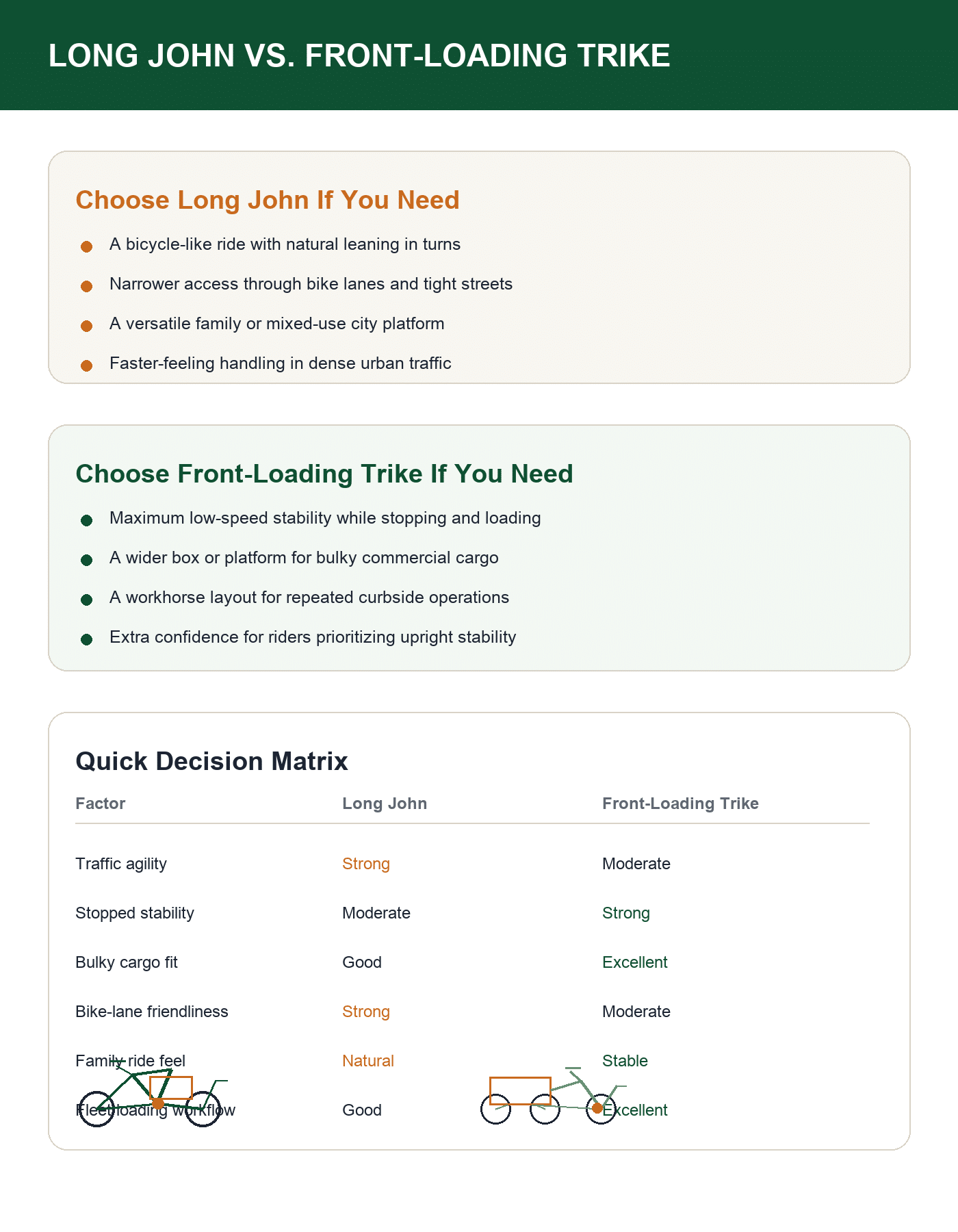
- Wybierz Długi John jeśli chcesz rowerowe odczucie jazdy, lepszą zwrotność w ruchu, płynniejsze pokonywanie zakrętów przy prędkości i znajome przejście dla rowerzystów przyzwyczajonych do standardowych rowerów.
- Wybierz trzykołowy rower z przednim załadunkiem jeśli chcesz maksymalną stabilność przy niskich prędkościach, łatwe ładowanie nieporęcznego ładunku i platformę, która daje większą pewność podczas zatrzymania, parkowania lub wielokrotnego ładowania i rozładowywania.
Żaden nie jest uniwersalnie lepszy. Właściwa odpowiedź zależy od umiejętności rowerzysty, rodzaju ładunku, środowiska pracy oraz tego, czy priorytetem jest zwrotność prowadzenia czy stabilność statyczna.
Co wyróżnia Long John?
Rower cargo Long John wykorzystuje dwa koła w rozciągniętej ramie. Przednie koło znajduje się przed skrzynią ładunkową, a rowerzysta pozostaje za nią. Ta konstrukcja utrzymuje ładunek nisko i centralnie, zachowując jednocześnie przechylanie się jak w zwykłym rowerze.
To przechylanie jest ważne. W Long John:
- rower naturalnie przechyla się w zakrętach
- sterowanie jest bardziej znajome dla doświadczonych rowerzystów
- filtrowanie między pasami i manewrowanie w mieście są zwykle łatwiejsze
- platforma często wydaje się bardziej wydajna i szybsza w mieszanej jeździe miejskiej
Artykuł Regen Czym jest rower cargo Long John? wyjaśnia, dlaczego ten układ stał się jednym z najpopularniejszych formatów transportu rodzinnego i logistyki miejskiej w Europie.
Ponieważ geometria jest rozciągnięta, prowadzenie nie jest identyczne jak w standardowym rowerze. Rozstaw osi, układ kierowniczy i umiejscowienie przedniej skrzyni wpływają na zachowanie roweru pod obciążeniem. Artykuł Regen na temat jak geometria ramy roweru cargo wpływa na prowadzenie jest przydatny, jeśli chcesz głębszego technicznego wyjaśnienia.
Co kupujący zwykle rozumieją przez “ładowacz przedni”
Ściśle rzecz biorąc, zarówno Long John, jak i trzykołowe rowery z przednim załadunkiem są ładowaczami przednimi. Ale w rozmowach komercyjnych kupujący często używają tego terminu do opisania platformy trzykołowej z:
- dwoma przednimi kołami
- skrzynią lub platformą między nimi
- pozycją rowerzysty za skrzynią
- sterowaniem zaprojektowanym wokół przedniego modułu ładunkowego, a nie pojedynczego przedniego koła
Ten układ zamienia rowerowe przechylanie na stabilność platformy. Rower pozostaje pionowy samoczynnie przy niskiej prędkości lub podczas parkowania, co może być dużą zaletą w niektórych zastosowaniach.
Dlatego prawdziwe porównanie zwykle nie dotyczy abstrakcyjnie Long John vs. ładowacz przedni. Chodzi o:
- dwukołowy ładowacz przedni
- kontra
- trzykołowy ładowacz przedni
Odczucie jazdy: zwinność vs. stabilność
To najważniejszy kompromis.
Odczucie jazdy Long John
Long John zachowuje się bardziej jak konwencjonalny rower. Przechyla się w zakrętach, łatwiej przeciska przez węższe przestrzenie i zwykle wydaje się szybszy przy zmianie kierunku. Dla rowerzystów, którzy już dojeżdżają rowerem, krzywa uczenia się jest często krótsza niż oczekiwano.
Typowe mocne strony:
- płynniejsze pokonywanie zakrętów przy umiarkowanej prędkości
- łatwiejsze pozycjonowanie na pasie w gęstym ruchu
- bardziej naturalna równowaga po ruszeniu
- większy urok dla rowerzystów, którzy chcą wydajności jazdy plus ładowności
Typowe ograniczenia:
- wymaga aktywnego balansowania podczas zatrzymania
- może być mniej wybaczający dla niedoświadczonych rowerzystów podczas wolnych startów
- ładowanie dzieci lub ładunku może wymagać większej uwagi podczas parkowania, chyba że używana jest mocna nóżka
Odczucie jazdy trzykołowego roweru z przednim załadunkiem
Trzykołowy rower z przednim załadunkiem nie przechyla się jak zwykły rower. To zmienia wszystko. Przy niskiej prędkości platforma może wydawać się stabilna i dająca pewność. Przy wyższej prędkości, zwłaszcza w ciaśniejszych zakrętach, rowerzysta musi inaczej zarządzać siłami pokonywania zakrętów, ponieważ podwozie pozostaje bardziej płaskie.
Typowe mocne strony:
- łatwiejsza równowaga przy niskich prędkościach dla wielu nowych rowerzystów
- bardzo wygodne przy częstych zatrzymaniach i cyklach ładowania
- stabilne parkowanie i ładowanie dzieci
- przydatne, gdy ładunek musi pozostać poziomy
Typowe ograniczenia:
- szerszy ślad w ruchu
- mniej zwrotny w wąskich pasach lub przy barierkach rowerowych
- wyższa krzywa uczenia się dynamiki zakrętów, jeśli rowerzyści oczekują rowerowego przechylania
Dla wielu kupujących wybór sprowadza się do tego zdania: Long Johny czują się lepiej w ruchu; trzykołowe rowery z przednim załadunkiem często wydają się łatwiejsze podczas zatrzymania, ładowania lub powolnych powtarzalnych przystanków dostawczych.
Ładowność, kształt skrzyni i codzienny rodzaj ładunku
Ładowność to nie tylko liczba kilogramów. Kształt, szerokość i stabilność ładunku mają równie duże znaczenie.
Przewodnik Regen na temat czynników wpływających na ładowność roweru cargo jasno to pokazuje: wytrzymałość ramy, obciążenie osi, rozmiar kół, wybór opon i struktura skrzyni wpływają na użyteczną ładowność.
Profil ładunkowy Long John
Long Johny są często idealne do:
- transportu rodzinnego z jednym lub dwojgiem dzieci
- dostaw paczek i ostatniej mili, gdzie liczy się zwinność trasy
- rowerzystów miejskich, którzy potrzebują węższego pojazdu
- użytkowania mieszanego, gdzie ten sam rower służy do odwożenia dzieci, zakupów i załatwiania spraw
Skrzynia jest zwykle węższa niż w trzykołowym rowerze z przednim załadunkiem, ale platforma może nadal obsługiwać znaczne codzienne obciążenia, jeśli jest dobrze zaprojektowana.
Profil ładunkowy trzykołowego roweru z przednim załadunkiem
Trzykołowe rowery z przednim załadunkiem są często lepsze do:
- nieporęcznych skrzyń komercyjnych
- szerszych modułów ładunkowych
- ładunków, które wymagają stabilnego ustawienia podczas zatrzymania
- rowerzyści, dla których priorytetem jest łatwość załadunku nad dynamiczną prędkością
- mobilna sprzedaż lub zastosowania użytkowe, gdzie rower częściowo pełni rolę platformy roboczej
Jeśli ładunek jest nieporęczny, szeroki lub często ładowany przy krawężniku, format trójkołowca może ułatwić operacje.
Użytkowanie rodzinne: Który sprawdza się lepiej z dziećmi?
Dla rodzinnych nabywców obie konfiguracje mogą działać bardzo dobrze, ale priorytety są różne.
Long John zwykle wygrywa, gdy rodzicom najbardziej zależy na:
- naturalnym odczuciu jazdy
- łatwiejszej integracji z codzienną jazdą miejską
- lepszej zwrotności na ścieżkach rowerowych i miejskich zakrętach
- rowerze, który wciąż sprawia frajdę i jest wydajny bez dzieci na pokładzie
Trójkołowce z przednim załadunkiem zwykle wygrywają, gdy rodzicom najbardziej zależy na:
- łatwym załadunku dzieci, gdy rower pozostaje stabilny
- dodatkowej pewności podczas ruszania i zatrzymywania
- bardziej płaskiej, platformowej skrzyni przedniej
- komforcie dla rowerzystów mniej pewnych w balansowaniu załadowanym rowerem
To powiedziawszy, pewność rowerzysty ma większe znaczenie niż teoria. Pewny siebie cyklista może od razu preferować Long Johna. Początkujący może poczuć się bezpieczniej na trójkołowcu po pierwszej jeździe testowej. Właściwy model rodzinny to ten, którego rodzic faktycznie będzie używać codziennie, a nie ten, który najlepiej wygląda na papierze.
Dostawy i floty: Która konfiguracja sprawdza się lepiej?
Dla komercyjnych nabywców decyzja zależy od struktury tras i rytmu przewozu ładunków.
Wybierz Long Johna, gdy:
- rowerzyści muszą szybko poruszać się w mieszanym ruchu
- trasy obejmują węższe ścieżki rowerowe lub miejskie wąskie gardła
- ładunek jest umiarkowany, ale częsty
- wydajność rowerzysty i prędkość trasy liczą się bardziej niż szerokość skrzyni
- rynek oczekuje produktu bardziej przypominającego rower
Wybierz trójkołowiec z przednim załadunkiem, gdy:
- częstotliwość start-stop jest bardzo wysoka
- ładunek jest nieporęczny lub musi pozostać stabilny podczas załadunku
- rowerzyści spędzają czas zaparkowani w punktach dostaw
- platforma może przenosić specjalistyczne moduły komercyjne
- stabilność przy niskich prędkościach jest cenniejsza niż wąskie prowadzenie
Dlatego niektóre floty używają obu. Long John może być lepszym narzędziem kurierskim w mieście, podczas gdy trójkołowiec z przednim załadunkiem może być lepszy do żywności, handlu detalicznego, utrzymania lub usług komunalnych, gdzie sama skrzynia ładunkowa jest częścią procesu pracy.
Szerokość dróg, parkowanie i infrastruktura miejska
Infrastruktura może rozstrzygnąć odpowiedź, zanim zrobią to specyfikacje.
Long Johny zwykle łatwiej mieszczą się w:
- wąskich ścieżkach rowerowych
- ciasnych miejskich zakrętach
- dostępach do mieszkań lub dziedzińców
- standardowych wzorach parkowania rowerów
Trójkołowce z przednim załadunkiem zwykle wymagają większego uwzględnienia:
- całkowitej szerokości
- promienia skrętu w ograniczonych przestrzeniach
- powierzchni do przechowywania
- dostępu przez słupki lub wąskie elementy kontroli ścieżek
Jeśli Twoim rynkiem docelowym jest gęsta europejska infrastruktura rowerowa, szerokość i zwrotność powinny być ocenione wcześnie. Konfiguracja, która wygląda idealnie w magazynie, może stać się frustrująca na prawdziwych sieciach ścieżek rowerowych.
Krzywa uczenia się i szkolenie rowerzystów
Częstym błędem w planowaniu ODM jest założenie, że każdy rowerzysta cargo może natychmiast przełączać się między formatami.
Tak te platformy nie działają.
Long Johny wymagają od rowerzystów adaptacji do:
- dłuższego rozstawu osi
- przedniego ładunku wpływającego na odczucie kierowania
- załadowanych startów i wolniejszej równowagi przy niskich prędkościach
Trójkołowce z przednim załadunkiem wymagają od rowerzystów adaptacji do:
- nieprzechylnego podwozia
- innych oczekiwań podczas pokonywania zakrętów
- szerszego pozycjonowania na drodze
- innego ruchu ciała podczas skrętów
Żadna platforma nie jest trudna w absolutnym sensie, ale obie korzystają z krótkiego szkolenia rowerzystów i realistycznych warunków testowych. Dla flot ma to większe znaczenie niż porównanie specyfikacji.
Regen 02 vs. RS01: Praktyczna perspektywa zakupowa
Przyjrzenie się konkretnie ofercie Regen pomaga uczynić porównanie konkretnym.
Regen 02 Długi John
Ten Regen 02 Long John rower towarowy jest lepszym punktem odniesienia, jeśli Twój rynek ceni:
- zwinność dwukołową
- węższe poruszanie się w mieście
- bardziej rowerowe odczucie jazdy
- wszechstronność rodzinną i mieszaną
RS01 Przednio-ładunkowy rower cargo
Ten RS01 rower cargo z przednim załadunkiem jest mocniejszym punktem odniesienia, jeśli Twój rynek ceni:
- stabilność modułu przedniego
- łatwiejszy załadunek przy krawężniku
- szeroką adaptowalność komercyjną
- platformę ładunkową, która priorytetowo traktuje łatwość i pewność przy niskich prędkościach
W planowaniu OEM i private-label to jest prawdziwe pytanie: czy budujesz dla rowerzystów, którzy chcą dodać ładowność do roweru, czy dla operatorów, którzy chcą kompaktowej platformy ładunkowej, która akurat jest oparta na rowerze?
Ta odpowiedź zwykle wskaże Ci właściwą architekturę ramy.
Szybka tabela porównawcza
| Czynnik | Długi John | Trójkołowiec z przednim załadunkiem |
|---|---|---|
| Koła | Dwa | Trzy |
| Odczucie skrętu | Przechylne, rowerowe | Bardziej płaskie, platformowe |
| Stabilność przy niskich prędkościach | Umiarkowany | Mocna |
| Zwinność w ruchu | Mocna | Umiarkowany |
| Łatwość parkowania i załadunku | Dobra z nóżką | Doskonały |
| Szerokość i dostęp | Węższy | Szerszy |
| Najlepszy do rodzinnej jazdy miejskiej | Mocna | Mocny, jeśli stabilność jest priorytetem |
| Najlepszy do nieporęcznych ładunków komercyjnych | Umiarkowany | Mocna |
| Krzywa uczenia się dla rowerzystów | Zwykle krótsza | Inne odczucie skrętu |
| Najlepsze dopasowanie | Rowerzyści stawiający na prowadzenie | Rowerzyści stawiający na stabilność i łatwość załadunku |
Więc którą konfigurację powinieneś wybrać?
Wybierz Długi John jeśli Twoim priorytetem jest zwrotność, rowerowe prowadzenie i ogólna jakość jazdy miejskiej.
Wybierz trzykołowy rower z przednim załadunkiem jeśli Twoim priorytetem jest stabilność przy niskich prędkościach, łatwiejszy załadunek, większy potencjał szerokości skrzyni i operacje ładunkowe skoncentrowane na pracy.
Dla większości rodzinnych nabywców w gęstych miastach Long John jest często bardziej naturalnym codziennym wyborem. Dla wielu zastosowań komercyjnych lub użytkowych trójkołowiec z przednim załadunkiem może być bardziej praktycznym narzędziem.
Najlepsza platforma to nie ta z najbardziej imponującą specyfikacją w nagłówku. To ta, która pasuje do trasy, rowerzysty i zachowania ładunku.
CTA
Potrzebujesz pomocy w wyborze odpowiedniej platformy roweru cargo dla swojego rynku, marki lub przypadku dostaw? Poznaj konfigurowalne rozwiązania rowerów cargo OEM/ODM od Regen: