
 BG
BG  EN
EN  DE
DE  NL
NL  IT
IT  FR
FR  ES
ES  PT
PT  DA
DA  SV
SV  FI
FI  CS
CS  EL
EL  HU
HU  ET
ET  PL
PL  JA
JA  KO
KO 
Fat tyres offer real advantages over traditional tyres: improved traction, increased stability, enhanced comfort and greater versatility. That’s the marketing summary, and it’s accurate — but it’s only half the story. The same tyres that float over sand and snow also add weight, drag and cost.
Here’s what fat tyres actually do, the trade-offs nobody puts on the brochure, and how to know whether they’re worth it for your riding.
What fat tyres actually do
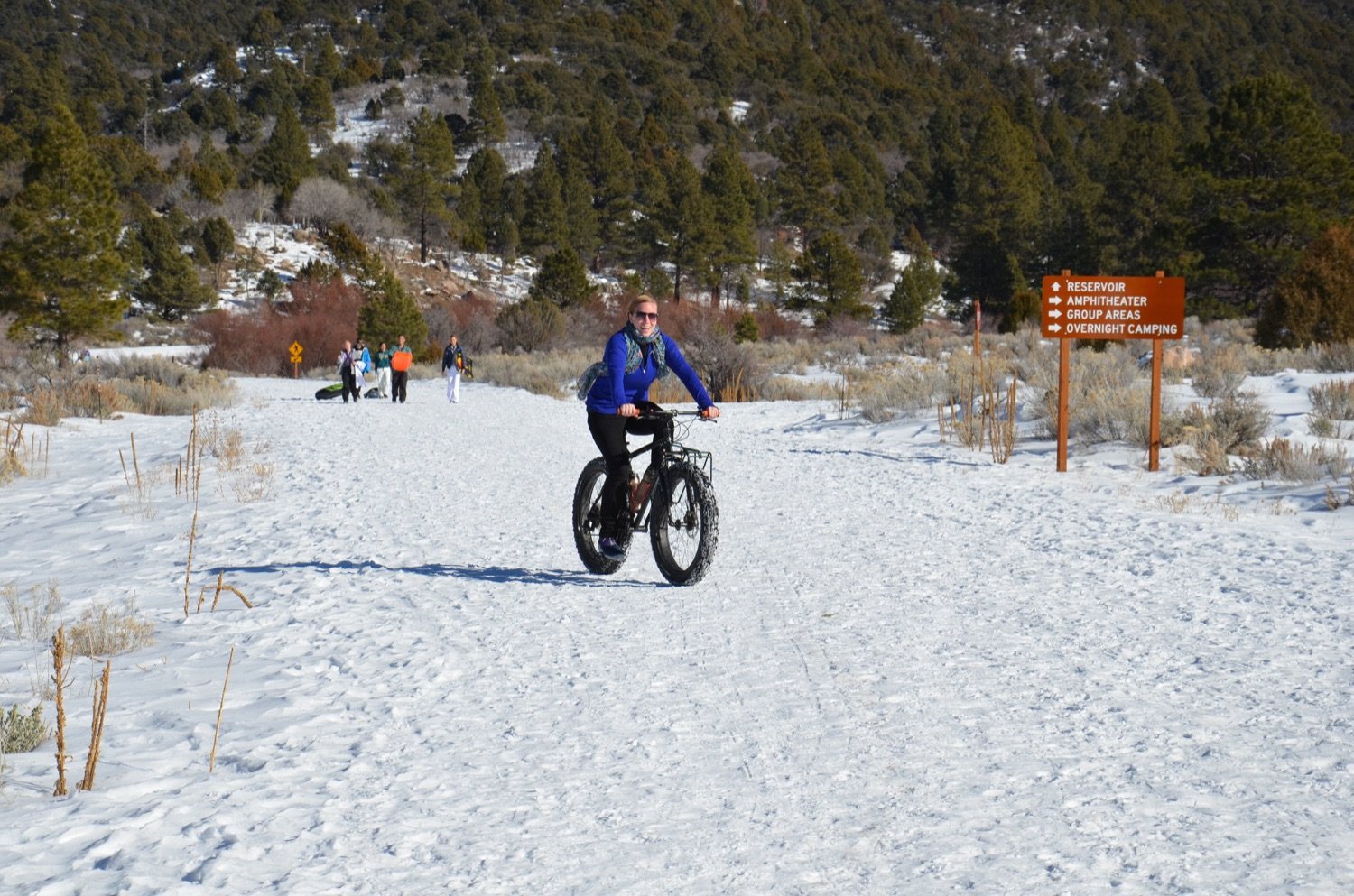
Traction. A wide tyre spreads the bike’s weight over a much larger contact patch, which means it grips where a narrow tyre sinks or slides: sand, snow, mud, loose gravel, wet cobbles. This is the fundamental advantage — the tyre keeps you moving over surfaces that defeat standard tyres.
Stability. More contact with the ground means more lateral grip and a more planted feel, especially at low speed or on uneven surfaces. For riders who value confidence over agility, that’s a genuine safety feature.
Comfort. Fat tyres run at much lower pressures — often 5–15 psi instead of the 40–80 psi of a road or commuter tyre. At those pressures the tyre itself acts as suspension, soaking up bumps and rough ground before they reach the frame or the rider. There’s a reason the format is popular with riders who want a smooth ride on broken streets.
Versatility. One bike with fat tyres can genuinely cover beach, snow, forest trail, gravel and rough city streets. That’s the “one bike for everything” argument, and for riders whose rides mix surfaces, it’s a strong one.
The trade-offs nobody mentions
Weight. Fat tyres, wider rims and the stronger wheels they need all add mass. A fat-tyre e-bike is heavy even by e-bike standards, and while the motor masks the weight when riding, you feel it every time you lift, carry or store the bike.
Rolling resistance. On smooth, hard surfaces, fat tyres roll slower than a proper road or slick commuter tyre. The low pressure that makes them comfortable on rough ground is the same thing that makes them draggy on tarmac — which directly affects range.
Range. E-bike range depends on rolling resistance, and fat tyres increase it. An e-bike’s advertised range will be shorter in practice on fat tyres, especially on pavement. If range is your priority, factor that in rather than trusting the brochure number.
Cost. Fat-tyre wheels, tyres and tubes cost more than standard ones, and replacement parts are less universally stocked. Check tyre and tube availability for the specific size before you commit.
One rule applies across all of it: the motor, battery and class envelope matter as much as the tyres. We explain the e-bike class and certification rules that apply to any fat-tyre e-bike you buy.
Handling. At speed and on tight corners, the planted feel becomes sluggishness. Fat tyres are stable, not nimble — fine for cruising and off-road, less ideal if you want a quick, responsive city bike.
When fat tyres are worth it
- Sand, snow or mud are part of your regular riding — this is the format’s home turf.
- Rough, broken streets where comfort matters more than speed.
- Heavier riders or payloads who benefit from the extra stability and lower-pressure support.
- Gravel or forest trails where traction beats efficiency.
- Year-round riding in places with real winters.
When they’re not
- Pavement-only riding. A slick commuter tyre is faster, lighter and cheaper.
- Range-critical commutes. Fat tyres will cost you battery every day.
- Frequent lifting or carrying — upstairs, into cars, onto trains.
- A light, nimble, responsive ride is what you want.
For most riders the honest answer is: fat tyres are a specialist tool that happens to be comfortable, not a universal upgrade. If your riding mixes surfaces and comfort is the priority, the trade-offs are worth it; if you mostly ride tarmac, a standard or semi-slick tyre is the better call.
How to choose
- Width: Гумите с размер над 4 инча са истинският мазен формат; 3-инчовите “средно-мазни” са по-лек среден вариант, който все още се справя с рохкави повърхности.
- Налягане: търсете комплект гума и джанта, rated for low pressures — that’s where the comfort comes from.
- Протектор: блоков протектор за рохкави повърхности, по-гладък централен протектор, ако ще прекарвате време на настилка.
- Безкамерни: Струва си при дебели гуми заради устойчивостта на спукване и по-ниското тегло, ако комплектът колела го позволява.
Ако сравнявате готови електрически велосипеди с мазни гуми, нашето ръководство за най-добри електрически велосипеди с мазни гуми обхваща моделите, които си струва да обмислите, и какво да проверите преди покупка.
Често задавани въпроси
По-добри ли са мазните гуми за електрически велосипед?
По-добри са за специфични условия: рохкави повърхности, неравни улици и колоездачи, които искат стабилност и комфорт. На настилка те са по-бавни, по-тежки и по-взискателни към пробега от стандартна гума.
Колко пробег отнемат мазните гуми?
Зависи от налягането и повърхността, но очаквайте реално намаление на асфалт в сравнение с гладка гума — често си струва да го планирате, ако пробегът е важен.
Мога ли да карам електрически велосипед с мазни гуми по пътя?
Да, и е удобно — просто по-бавно и по-тежко от гума, ориентирана към пътя. Много колоездачи карат с леко по-високо налягане на асфалт, за да намалят съпротивлението.
Нуждаят ли се мазните гуми от специални колела?
Да. Мазните гуми се нуждаят от по-широки джанти и често по-широки рамки; не можете просто да ги монтирате на стандартен велосипед. Ето защо си струва да проверите колелата за тегло и качество при покупка.
Референции
- Уикипедия — Мазе
- Himiway — Сравнение на предимствата на мазните гуми