
 JA
JA  EN
EN  DE
DE  NL
NL  IT
IT  FR
FR  ES
ES  PT
PT  DA
DA  SV
SV  FI
FI  CS
CS  EL
EL  HU
HU  ET
ET  BG
BG  PL
PL  KO
KO 最終更新日:2026年6月
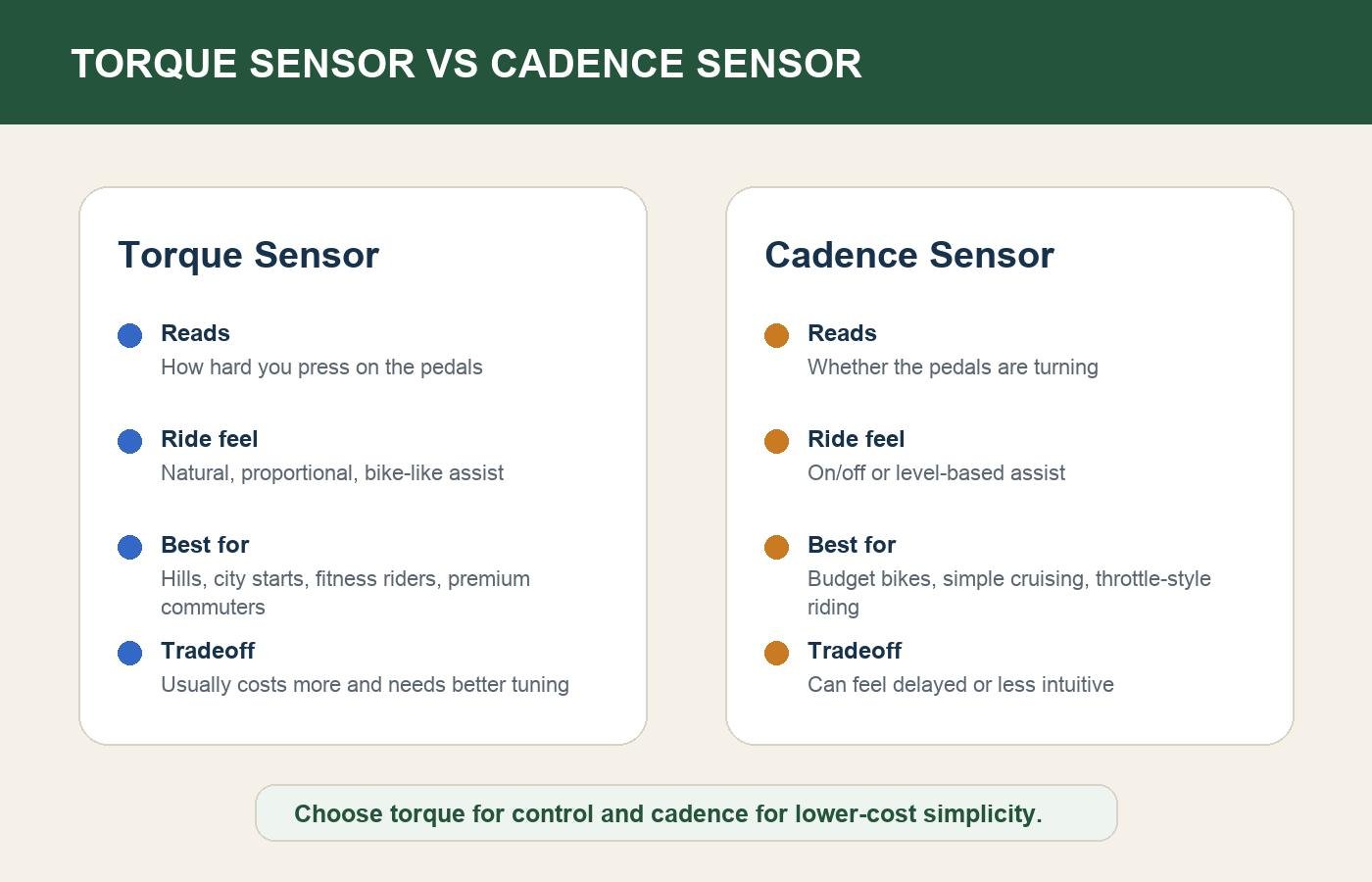
トルクセンサーとケイデンスセンサーの最大の違いは、e-bikeが何に反応するかです。トルクセンサーはペダルの圧力に反応するため、強く押すとモーターがより多くのアシストを追加します。ケイデンスセンサーはペダルの動きに反応するため、クランクが回転していることを検出するとモーターが作動します。.
その単一の違いがライド全体を変えます。トルクセンサー搭載のe-bikeは、自分の脚の強力なバージョンのように感じられます。ケイデンスセンサー搭載の電動自転車は、パワーレベルを選択して、ペダリングを開始するとバイクがより多くの作業を担うように感じられます。どちらのシステムも自動的に間違っているわけではありませんが、異なるライダー、予算、地形に適合します。.
トルクセンサー vs ケイデンスセンサー:シンプルな違い
両方のシステムはペダルアシストの一部です。コントローラーにバッテリーからモーターへ電力を送るタイミングを指示します。違いは送信する信号です。.
| 特徴 | トルクセンサー | ケイデンスセンサー |
|---|---|---|
| 測定するもの | ペダルの力 | ペダルの回転 |
| 乗り心地 | 自然で比例した | よりオン/オフまたはレベルベース |
| 停止からの発進 | 適切に調整されていればスムーズ | 遅延やサージ感がある場合があります |
| 爬坡能力 | 通常はより良いコントロール | アシストレベルとモーター出力に大きく依存 |
| バッテリー使用 | 多くの場合より効率的 | 高アシストが続くとより多くの電力を使用する可能性があります |
| コスト | 通常はより高い | 通常はより低い |
| 最適 | 通勤、坂道、フィットネス、プレミアムバイク | 予算重視のライダー、カジュアルなクルージング、平坦なルート |
バイクが直感的に感じられるようにしたい場合は、予算が許せばトルクセンサーを選択してください。リラックスした走行のための低コストのe-bikeを希望し、洗練されていないアシスト感を気にしない場合は、ケイデンスセンサーでも十分に意味があります。.
E-Bikeトルクセンサーとは?
e-bikeトルクセンサーは、ペダル、クランク、ボトムブラケット、またはドライブトレインを通じて加える力を測定します。強く押すと、コントローラーがその努力を読み取り、モーターにより多くのアシストを提供するように指示します。優しくペダリングすると、モーターは出力を抑えます。.
そのため、トルクセンシングペダルアシストは自然に感じられることが多いのです。バイクは「ペダルが動いているか?」と尋ねているだけではありません。「ライダーが今どれだけの努力をしているか?」と尋ねています。“
これは実際の状況で役立ちます:
- 交差点での停止からの発進
- 荷物や食料品を積んで坂を登る
- 向かい風の中を走る
- 混雑した自転車道をゆっくり進む
- 長い通勤でバッテリーを節約する
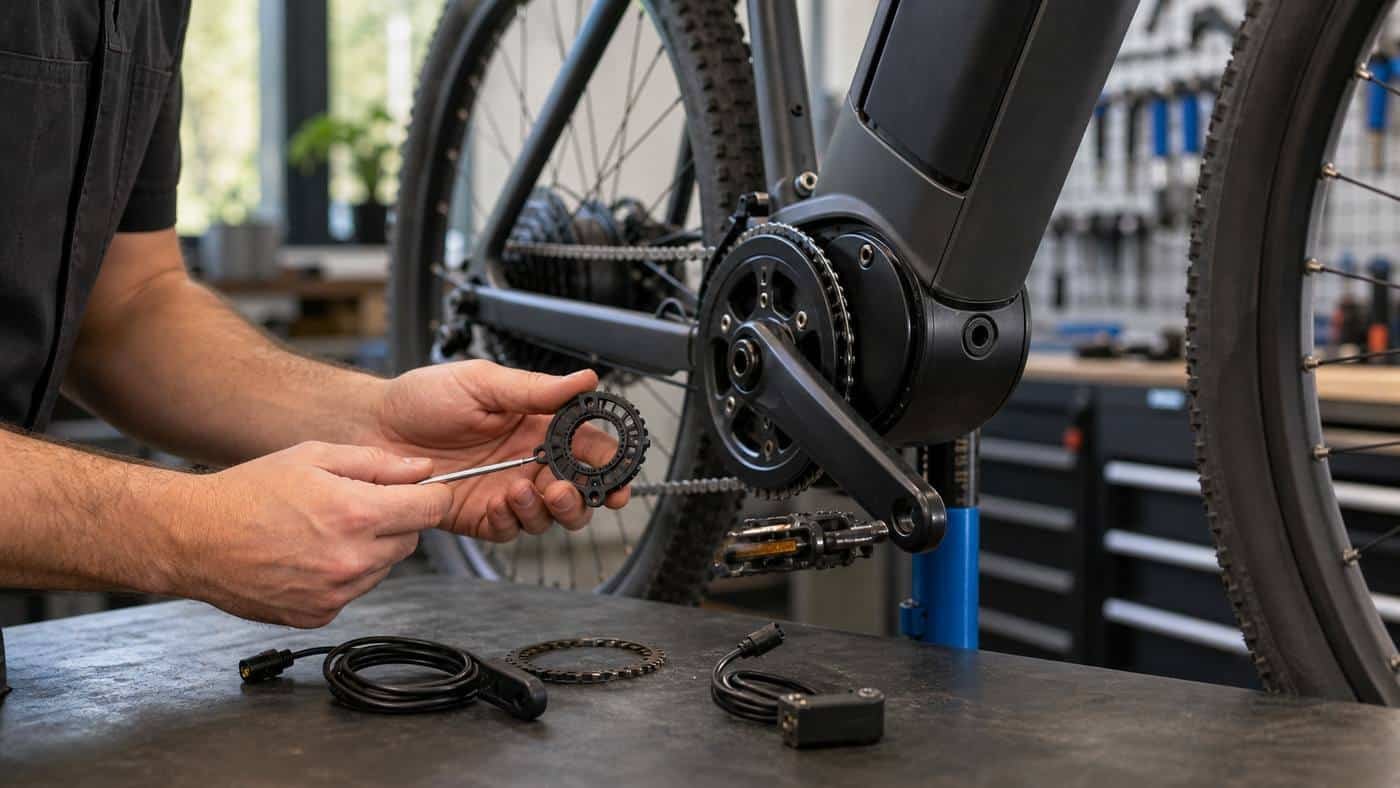
適切に調整されたトルクセンサーは、モーターが脚に接続されているように感じさせます。それでもアシストレベルを選択しますが、そのレベル内でシステムは努力に反応します。低い努力には軽いアシスト。強い努力にはより強いアシスト。.
欠点はコストです。トルクセンサーは通常、装備の良い通勤用、カーゴ、トレッキング、パフォーマンスe-bikeに搭載されています。また、優れたソフトウェア調整も必要です。コントローラー調整が不十分な安価なトルクセンサーは、ぎこちなく感じられることがあります。.
ケイデンスセンサーE-Bikeとは?
ケイデンスセンサーはペダルの回転を検出します。マグネットまたはセンサーシステムがクランクが回転していることを確認すると、コントローラーは選択されたアシストレベルに応じてモーターアシストを作動させます。.
簡単に言うと、ケイデンスセンサーは「ペダリングしていますか、していませんか?」と尋ねます。
多くのケイデンスセンサーe-bikeでは、アシストは押す強さに基づいてあまり変化しません。バイクがアシストレベル3に設定されている場合、ペダルが動き続ける限り、プログラムされた量の電力を供給することがあります。これは特に平坦な地面で簡単でリラックスした感じになります。.
トレードオフはコントロールです。一部のケイデンスシステムでは、開始または停止時にわずかな遅延があります。アシストが始まるとサージが発生することがあります。「ゴーストペダリング」を促進するものもあります。これはライダーが軽くペダルを回し、モーターがほとんどの作業を行う状態です。.
それは常に悪いわけではありません。多くのライダーはその感覚を望んでいます。平坦な道を走る場合、疲労から回復する場合、またはリラックスした地元の移動のために予算重視のe-bikeを選ぶ場合、ケイデンスアシストはまさに期待通りかもしれません。.
各ペダルアシストセンサーが道路上でどのように感じられるか
トルクセンサーとケイデンスセンサーの動作を理解する最良の方法は、同じライドを2台のバイクで想像することです。.
停止からの発進
トルクセンサーでは、ペダルを押すとすぐにモーターが反応します。モーター出力が努力に応じて上昇するため、優れたシステムは制御されているように感じられます。.
ケイデンスセンサーでは、モーターは通常、クランクの回転を検出するまで待機します。これにより短い遅延が発生する可能性があります。アシストが到着すると、バイクが突然目覚めたように感じられることがあります。.
自信のあるライダーにとっては管理可能です。初心者、高齢者、カーゴライダー、または交通量の中で発進する通勤者にとって、スムーズな発進動作は非常に重要です。.
坂を登る
トルクセンサーは通常、坂道でより良い感触をもたらします。ライダーが強く漕ぐとパワーが追加されるからです。そのため、登坂が予測しやすくなります。少し力を抜けば、バイクも一緒に力を抜いてくれます。.
ケイデンスセンサーでも、モーターが強力でアシストレベルが高ければ、登坂は十分にこなせます。ただし、パワーがペダル圧よりもアシスト設定に連動するため、バイクの操作感はやや精密さに欠けるかもしれません。.
交通量の中での走行
ストップ&ゴーの多い市街地走行では、スムーズなコントロールが重要です。トルクセンサーは、ライダーの力の小さな変化がモーター出力の小さな変化につながるため、役立ちます。.
ケイデンスセンサーは、自転車レーンや静かな通りでは問題ないかもしれませんが、アシストが急に作動すると、混雑した交通の中ではぎこちなく感じることがあります。.
長距離のリラックスした巡航
ケイデンスセンサーはここで力を発揮します。ルートが平坦で、ライダーが低い労力を望む場合、ケイデンスセンサー搭載のe-bikeは、ペダルに大きな力をかけずに、原付のような楽なリズムを維持できます。.
トルクセンサーも良好に機能しますが、通常はライダーにより実際のペダリング労力を求めます。.
航続距離に優れているのはどちらのセンサーか?
トルクセンサーは、モーター出力がライダーの労力により密接に追従するため、航続距離の向上に役立つことがよくあります。平坦な道で優しくペダルを漕げば、坂道で使うような同じパワーをバイクが注ぎ込む必要はありません。これにより、アシストがより効率的に感じられます。.
ケイデンスセンサーは、ライダーが高いアシストレベルを選択し、ペダルを軽く回し続けると、バッテリーを多く消費する可能性があります。少ないパワーで十分な場合でも、バイクは比較的固定された量のアシストを提供し続けることがあります。.
とはいえ、航続距離はセンサーだけで決まるわけではありません。実際の航続距離は以下にも依存します:
- バッテリー容量
- モーターの種類とチューニング
- ライダーの体重
- タイヤの空気圧
- スピード
- 坂道
- 風
- 貨物
- 気温
- ストップ&ゴーの走行
同じ人物が同じ通勤路で、他は同等の2台のe-bikeを走らせた場合、トルクセンサー搭載車の方が効率的に管理しやすいと感じることが多いでしょう。しかし、ケイデンスセンサー搭載車でも、ライダーが低いアシストレベルを使用し、タイヤの空気圧、駆動系、充電習慣を適切に管理すれば、良好な航続距離を実現できます。.
バッテリーの挙動と航続距離の診断については、ガイドを参照してください: eカーゴバイクのバッテリーが劣化している8つの兆候.
通勤に優れているのはどちらのセンサーか?
ほとんどの日常的な通勤者にとって、価格が妥当であれば、トルクセンサーの方が優れています。通勤には交差点、坂道、速度変化、歩行者、信号、そして生のモーター出力よりも予測可能なコントロールが重要となる場面が含まれます。.
以下の場合、通勤用にトルクセンサーを選びましょう:
- ルートに坂道がある
- 交通量の中で走行する
- バックパック、食料品、チャイルドシートを運ぶ
- バイクが自然なサイクリングのように感じてほしい
- バッテリー効率を重視する
- ミッドレンジまたはプレミアムな通勤用e-bikeを購入する
以下の場合、通勤用にケイデンスセンサーを選びましょう:
- ルートが平坦である
- 購入価格を抑えたい
- 非常に軽いペダリング労力を好む
- 法的に許可されている場所でスロットルを頻繁に使用する
- 主に遊歩道、住宅街、または短距離の移動を走行する
通勤者は、地域のクラス規則についても考慮すべきです。センサー自体がバイクをクラス1、クラス2、クラス3に決定するわけではありませんが、アシストの挙動、スロットルの有無、アシスト最高速度が、バイクを走行してもよい場所に影響します。.
高齢者や初心者ライダーに優れているのはどちらのセンサーか?
これはライダーによります。.
トルクセンサーは、スムーズな発進、予測可能な速度制御、そして自分の労力に自然に反応するバイクを求めるライダーに適していることが多いです。これは高齢者、慎重なライダー、急加速が苦手な人に役立ちます。.
ケイデンスセンサーは、膝の痛み、疲労、筋力の制限があり、軽いペダル圧でより多くのアシストをバイクに提供してほしいライダーに適しています。モーターの助けを得るために強く漕ぐ必要がないため、ケイデンスシステムを好むライダーもいます。.
重要な詳細はチューニングです。発進時の挙動が適切に制御された穏やかなケイデンスシステムは、チューニングの悪いトルクシステムよりも扱いやすい場合があります。荒いケイデンスシステムは不安定に感じることがあります。可能であれば、購入前に両方を試乗してください。.
購入アドバイス:トルクセンサー vs ケイデンスセンサー
e-bikeが中予算帯を超え、通勤用、カーゴ用、トレッキング用、またはプレミアムシティバイクとして販売されている場合、トルクセンサーは大きなプラス要素です。ライダーが毎マイル感じる、バイクがどれほど自然に反応するかという点を向上させます。.
バイクが低価格の折りたたみ自転車、クルーザー、または近所向けe-bikeの場合、ケイデンスセンサーは許容できる妥協点かもしれません。価格を抑えつつ、有用な電動アシストを提供します。.
この簡単な購入ロジックを使用してください:
- 自然な乗り心地を求めるならトルクセンサーを選びましょう。.
- ルートに坂道や交通量があるならトルクセンサーを選びましょう。.
- 積極的にペダルを漕ぎたいならトルクセンサーを選びましょう。.
- 価格が最も重要ならケイデンスセンサーを選びましょう。.
- ルートが平坦でリラックスしているなら、ケイデンスセンサーを選びましょう。.
- 一定速度でとても楽にペダリングしたいなら、ケイデンスセンサーを選びましょう。.
最高のe-bikeは、スペック上で最も凝ったセンサーを搭載したものではありません。実際の乗り方にアシストの挙動が合っているものです。.
よくあるご質問
Q1: トルクセンサーはケイデンスセンサーより優れていますか?
A: トルクセンサーは通常、自然な乗り心地、坂道、通勤、効率の面で優れています。ケイデンスセンサーは通常より安価で、平坦でリラックスした走行に適しています。.
Q2: e-bikeでケイデンスセンサーは何をしますか?
A: ケイデンスセンサーはペダルが回転しているかどうかを検知します。ペダリングを検知すると、選択されたアシストレベルに基づいてアシストを提供するようコントローラーに指示します。.
Q3: e-bikeでトルクセンサーは何をしますか?
A: トルクセンサーは、ライダーがペダルをどれだけ強く踏んでいるかを測定します。モーターはライダーの踏力に比例してアシストを加えます。.
Q4: トルクセンサーのe-bikeはバッテリーをあまり使いませんか?
A: 多くの場合、はい。モーター出力がライダーの踏力により密接に追従するためです。ただし、総航続距離はバッテリー容量、速度、坂道、ライダーの体重、タイヤ空気圧、アシストレベルによって決まります。.
Q5: ケイデンスセンサーのe-bikeは坂道を登れますか?
A: はい、モーター、ギア、バッテリーが十分に強ければ可能です。アシストがペダル踏力に直接連動していないため、トルクセンサー車ほど精密には感じられないかもしれません。.
Q6: 初心者はトルクとケイデンスのどちらを選ぶべきですか?
A: 滑らかで自転車に近い操作感を求める初心者は、トルクセンシングを選ぶとよいでしょう。低い踏力と低コストを求める初心者は、特に平坦なルートではケイデンスセンシングを好むかもしれません。.
情報源
- Bosch eBike Systems、公式ドライブユニットおよびセンサーの説明。.
- トルクセンサーとケイデンスセンサーに関するAventonの教育資料。.
- ペダルアシストの挙動に関するShimano STEPSのサポートおよびe-bikeシステムの説明。.