
 EN
EN  DE
DE  NL
NL  IT
IT  FR
FR  ES
ES  PT
PT  DA
DA  SV
SV  FI
FI  CS
CS  EL
EL  HU
HU  ET
ET  BG
BG  PL
PL  JA
JA  KO
KO 
The 2025 North American shared-mobility data shows two-wheel electric working at scale in US cities: roughly 237 million shared trips, about 62% of them on bikes. It says almost nothing about three-wheel or cargo formats — because shared fleets do not run them. For a fleet operator or brand building a US assortment, that absence is the useful part.
It marks where three wheels do a different job, for a different rider, through a different channel. This guide maps the two-wheel vs three-wheel cargo bike decision to the work a US fleet actually needs done.
What the shared-fleet data proves (and what it can’t tell you)
The shared data validates the two-wheel electric bike as a mainstream US format: agile, lane-friendly, and preferred by riders over standing scooters for anything beyond the shortest hop. That covers city e-bikes and two-wheel cargo — front-load platforms where the load sits ahead of the rider for stability and clear sightlines, and longtail platforms that extend a familiar bicycle to carry more behind the rider.
Two-wheel stops where the load gets heavy or awkward, where the rider needs the vehicle to stand stable while stationary, or where balance itself is the barrier to entry. Those are not edge cases. They are the point at which the format changes.
What the report cannot do is size the cargo or trike market, because that market does not run on shared fleets. Treat the NABSA figures as a proof point for two-wheel demand, and as evidence — by omission — of the three-wheel white space beside it.
Where two-wheel stops and three-wheel starts
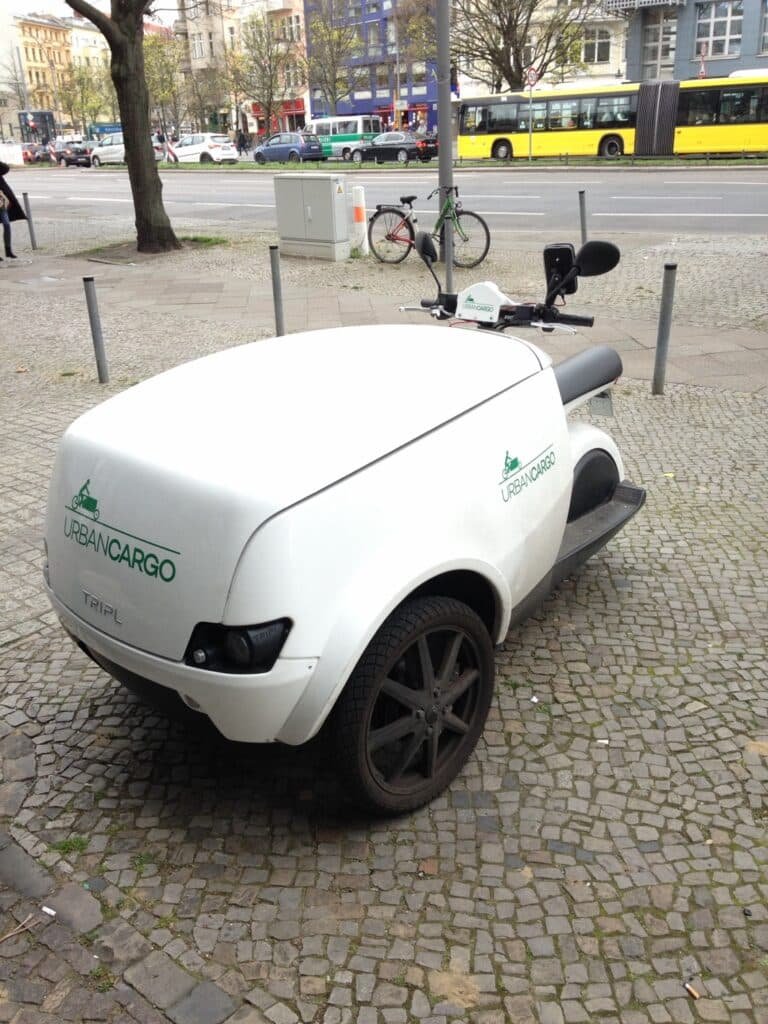
A three-wheel platform earns its place on three specific jobs:
- Stability when the vehicle is not moving — loading, stop-start delivery rounds, and holding position on a slope with a park brake.
- Higher and heavier payloads, carried low and central — the load sits inside the wheelbase rather than hanging off it.
- Access for a broader rider base — step-through frames and geometry tuned for an easy, balanced ride rather than an athletic posture.
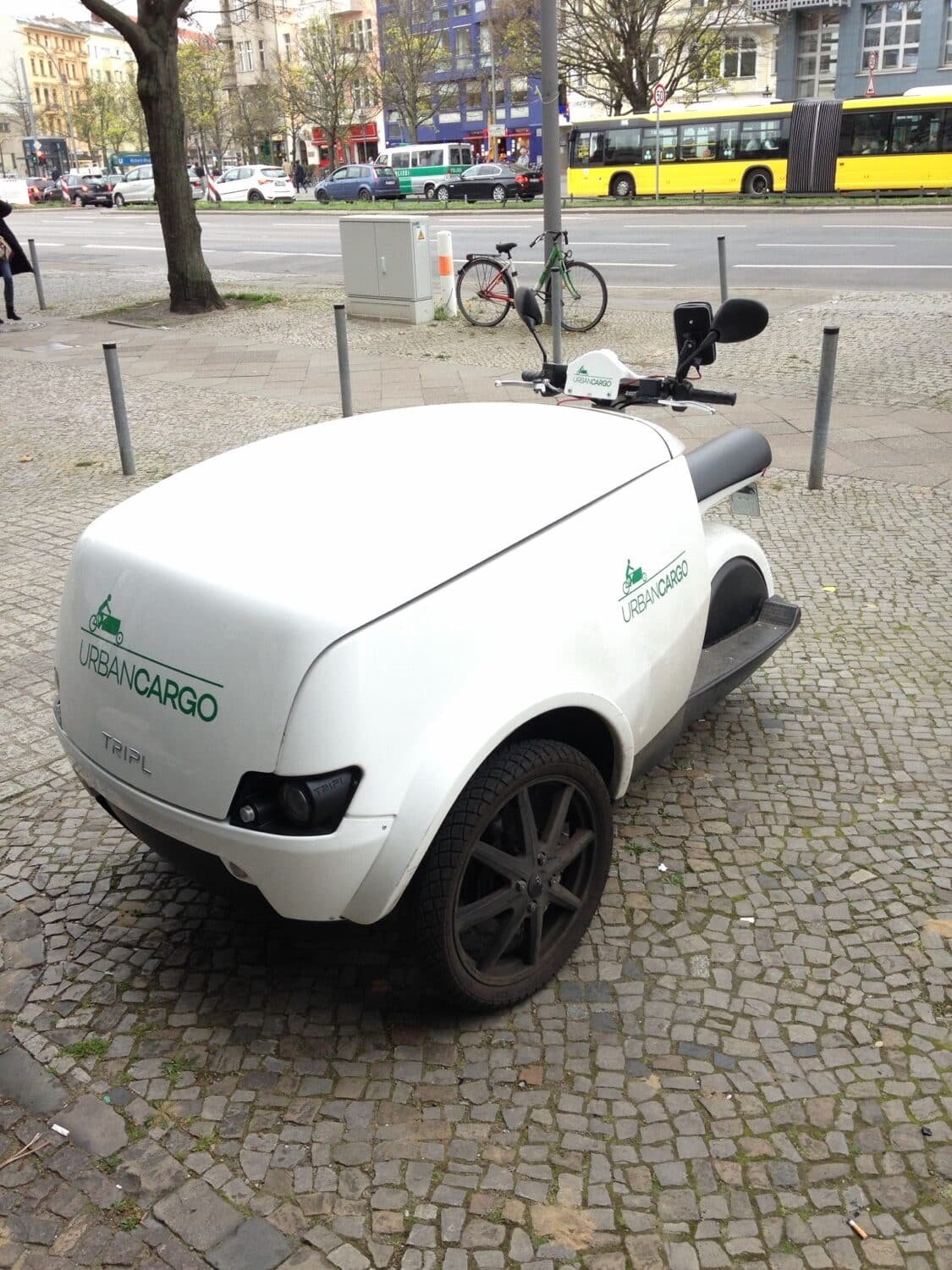
That maps to two families: front-load cargo trikes for payload and commercial rounds, and semi-recumbent platforms for riders who value seated comfort, confidence and easy entry over load volume or speed.

The trade-offs to plan for, not discover
Three wheels introduce constraints a fleet plans around rather than finds out later:
- Width and footprint affect where the vehicle parks and how it moves through a bike lane or storage bay.
- Turning radius and handling differ from a two-wheeler and shape route planning.
- Payload ratings, braking and park systems need to be specified for the actual use, not assumed.
These are engineering decisions taken at the specification stage, which is where the format choice is really made.
Mapping format to the job
Set against the work a US fleet or brand needs done, the assortment resolves cleanly:
| The job | Format | Why it fits |
|---|---|---|
| Short urban trips at high volume | Two-wheel city e-bike | The format riders already choose; agile and lane-friendly |
| Boxed payload with rider visibility | Front-load two-wheel cargo | Low central load, stable, clear sightlines over the box |
| Long or awkward loads, familiar handling | Longtail two-wheel cargo | Rides like a bicycle, carries behind the rider |
| Heavy or stable payload, stop-start rounds | Three-wheel cargo trike | Stands stable when loading; low, central capacity |
| Broader rider base, stability and access | Semi-recumbent trike | Step-through entry; balanced, confident handling |
For a closer look at the two-wheel side, our long-john vs front-loader guide breaks down how the formats actually ride and load; for the three-wheel end, the three-wheel cargo bike guide covers what is worth paying for.
Building a range that covers both
A single supplier can cover the whole table, which keeps a multi-format range consistent on quality, documentation and certification. Whether you need one platform or five, the specification discipline is the same: payload rated for real use, braking and park systems sized to that payload, and geometry set for the rider you are actually serving.
If you are a fleet operator, the practical details matter as much as the platform choice. Our cargo bike tyre guide for fleet operators and the drivetrain care guide cover the maintenance side that keeps a mixed fleet on the road.
Frequently asked questions
Is a three-wheel cargo bike just a more stable two-wheeler?
No. It does a different job — higher and heavier payloads, stability while stationary, and access for a broader rider base — with its own footprint and handling to plan for.
Do US shared fleets use trikes?
Rarely. The shared data is almost entirely two-wheel bikes and standing scooters, which is why the report reads as a two-wheel proof point and a three-wheel white space.
Which format suits a delivery round?
Short, high-volume urban trips suit two-wheel; heavy or stop-start rounds with significant loading time suit three-wheel. Match the format to the payload and the stops, not to the trend of the moment.
Can one supplier cover both formats?
Yes, and it is usually the better option: both formats under one specification and label keeps quality, documentation and certification coherent across the range.
References
- North American Bikeshare and Scootershare Association — 2025 Shared Micromobility State of the Industry Report
- Government Technology — Shared Micromobility Posts New Records in North America
- United Mobility — Two Wheels or Three? US Cargo Fleet Format Guide