
 EN
EN  DE
DE  NL
NL  IT
IT  FR
FR  ES
ES  PT
PT  DA
DA  SV
SV  FI
FI  CS
CS  EL
EL  HU
HU  ET
ET  BG
BG  PL
PL  JA
JA  KO
KO Last Updated: July 2026
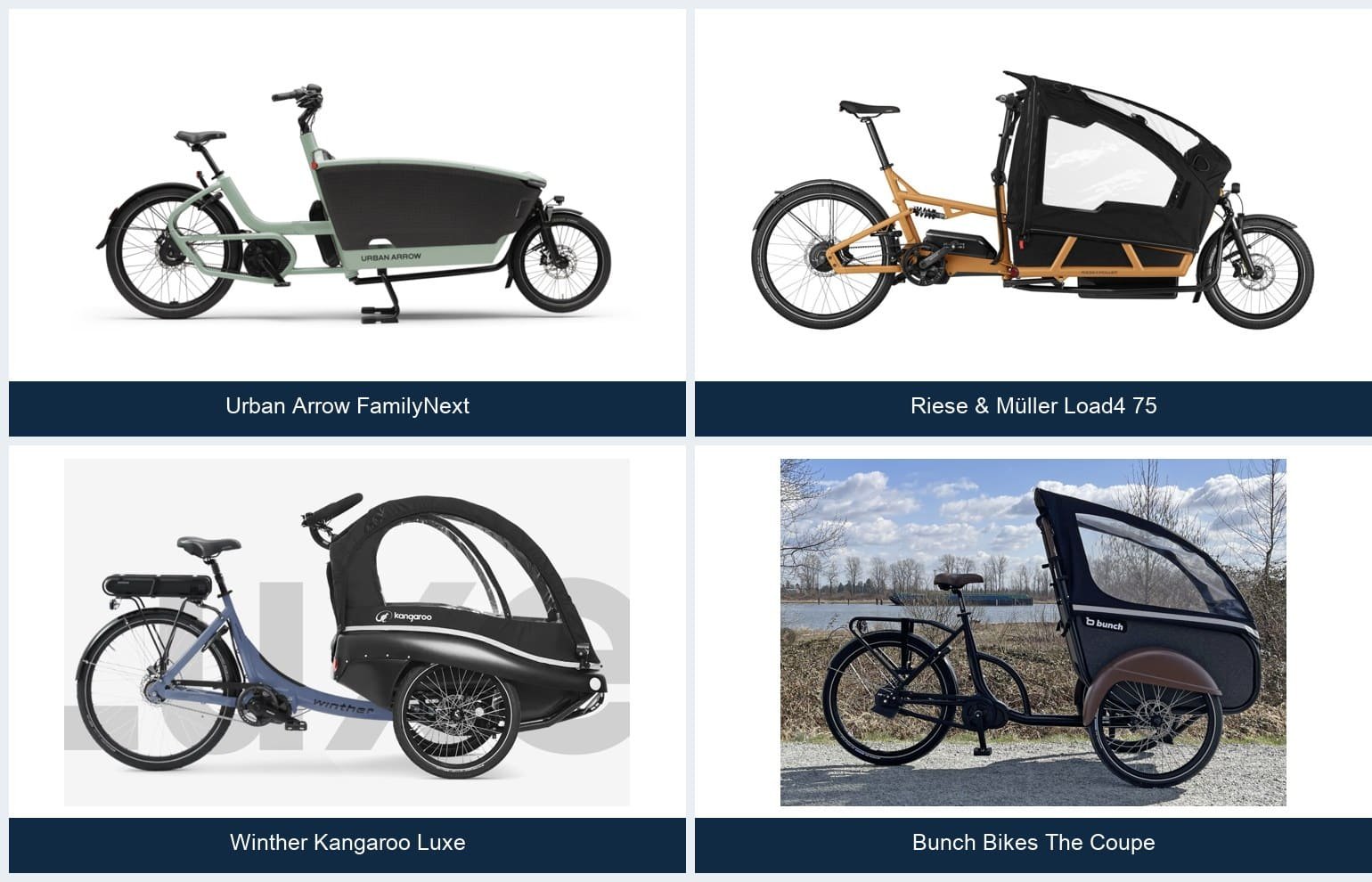
For most families, the best choice is a two-wheel front-loader when narrow handling and direct passenger visibility are priorities, a three-wheeler when stationary stability and cabin capacity matter most, or a longtail when storage and familiar bicycle behaviour lead the decision. Urban Arrow FamilyNext, Riese & Müller Load4 75, Winther Kangaroo Luxe, Tern GSD and Yuba Spicy Curry represent these different solutions. For a broader platform shortlist, see our best cargo bikes of 2026 guide.
Best Family Cargo E-Bikes Compared
| Model | Format | Typical family strength | Technical point to verify |
|---|---|---|---|
| Urban Arrow FamilyNext | Two-wheel front-loader | EPP passenger box and city-oriented family ecosystem | Motor tier, seat configuration and local price |
| Riese & Müller Load4 75 | Full-suspension front-loader | Up to three child-seat positions and premium ride control | Gross-weight allocation and option cost |
| Winther Kangaroo Luxe | Three-wheel cabin bike | Up to four child-seat solutions, harnesses and weather hood | 90 cm width and trike handling training |
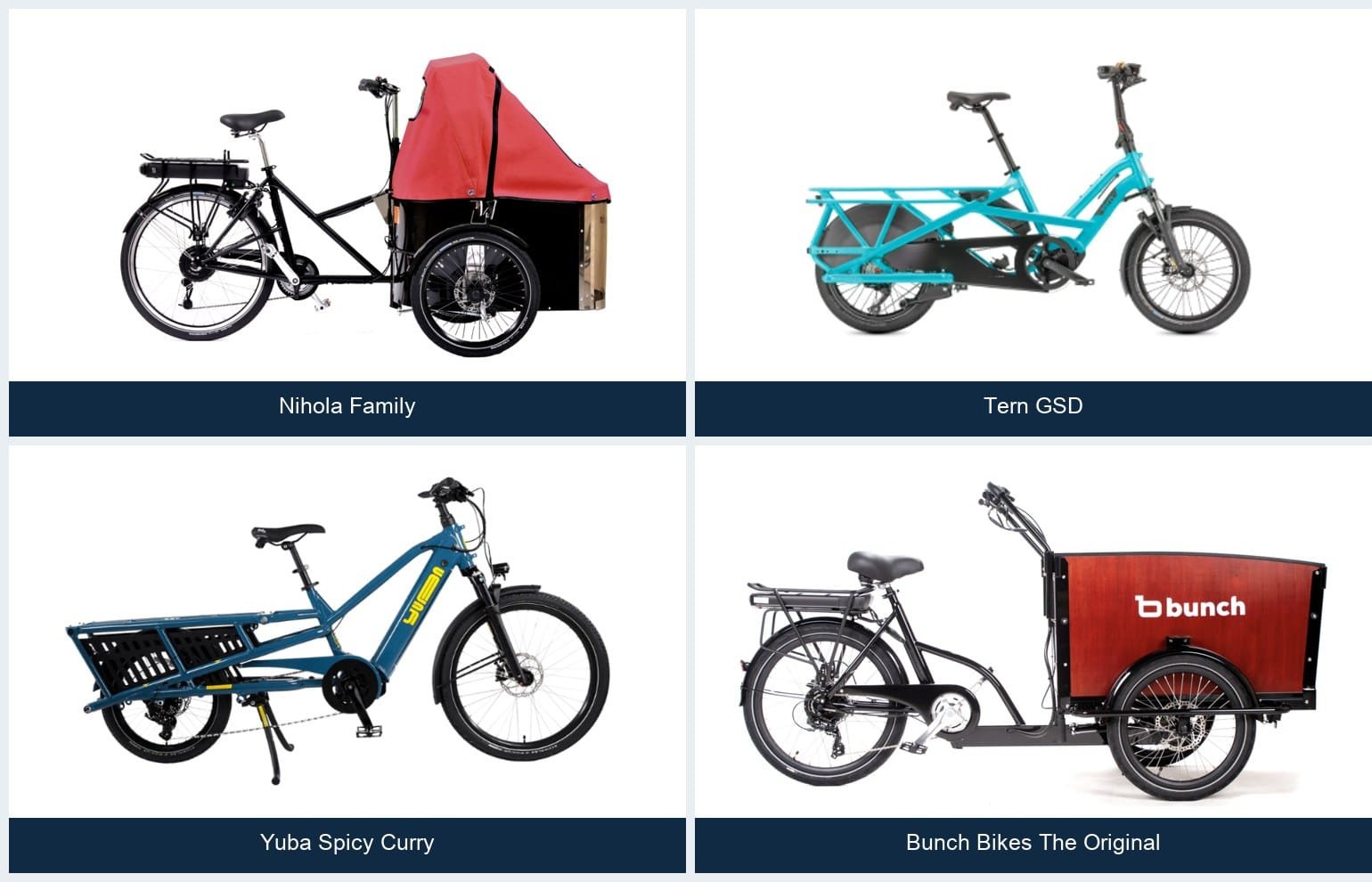
| Tern GSD | Compact longtail | Flexible rear passenger system in a short footprint | Correct rails, footrests and wheel guards |
| Yuba Spicy Curry | Longtail | Adaptable rear deck with low rear wheel | Complete accessory and passenger specification |
| Bunch Bikes The Original | Three-wheel front-loader | Large forward cabin and easy boarding | Market-specific specification and service support |
Choosing Between a Front Box and Rear Passenger Deck
A front box gives the rider visual contact with passengers and can integrate a canopy, seats and side protection. It also increases overall length. Steering behaviour changes as load moves forward, so geometry and damping must be validated across payload conditions. Regen’s overview of the main types of cargo bike provides additional layout context.
A longtail keeps the wheelbase and steering closer to a conventional bicycle. It is often easier in lifts, storage areas and narrow streets. However, the rear passenger area must control foot, hand and clothing contact with wheels and moving drivetrain parts. A complete passenger kit is essential.
Three-wheel cabins are attractive for multiple small children because the bike remains upright while loading. Their width, camber response and turning path require rider familiarisation. Winther’s Kangaroo Luxe, for example, lists a 250 kg total maximum weight, a 100 kg cabin limit and hydraulic disc brakes on all three wheels; these are useful reference points, but the permitted seating arrangement must still match the selected configuration. Buyers comparing larger cabins should also review the best three-wheel cargo bikes.
Family Cargo Bike Safety: What Buyers Should Inspect
Passenger restraint and head space
Check harness geometry, buckle accessibility, seat anchorage, side-wall height and clearance around the child’s head. Our dedicated guide to choosing a cargo e-bike with child seats explains the purchasing questions in greater depth. A canopy is not automatically a protective structure. Brands should distinguish weather protection from verified impact or rollover claims.
Boarding and parking stability
The stand must hold the loaded bicycle on the intended surface. Test the sequence of parking, boarding, fastening and departure. For trikes, a parking brake is valuable; for two-wheelers, stand footprint, leverage and frame attachment matter.
Braking at maximum mass
Brake evaluation should include repeated stops, wet conditions and long descents. Hardware selection must reflect gross vehicle mass, tyre grip and wheel size. Modulation is especially important when passengers are seated in front of the rider.
Weather and ventilation
European family use includes rain, cold and summer heat. Evaluate canopy ventilation, window access, water shedding, drainage, material ageing and visibility. Avoid designs that invite children to reach outside the passenger compartment.
Motor, Battery and Drivetrain Choices
Urban Arrow describes FamilyNext motor variants from 75 Nm to 85 Nm, illustrating how brands can tier a family range for flat urban use and heavier or hillier duty. The motor should deliver predictable assistance from a loaded start without abrupt surging.
Battery choice should follow route length, temperature, support level and charging opportunity. Larger capacity can reduce charging frequency, but it adds purchase cost and weight. Procurement teams should also ask about pack traceability, replacement lead time, charger variants and end-of-life responsibilities.
Internal hub gears and belt drives can reduce routine cleaning, while derailleur systems offer a broad ratio range and familiar service. There is no universal winner; the best choice is the one supported by the target dealer network.
Commercial Buyer Checklist
- Define the number, age and combined mass of passengers, following a clear cargo-bike load-capacity framework.
- Allocate gross vehicle weight between rider, passengers, luggage and accessories.
- Test the fully loaded vehicle on hills, kerbs and tight turns.
- Confirm seat, harness, canopy and foot-protection compatibility.
- Review brake and stand performance at maximum intended mass.
- Verify local rules for carrying children.
- Confirm spare parts, diagnostic access and warranty handling.
- Freeze the production configuration before compliance testing.
ODM/OEM Implications for Family Cargo Bikes
Family transport creates more design interfaces than a simple cargo box: frame, seat, restraint, canopy, step, stand, steering and electrical system all interact. Regen’s OEM and ODM project development process can help brand owners translate a passenger-use case into target geometry, configuration control, prototypes and testing preparation. EU assembly in Portugal may also support regional supply and final-configuration management, but the compliance responsibility and documentation scope must be agreed contractually for each project. For deeper passenger-system criteria, read our guide to cargo bikes for carrying kids.
FAQ
Are two-wheel or three-wheel cargo bikes safer for families?
Neither layout is automatically safer. Trikes offer stationary stability; two-wheelers are narrower and often feel more natural at speed. Safety depends on the complete design, correct loading, rider training and maintenance.
How many children can a family cargo bike carry?
Capacity varies by model and approved seat configuration. Some front boxes accommodate two or three children, while selected three-wheel cabins offer four-seat solutions. Always follow the manufacturer’s mass and seating limits.
Is 500 Wh enough for a family cargo bike?
It can be enough for shorter urban routes, but terrain, load, temperature and assistance level materially affect range. A route-based energy estimate is more useful than a single advertised range.
What should a distributor test before listing a family cargo bike?
Test boarding, stand stability, loaded starts, low-speed turns, emergency braking, hill restarts, canopy use, component access and the full passenger accessory set.
CTA
Developing a family cargo e-bike for a European brand or distributor? Regen can help define the passenger system, platform specification, prototype plan and production route before tooling and certification costs are committed.
References
Riese & Müller. (2026). Load4 75. https://www.r-m.de/en-gb/bikes/load4-75/
Urban Arrow. (2026). Family and FamilyNext motor configurations. https://servicecenter.urbanarrow.com/en/what-are-the-differences-between-the-various-motor-set-ups-of-the-urban-arrow-family
Winther Bikes. (2026). Kangaroo Luxe. https://www.wintherbikes.com/products/cargo-bikes/for-family/kangaroo-luxe/misty-black-misty-black