
 ET
ET  EN
EN  DE
DE  NL
NL  IT
IT  FR
FR  ES
ES  PT
PT  DA
DA  SV
SV  FI
FI  CS
CS  EL
EL  HU
HU  BG
BG  PL
PL  JA
JA  KO
KO Last Updated: August 2026
The loudest e-bike headlines are not always the ones that change purchase orders, compliance work or product plans. For industry professionals, the useful question is simpler: which stories can change what a brand imports, builds or sells next?
For this August 2026 e-bike industry news update, Regen reviewed reporting published from July 1 through August 3 and ranked stories by breadth of coverage, operational impact and relevance to manufacturers, importers, distributors and dealers. Three developments stand out: a new U.S. import filing requirement is now live, European market data points to a slower but healthier reset, and automotive-style e-bike technology is meeting the harder reality of production timing.
CPSC eFiling Is Now an Operating Requirement, Not a Future Deadline
The U.S. Consumer Product Safety Commission's mandatory eFiling program took effect on July 8, 2026. Importers of regulated consumer products must submit certificate data electronically through U.S. Customs and Border Protection's Automated Commercial Environment before covered goods enter U.S. commerce.
This matters to the e-bike sector because imported complete bicycles are subject to CPSC rules and certification requirements. The filing system does not create a new safety test by itself. It changes when and how existing certificate information reaches the government, giving the CPSC data before a shipment clears the border.
For compliant brands, that means certificate records, product identifiers, applicable rules, testing dates and laboratory information must match the customs entry. A test report stored in a supplier's inbox is no longer enough if the data cannot be mapped cleanly to the imported product.
The CPSC says the system should help it target high-risk imports while reducing unnecessary inspections for compliant shipments. Its FAQ also notes that the agency does not currently intend to request denial of entry solely because an importer failed to eFile. That should not be read as permission to ignore the rule: regulated finished products still have to meet testing, certification and filing requirements.

What e-bike importers should do now
The practical task is data discipline. Importers should connect every model and variant to the correct General Certificate of Conformity, testing record and customs data before the container leaves origin. Product names used by the factory, laboratory, freight forwarder and sales team should resolve to the same item.
Battery and electrical documentation deserves separate attention. The eFiling launch is distinct from the CPSC's proposed federal lithium-ion battery rule, but both developments point in the same direction: weak traceability is becoming a commercial risk. Regen's guide to e-bike certifications explains the difference between whole-bike rules and electrical-system standards, while the e-bike BMS guide covers why battery control records matter beyond a certificate label.
Foreign Trade Zone entries receive a later effective date of January 8, 2027. Everyone else importing covered finished products should treat the July 8 system as normal operating procedure now.
Europe's 2026 Market Report Shows Stabilisation, Not a New Boom
European Cycling Industries published its 2026 Bicycle Industry & Market Profile on July 29, using 2025 data. The headline is cautiously positive: the market correction that followed pandemic demand and inventory disruption appears to be moving toward a more balanced, demand-led market.
Euroopa toodang püsis 2025. aastal stabiilsena 10,820 miljoni jalgratta ja EPAC-i juures. Müügimaht ulatus 15,618 miljoni ühikuni, langedes aastases võrdluses 2,6% võrra, samas kui müügiväärtus langes vaid 0,84%, jõudes 18,252 miljardi euroni. Otsene tööhõive jalgratta- ja osade tootmises kasvas 1 025 töökoha võrra, ulatudes 67 076-ni.
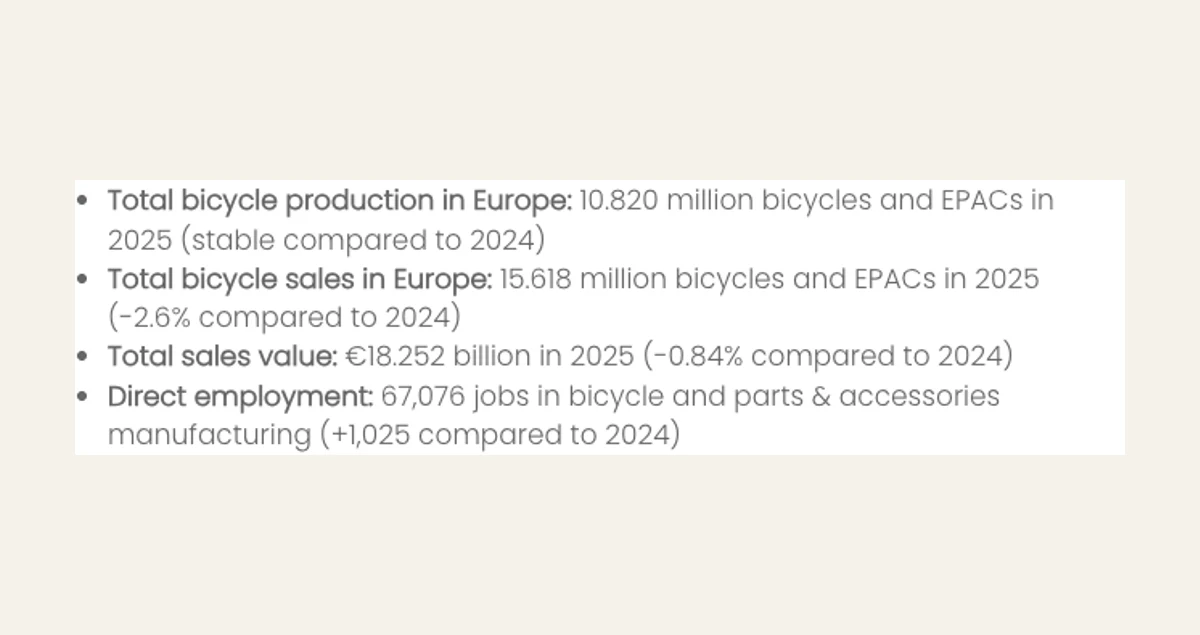
Need arvud ei kirjelda tugevat taastumist. Need kirjeldavad turgu, kus tootmine on lakanud järsult langemast, laoseisud normaliseeruvad ja väärtus püsib paremini kui maht. See on oluline eristus tööstusele, mis veetis mitu aastat üleliigsete laovarude likvideerimisel suurte allahindlustega.
Mida Euroopa jalgrattaturu andmed tähendavad tarnijatele
Brändid ei tohiks muuta "stabiliseerumist" agressiivseks mahuprognoosiks. 2,6% müügilangus tähendab siiski, et lõppnõudlus oli 2025. aastal nõrgem. Ohutum lugemine on see, et planeerimine võib naasta lühemate, tõenduspõhiste tsüklite juurde, mitte pandeemiaaegsetele eeldustele.
Aruanne tõstatab ka strateegilise küsimuse Euroopa tootmisbaasi kohta. Impordid on taastunud, kui kaubandusmustrid normaliseeruvad, kuid tulevane turukasv ei tugevda automaatselt Euroopa komponentide tootmist. Ajamiüksuste, akude, raamide ja elektroonika tarnijate jaoks liigub konkurentsitest lihtsast kättesaadavusest kulude, teeninduskatvuse, tarkvaratoe ja dokumenteeritud vastavuse suunas.
See on ka põhjus, miks Regen tehnoloogia- ja hankenihe aasta juuli e-jalgrattatööstuse kokkuvõte on endiselt oluline. Kiiremad Aasia tootetsüklid võivad võita spetsifikatsioone, kuid Euroopa edasimüüjad ja sõidukipargid hindavad jätkuvalt osade kättesaadavust, diagnostikat ja jääkväärtust. 2026. aasta andmed toetavad valivat turgu, mitte muretut.
ALSO TM-B muudab pedaalijuhtme päris turukatsetuseks
The ALSO TM-B returned to the news cycle at the end of July as major consumer-technology publications published hands-on rides. ALSO began as a program inside Rivian before becoming a standalone small-EV company, and that automotive lineage is visible in the product.
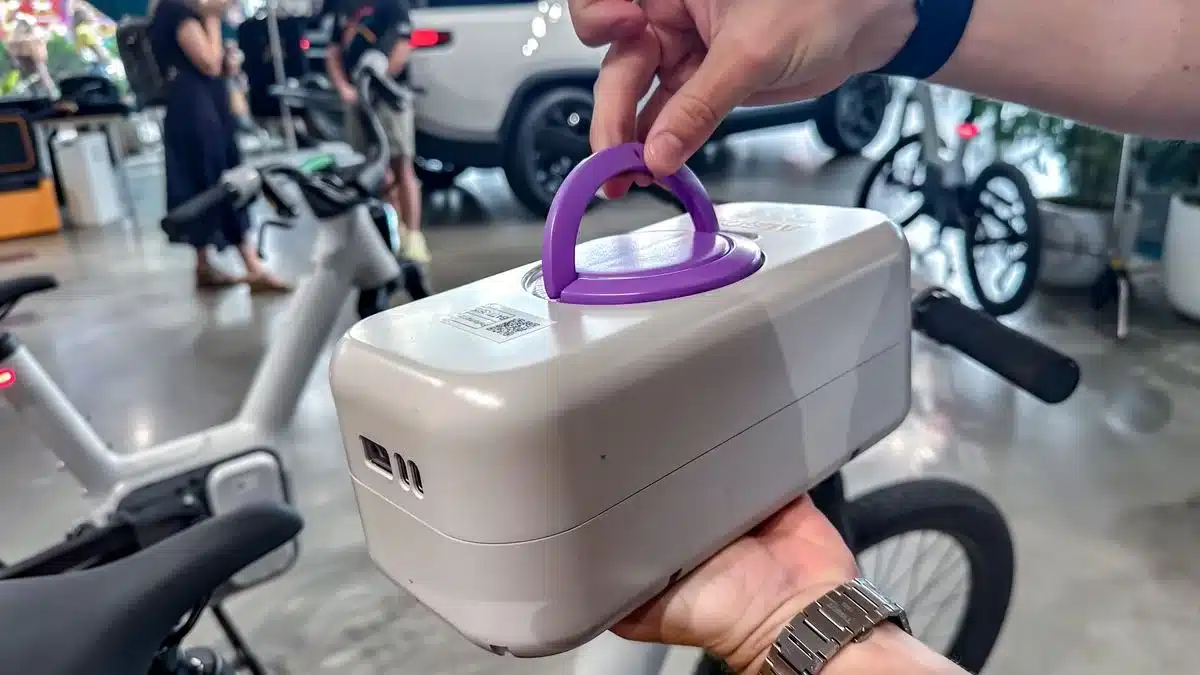
The Class 3 TM-B uses a series-hybrid, pedal-by-wire drive. Pedalling turns a generator rather than mechanically driving the rear wheel; software then controls the traction motor. ALSO lists 180 Nm of output torque, up to 28 mph assisted speed, regenerative braking, a removable USB-C power-bank battery, over-the-air updates and swappable top frames.
The base model starts at $3,500 with a manufacturer-estimated range of up to 60 miles. The Performance version starts at $4,500 and claims up to 100 miles under ideal conditions. These are manufacturer figures, not independent range-test results.
The launch timing is now part of the story
Tom's Guide reported on July 30 that shipments were expected to begin in August after an earlier first-half target. However, ALSO's current configuration page lists shipping for the regular TM-B and TM-B Performance as "Late 2026." The difference suggests that the rollout timetable remains fluid.
For suppliers and competitors, the interesting question is not whether the TM-B wins a review. It is whether an automotive-style, vertically integrated platform can reach volume with acceptable weight, serviceability and delivery reliability. The bike weighs about 80 pounds, relies heavily on proprietary hardware and software, and asks dealers and customers to accept a different relationship between rider input and wheel drive.
Platvorm võiks mõjutada kauba- ja tarbe-elektrirattaid isegi siis, kui esimene mudel jääb premium-klassi. Tarkvarapõhine käiguvahetus, vahetatavad veomoodulid, suure võimsusega USB-C laadimine ja regeneratiivpidurdus ühendavad jalgrattadisaini väikeste elektrisõidukite arhitektuuriga. Regen selgitus regeneratiivpidurduse kohta elektriratastel näitab, miks TM-B seeriahübriidne paigutus on ebatavaline võrreldes tavapäraste keskveo- ja rummumootorisüsteemidega.
Lähiaja signaal on seega vastuoluline: tehnoloogia on piisavalt reaalne sõltumatuteks proovisõitudeks, kuid tarnegraafik jääb liikuvaks sihtmärgiks. Tooteplaneerijad peaksid jälgima klienditarneid, hooldusprotseduure ja garantiikäsitlust tähelepanelikumalt kui turundusürituste spetsifikatsioone.
Mida need elektriratta tööstusuudised kokkuvõttes tähendavad
Kõik kolm lugu premeerivad ettevõtteid, kes suudavad ühendada tooteambitsiooni operatiivse tõestusega.
- Ameerika Ühendriikides vajab nõuetele vastav toode nüüd sertifikaadiandmeid, mis liiguvad täpselt läbi impordisüsteemi.
- Euroopas annab stabiliseeruv nõudlus tööstusele kindlama aluse, kuid mitte luba üleliigsete laovarude taastamiseks.
- Tootearenduses näitab ALSO TM-B, kui kiiresti võivad autoelektroonika elektriratastesse jõuda – ja kuidas tootmise ajastus jääb tõeliseks proovikiviks.
Ühine joon on jälgitavus. Regulaatorid tahavad jälgitavaid vastavusandmeid. Edasimüüjad tahavad jälgitavat hooldus- ja varuosatuge. Ostjad tahavad väiteid, mida saab pärast toote saatmist kontrollida. 2026. aasta teisel poolel võivad ettevõtted, kes need lingid dokumenteerivad, omada tugevamat eelist kui ettevõtted, kellel on kõige valjem spetsifikatsioonileht.
Korduma kippuvad küsimused
Kas CPSC eFiling loob uusi elektriratta ohutusteste?
Ei. 8. juuli eFilingi nõue muudab seda, kuidas importijad edastavad olemasolevaid sertifikaadiandmeid CPSC-le tollisüsteemi kaudu. Eraldi CPSC reeglistik võib muuta tulevasi akuohutusnõudeid, kuid eFiling ise on andmeesitussüsteem.
Kas Euroopa elektriratta turg kasvab 2026. aastal uuesti?
The latest ECI report uses 2025 data and describes the broader bicycle market as stabilising. Production was flat, while total bicycle and EPAC sales were down 2.6%, so the evidence supports normalisation rather than a new boom.
Is the ALSO TM-B shipping in August 2026?
A July 30 hands-on report said shipments were expected to start in August, but ALSO's current product configuration page lists late 2026 for the regular models. Buyers and dealers should confirm the delivery estimate attached to a specific order.
Viited
- CPSC Implements Mandatory eFiling for Certificates of Compliance — U.S. Consumer Product Safety Commission, July 8, 2026.
- CPSC eFiling Frequently Asked Questions — U.S. Consumer Product Safety Commission.
- The 2026 Bicycle Industry & Market Profile is now available — European Cycling Industries, July 29, 2026.
- European bicycle market stabilises while local component production loses ground — Bike Europe, July 31, 2026.
- TM-B product specifications — ALSO.
- Select a TM-B — ALSO, current shipping information.
- About ALSO — ALSO.
- I took Rivian's $4,500 e-bike for a test ride — Tom's Guide, July 30, 2026.