
 DE
DE  EN
EN  NL
NL  IT
IT  FR
FR  ES
ES  PT
PT  DA
DA  SV
SV  FI
FI  CS
CS  EL
EL  HU
HU  ET
ET  BG
BG  PL
PL  JA
JA  KO
KO 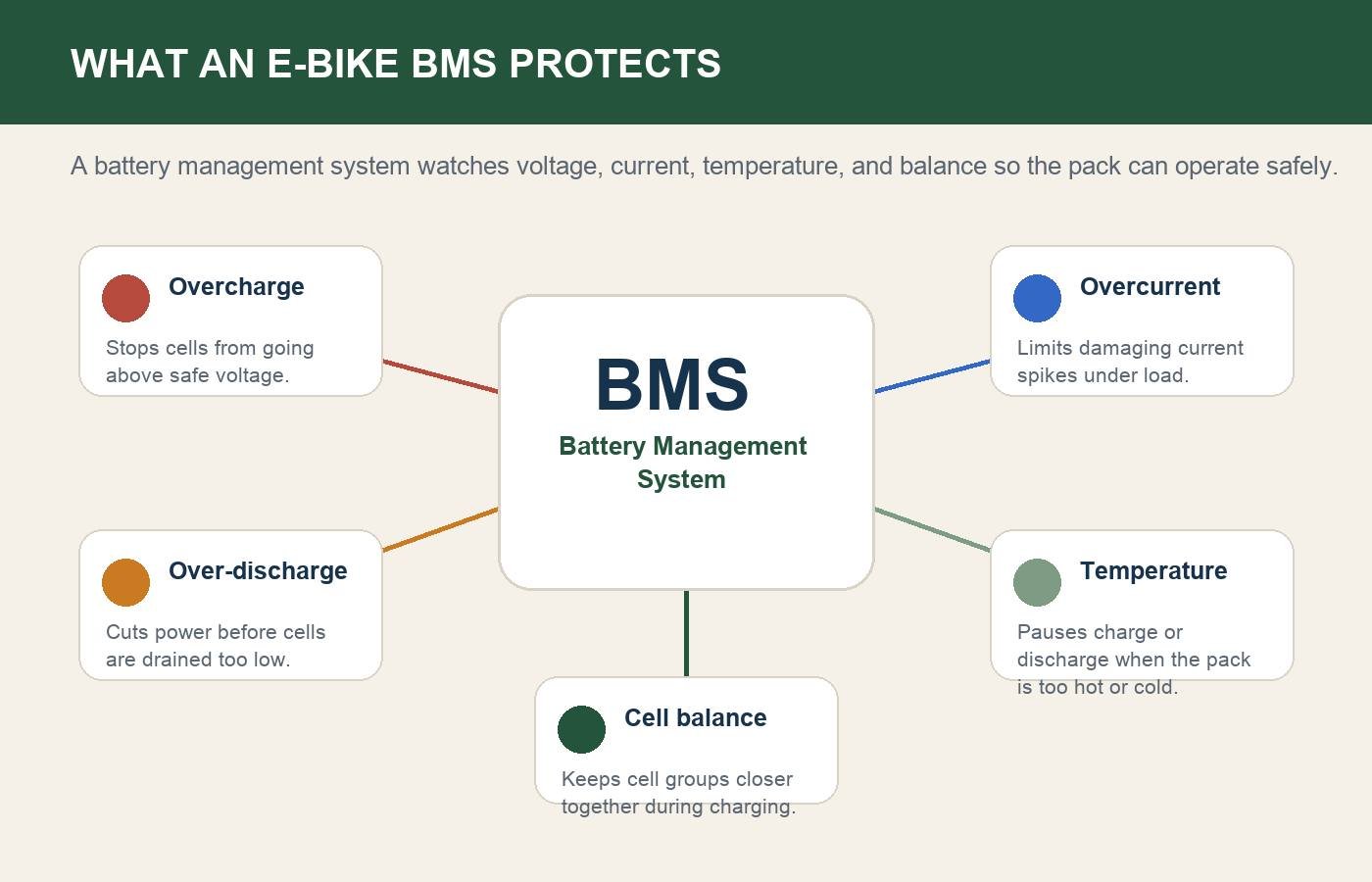
Ein E-Bike-BMS ist nicht der Motor, das Ladegerät oder das Display. Es ist das integrierte Management- und Schutzsystem des Akkus, und seine Aufgabe ist es zu entscheiden, wann der Akku geladen werden kann, wann er entladen werden kann, wann er die Leistung begrenzen sollte und wann er das System abschalten sollte, um die Zellen und den Fahrer zu schützen.
Das ist wichtig, weil die meisten modernen Elektrofahrräder Lithium-Ionen-Akkus verwenden. Diese Akkus speichern viel Energie in einem kompakten Gehäuse und sind auf kontrolliertes Laden, Entladegrenzen, Temperaturbewusstsein und Zellbalancierung angewiesen. Ein gutes Batteriemanagementsystem macht aus einem schlechten Akku keinen hochwertigen, aber ohne ein funktionierendes BMS kann selbst ein guter Akku unzuverlässig oder unsicher werden.
Für Fahrer ist die praktische Erkenntnis einfach: Wenn ein E-Bike plötzlich an Leistung verliert, sich weigert zu laden, an Hügeln aussetzt oder einen Akkufehler anzeigt, schützt das BMS möglicherweise den Akku, anstatt die Fahrt zu “unterbrechen”. Den Unterschied zu verstehen, hilft Ihnen, unsichere Heimwerkerlösungen zu vermeiden, bessere Akkus zu wählen und Symptome einem Händler oder einer Reparaturwerkstatt klarer zu erklären.
Was ist ein E-Bike-BMS?
Ein E-Bike-BMS ist eine kleine elektronische Schaltung, die normalerweise in den Akkupack integriert ist und die einzelnen Zellgruppen im Akku überwacht und verwaltet. BMS steht für Batteriemanagementsystem.
In einfachen Worten ist das BMS der Kontrollraum des Akkus. Es überwacht, ob die Zellen zu hoch geladen, zu tief entladen, zu stark erhitzt, mit zu viel Strom belastet oder aus dem Gleichgewicht geraten. Wenn sich der Akku außerhalb seines zulässigen Betriebsbereichs bewegt, kann das BMS die Leistung reduzieren, das Laden stoppen oder den Akku vom Fahrrad trennen.
Deshalb ist ein E-Bike-Akku mehr als eine Box voller Zellen. Ein kompletter Akkupack umfasst normalerweise:
- Lithium-Ionen-Zellgruppen
- Nickelbänder oder Sammelschienen, die die Zellen verbinden
- Temperatursensoren
- eine Batteriemanagementsystem-Platine
- Lade- und Entladeanschlüsse
- ein Gehäuse, Montagehalterungen und Dichtungen
- Kommunikationsverkabelung bei fortschrittlicheren Systemen
Der Fahrer sieht das BMS normalerweise nie. Aber der Fahrer spürt seine Entscheidungen jedes Mal, wenn der Akku korrekt lädt, eine Überentladung vermeidet, Zellen nahe dem Ladeende balanciert oder abschaltet, um einen schwerwiegenderen Fehler zu verhindern.
Was macht ein E-Bike-Batteriemanagementsystem?
Die Kernaufgabe eines E-Bike-Batteriemanagementsystems ist es, den Akku innerhalb seines sicheren Betriebsfensters zu halten. Verschiedene Akkus und Marken setzen diese Aufgabe unterschiedlich um, aber die Hauptfunktionen sind weitgehend ähnlich.
| BMS-Funktion | Was sie für Fahrer bedeutet | Häufiges Symptom, wenn ausgelöst |
|---|---|---|
| Überladeschutz | Stoppt Zellgruppen daran, ihre maximale Spannung zu überschreiten | Ladegerät stoppt früh oder Akku nimmt keine Ladung an |
| Überentladungsschutz | Verhindert, dass Zellen zu tief entladen werden | Fahrrad schaltet sich bei sehr niedrigem Ladezustand oder starkem Spannungsabfall ab |
| Überstromschutz | Begrenzt Stromspitzen, die Zellen oder Verkabelung beschädigen können | Aussetzer bei steilen Anstiegen, harten Starts oder schweren Lasten |
| Temperaturschutz | Blockiert unsicheres Laden oder Entladen, wenn der Akku zu heiß oder zu kalt ist | Akkufehler nach Hitze, Kaltlagerung oder starker Nutzung |
| Zellbalancierung | Hält Zellgruppen während des Ladens näher beieinander | Stabilere Reichweite und vollständigeres Laden im Laufe der Zeit |
| Kurzschlussschutz | Trennt den Akku bei gefährlichen elektrischen Fehlern | Sofortige Abschaltung oder keine Ausgangsleistung |
Überladeschutz
Lithium-Ionen-Zellen sollten nicht über ihre konstruierte Spannungsgrenze geladen werden. Überladung kann Zellen belasten, die Akkulebensdauer verkürzen und das Sicherheitsrisiko erhöhen. Das BMS überwacht Zellgruppen und stoppt das Laden, wenn eine Gruppe ihre Grenze erreicht.
Dies ist ein Grund, warum Sie das vom Fahrrad- oder Akkuhersteller gelieferte oder zugelassene Ladegerät verwenden sollten. Ein Ladegerät und ein BMS sind darauf ausgelegt, zusammenzuarbeiten. Ein nicht passendes Ladegerät kann ein Problem erzeugen, gegen das das BMS ankämpfen muss, und bei minderwertigen Systemen reicht der Schutz möglicherweise nicht aus.
Überentladungsschutz
Das Entladen von Lithium-Ionen-Zellen zu tief kann sie dauerhaft beschädigen. Das BMS verhindert dies, indem es die Stromversorgung unterbricht, bevor die Zellen unter eine kritische Spannung fallen.
Für den Fahrer kann sich das frustrierend anfühlen. Das Display zeigt möglicherweise noch etwas Ladung an, dann schaltet sich das Fahrrad unter Last aus. Aber wenn die Akkuspannung während einer Steigung, einer kalten Fahrt oder eines schweren Laststarts zu stark abfällt, kann das BMS den Ausgang trennen, um die Zellgruppen zu schützen. Das ist ein Schutzereignis, keine Einstellung, die man umgehen sollte.
Überstromschutz
Ein E-Bike-Motor kann während der Beschleunigung, beim Klettern, auf weichem Gelände oder beim Fahren mit Last viel Strom verlangen. Das BMS überwacht diese Stromaufnahme. Wenn die Anforderung das sichere Limit des Akkus überschreitet, kann das BMS die Leistung unterbrechen.
Dies ist häufig der Fall, wenn Fahrer einen Controller mit höherer Leistung an einem Akku installieren, der nie dafür ausgelegt war. Der Motor kann möglicherweise mehr Leistung anfordern, aber der Akkupack und das BMS entscheiden, ob diese Leistung sicher geliefert werden kann.
Temperaturschutz
Die Akkutemperatur ist sowohl beim Laden als auch beim Fahren wichtig. Das Laden eines sehr kalten Lithium-Ionen-Akkus kann schädlich sein, während das Entladen eines heißen Akkus unter starker Last die Alterung beschleunigen oder Sicherheitsbedenken hervorrufen kann.
Ein verantwortungsvolles BMS verwendet Temperatursensoren, um Laden oder Entladen außerhalb des zulässigen Temperaturbereichs des Akkus zu verhindern. Wenn ein Fahrrad sich weigert zu laden, nachdem es in einer eiskalten Garage stand, oder nach starker Nutzung an einem heißen Tag einen Fehler wirft, könnte der Temperaturschutz Teil der Erklärung sein.
Zellbalancierung
Ein E-Bike-Akku besteht aus vielen Zellen, die in Gruppen angeordnet sind. Im Laufe der Zeit können diese Gruppen leicht voneinander abweichen. Wenn eine Gruppe früher als die anderen voll oder leer ist, wird der gesamte Akku durch diese schwächste Gruppe begrenzt.
Zellbalancing hilft, diese Gruppen näher beieinander zu halten, normalerweise nahe dem oberen Ladezustand. Dies ist ein Grund, warum gelegentliche Vollladungen nützlich sein können, wenn der Hersteller sie empfiehlt. Es gibt dem BMS Zeit, den Akku auszugleichen. Das bedeutet nicht, dass jeder Akku die ganze Zeit bei 100 Prozent liegen sollte; befolgen Sie die Lagerungshinweise des Akkuherstellers.
E-Bike-BMS vs. Ladegerät vs. Controller
Fahrer verwechseln oft das Batteriemanagementsystem, das Ladegerät und den Motorcontroller, weil alle drei die Leistungsabgabe beeinflussen können.
Das Ladegerät wandelt Netzstrom in die korrekte Ladeausgabe für den Akku um. Es sollte der Akkuspannung, dem Stecker und der Herstellerspezifikation entsprechen.
Das BMS befindet sich im oder in der Nähe des Akkupacks. Es überwacht den Pack und kann Laden und Entladen erlauben oder blockieren.
Der Controller verwaltet die Leistung vom Akku zum Motor. Er interpretiert Signale von Display, Gasgriff, Tretunterstützungssensor, Bremsabschaltungen und Motorsensoren.
Diese drei Teile arbeiten als System. Wenn das Bike an einem Hügel aussetzt, könnte die Ursache ein BMS-Überstromschutz, eine schwache Akkugruppe, ein Controller-Fehler, ein loser Stecker, Bremsensensorverhalten oder Spannungsabfall durch einen alternden Pack sein. Deshalb betrachtet eine gute Diagnose das gesamte elektrische System, anstatt sofort einem Teil die Schuld zu geben.
Wenn Sie die fahrerorientierten Zahlen verstehen möchten, die dies einfacher diagnostizieren lassen, lesen Sie unseren Leitfaden zu was die Zahlen auf Ihrem E-Bike-Display wirklich bedeuten. Akkuprozent, Spannung, Watt und Fehlercodes können eine nützlichere Geschichte erzählen, wenn Sie wissen, was sie zeigen sollen.
Häufige E-Bike-BMS-Begriffe, die Fahrer sehen
Sie müssen kein Elektroingenieur werden, um die BMS-Sprache zu verstehen. Dies sind die Begriffe, die die meisten Fahrer und Käufer erkennen sollten.
Spannung
Spannung ist der elektrische Druck des Packs. Ein “48V”-E-Bike-Akku ist normalerweise eine Nennangabe, nicht die exakte Spannung zu jedem Moment. Die tatsächliche Packspannung ist höher, wenn voll, und niedriger, wenn er entladen wird.
Das BMS verwendet Spannungsgrenzen, um Überladung und Tiefentladung zu verhindern.
Strom und Ampere
Strom, gemessen in Ampere, ist der Fluss von Elektrizität. Hoher Strombedarf tritt bei starker Beschleunigung, Bergauffahrten und schwerer Lastnutzung auf.
Wenn ein Controller mehr Strom anfordert, als das BMS erlaubt, kann der Akku die Ausgabe unterbrechen.
Dauerentladungsrate
Dies beschreibt, wie viel Strom der Akku kontinuierlich liefern kann. Ein Pack, der für ein Pendler-Bike geeignet ist, könnte für ein schwereres Lastenrad oder einen modifizierten Hochleistungsaufbau ungeeignet sein.
Spitzenentladungsrate
Spitzenstrom ist eine Kurzzeit-Burst-Bewertung. Sie sollte nicht mit dem verwechselt werden, was der Akku den ganzen Tag liefern kann.
Zellgruppe
Zellen im Pack sind in Gruppen angeordnet. Wenn eine Gruppe schwächer wird als die anderen, kann das BMS die Entladung früher stoppen, weil die schwächste Gruppe zuerst die Niederspannungsgrenze erreicht.
Zellbalancierung
Balancing ist der Prozess, Zellgruppen in der Spannung näher beieinander zu halten. Besseres Balancing unterstützt normalerweise eine vorhersehbarere Reichweite, das Laden und die Langlebigkeit des Packs.
BMS-Fehler
Ein BMS-Fehler ist ein Schutz- oder Kommunikationsproblem, das vom Batteriesystem gemeldet wird. Es bedeutet nicht immer, dass die BMS-Platine selbst defekt ist. Es kann auch bedeuten, dass das BMS Niederspannung, Hitze, Überstrom, schlechte Kommunikation oder ein Zellgruppen-Ungleichgewicht erkannt hat.
Anzeichen, dass ein E-Bike-BMS den Akku schützt
Ein BMS-Ereignis tritt oft plötzlich auf, weil Schutzsysteme darauf ausgelegt sind, das Problem schnell zu unterbrechen. Die wichtige Frage ist, ob das Ereignis einmalig, erklärbar oder wiederholt ist.
Achten Sie auf diese Muster:
- das Bike unterbricht die Leistung bei steilen Hügeln oder starker Beschleunigung
- der Akku weigert sich zu laden, wenn er sehr heiß oder sehr kalt ist
- das Ladegerät wird zu früh grün, aber die Reichweite ist schlecht
- das Bike schaltet sich bei moderatem angezeigtem Ladezustand unter Last ab
- der Pack wacht nur auf, nachdem er an das Ladegerät angeschlossen wurde
- das Display zeigt einen Akku-, Spannungs- oder Kommunikationsfehler
- dieselbe Route löst jetzt Aussetzer aus, die vorher nie passierten
Ein einmaliges Abschalten nach ungewöhnlicher Nutzung beweist nicht, dass das BMS defekt ist. Wiederholte Aussetzer unter normalen Bedingungen verdienen eine Diagnose.
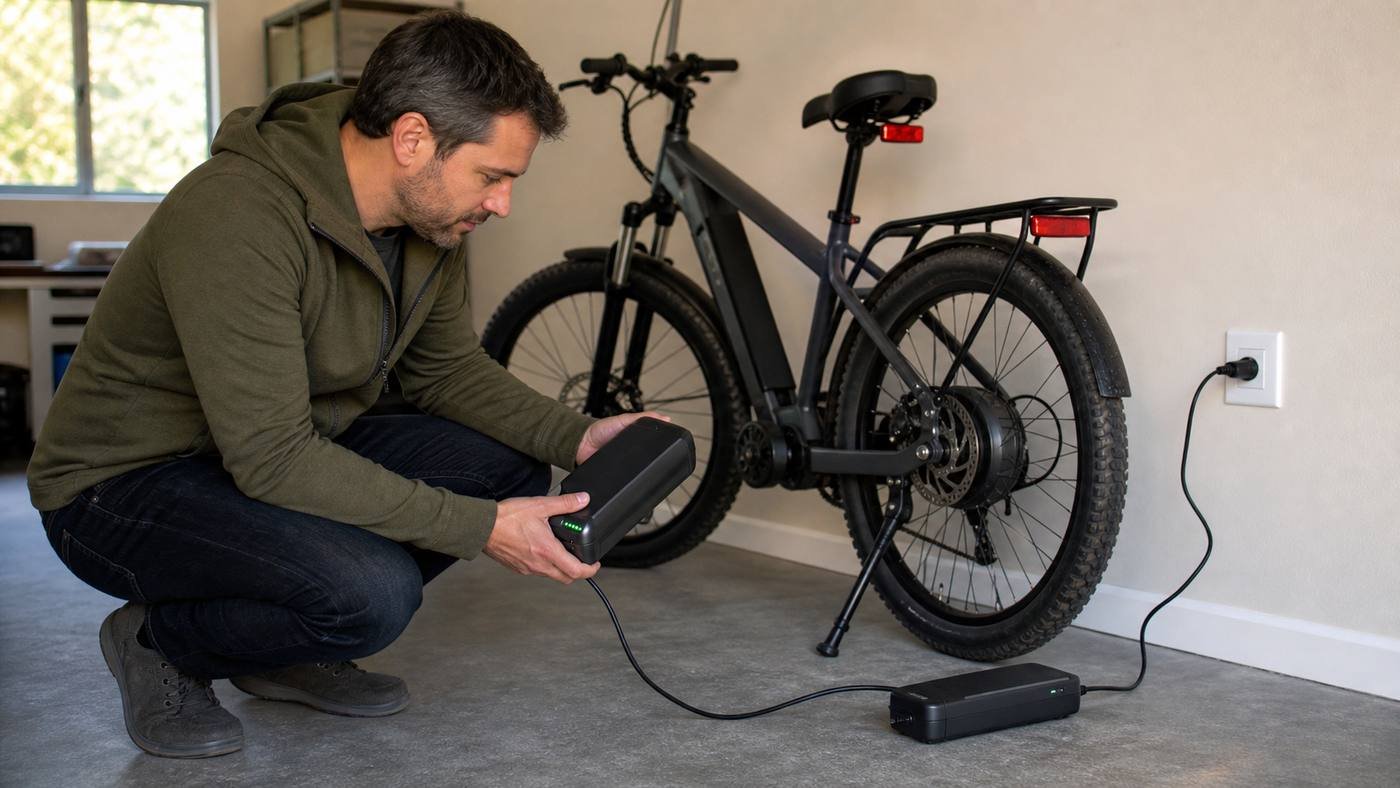
Beginnen Sie mit einfachen Checks: Akkusitz, Steckerreinigung, Ladegerät-Kompatibilität, Reifendruck, Bremsenwiderstand und ob das Problem nur bei kaltem Wetter auftritt. Wenn diese Grundlagen sauber sind, kann ein Händler die Akkuspannung, das Zellgruppen-Balancing, die Ladegerätausgabe und das Controller-Verhalten testen.
Für Symptome der Akkualterung bietet unser Leitfaden zu 8 Anzeichen, dass deine E-Lastenrad-Batterie nachlässt einen praktischen Weg, um normale Reichweitenschwankungen von echtem Akkugesundheitsverfall zu unterscheiden.
Kann man ein E-Bike-BMS zurücksetzen oder umgehen?
Einige Akkus können nach einem Niederspannungsschutzereignis “aufgeweckt” werden, indem das zugelassene Ladegerät angeschlossen wird. Einige Systeme löschen auch vorübergehende Fehler, nachdem der Akku abkühlt, sich erwärmt oder korrekt wieder eingesetzt wird. Das ist normal.
Das Umgehen eines BMS ist anders. Fahrer sollten ein E-Bike-BMS nicht umgehen, um mehr Leistung zu erhalten, einen fragwürdigen Pack wiederzubeleben oder eine Abschaltung zu überwinden. Das BMS ist da, weil Lithium-Ionen-Akkus kontrollierte Grenzen benötigen. Das Umgehen kann Überladungs-, Tiefentladungs-, Überstrom-, Kurzschluss- und Temperaturschutz entfernen.
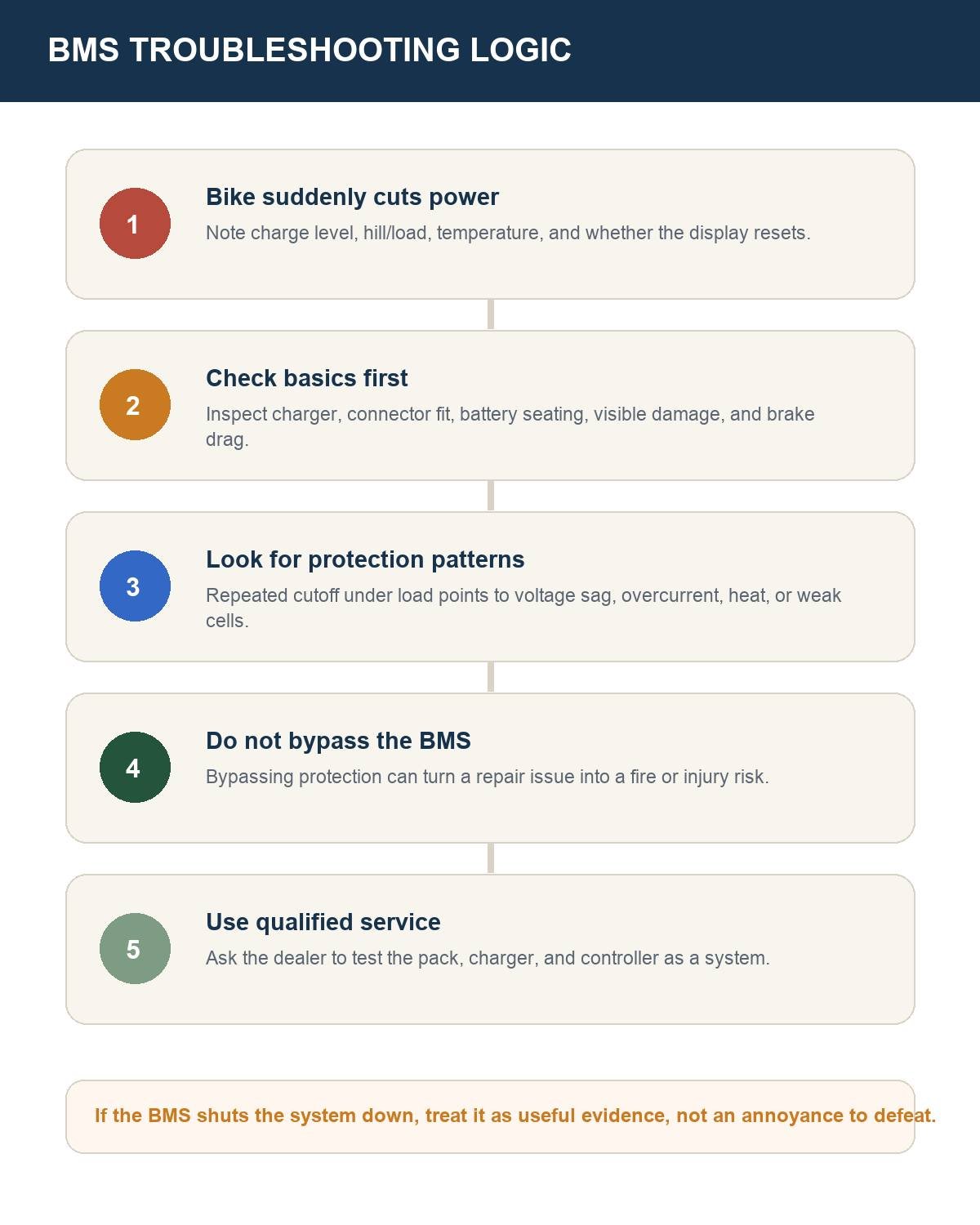
Die sicherere Logik ist:
- Behandeln Sie die Abschaltung als Beweis.
- Notieren Sie, wann sie passiert: Ladezustand, Wetter, Hügel, Last, Unterstützungsmodus und Fehlercode.
- Überprüfen Sie die Grundlagen von Ladegerät und Stecker.
- Stoppen Sie die Nutzung des Akkus bei Schwellung, Aufprallschäden, ungewöhnlicher Hitze, Geruch, Schmelzen oder wiederholten unerklärlichen Abschaltungen.
- Bitten Sie einen qualifizierten Serviceanbieter, den Akku und das elektrische System zu testen.
Dies ist besonders wichtig für Lastenräder, Lieferfahrräder und Familien-E-Bikes, da der Akku nicht nur einen Freizeitausflug mit Strom versorgt. Er kann Kinder, Werkzeug, Lebensmittel oder gewerbliche Lasten transportieren.
Worauf Sie beim Kauf eines E-Bike-Akkus achten sollten
Ein starkes BMS ist ein Teil eines sicheren Akkus, aber Käufer sollten das gesamte System betrachten.
Passen Sie den Akku an das Fahrrad an
Verwenden Sie Spannung, Halterung, Stecker, Entladeleistung und Kommunikationstyp, die vom Fahrradhersteller vorgegeben sind. Ein Akku, der physisch passt, kann elektrisch dennoch falsch sein.
Verwenden Sie das zugelassene Ladegerät
Behandeln Sie Ladegeräte nicht als austauschbar, nur weil der Stecker ähnlich aussieht. Spannung, Ladeprofil, Steckerverkabelung und Systemkommunikation können sich unterscheiden.
Achten Sie auf anerkannte Sicherheitszertifizierungen auf Systemebene
In Nordamerika beschreibt UL Solutions UL 2849 als einen Standard für E-Bike-Elektrosysteme, der die Kombination aus Antriebsstrang, Akku und Ladesystem untersucht. UL 2271 wird häufig mit Akkus für leichte Elektrofahrzeuganwendungen in Verbindung gebracht. Für Fahrer ist der entscheidende Punkt, dass glaubwürdige Tests über einen einzelnen Marketingbegriff hinausgehen und berücksichtigen, ob Akku, Ladegerät, Motor, Steuerung und Verkabelung sicher zusammenarbeiten.
Vermeiden Sie mysteriöse Ersatzakkus
Billige Ersatzakkus können verlockend sein, aber unbekannte Zellen, schwache Montage, schlechte Schweißverbindungen, nicht passende Ladegeräte und vage BMS-Spezifikationen können ein echtes Risiko darstellen. Ein niedriger Preis ist nutzlos, wenn der Akku unter Last ausfällt, schnell an Kapazität verliert oder nicht gewartet werden kann.
Fragen Sie nach Garantie und Service
Ein seriöser Akkulieferant sollte in der Lage sein, Garantiebedingungen, kompatible Ladegeräte, Lagerungshinweise, erwartetes Verhalten und Maßnahmen bei BMS-Fehlermeldungen zu erklären.
Wie Fahrer dem BMS helfen können, seine Aufgabe zu erfüllen
Das BMS schützt den Akku, aber das Verhalten des Fahrers ist dennoch wichtig.
Verwenden Sie das zugelassene Ladegerät und stellen Sie die Verwendung beschädigter Ladegeräte ein. Laden Sie auf einer harten, stabilen Oberfläche mit Luftzirkulation um den Akku. Decken Sie das Ladegerät nicht ab. Vermeiden Sie das Laden bei extremer Hitze oder Frost, es sei denn, der Hersteller erlaubt es ausdrücklich. Lagern Sie den Akku nicht vollständig entladen. Vermeiden Sie es, den Akku längere Zeit in einem heißen Auto oder in direkter Sommersonne zu lassen.
Bei saisonaler Lagerung sind Ladezustand und Temperatur entscheidend. Viele Hersteller empfehlen, Lithium-Ionen-Akkus teilgeladen an einem kühlen, trockenen Ort zu lagern und sie regelmäßig zu überprüfen. Wenn Winterlagerung relevant ist, lesen Sie unseren Leitfaden unter wie Sie Ihr elektrisches Lastenrad für den Winter lagern.
Das BMS ist die letzte elektronische Schutzlinie, keine Erlaubnis, den Akku zu missbrauchen. Gute Ladegewohnheiten, korrekte Lagerung und kompatible Komponenten erleichtern die Arbeit des BMS und verlängern die Lebensdauer des Akkus.
Was ein E-Bike-BMS für echte Fahrer bedeutet
Für einen Pendler bedeutet das BMS, dass der Akku vorhersehbar lädt, Leistung innerhalb sicherer Grenzen liefert und abschaltet, bevor Zellschäden schlimmer werden.
Für einen Lastenradbesitzer ist das BMS noch wichtiger, da schwere Lasten den Strombedarf und den Spannungsabfall erhöhen. Ein Akku, der auf ebenen Straßen einwandfrei funktioniert, kann an beladenen Hügeln den Schutz auslösen, wenn Akku, Steuerung und Motor nicht gut aufeinander abgestimmt sind.
Für Lieferfahrer und Flotten ist das BMS Teil der Verfügbarkeitsplanung. Wiederholte Schutzauslösungen sind nicht nur Ärgernisse. Sie sind betriebliche Signale, dass Route, Nutzlast, Akkualter oder elektrische Konfiguration möglicherweise nicht mehr zur Aufgabe passen.
Für Käufer gebrauchter E-Bikes kann das BMS-Verhalten versteckte Akkurisiken aufdecken. Ein Verkäufer mag sagen, das Fahrrad “brauche nur ein Ladegerät” oder “schalte sich manchmal ab”, aber diese Symptome können auf einen erschöpften Akku, schlechten Zellenabgleich oder einen Schutzfehler hinweisen, der echte Tests erfordert.
Die beste Art, über das E-Bike-BMS nachzudenken, ist diese: Es ist nicht da, um das Fahrrad kompliziert wirken zu lassen. Es ist da, um einen Hochenergie-Akku innerhalb eines kontrollierten Betriebsbereichs zu halten. Wenn es eingreift, hören Sie auf das Muster, bevor Sie Teile ersetzen, Einstellungen ändern oder dem Motor die Schuld geben.
Häufig gestellte Fragen
F1: Was bedeutet BMS bei einem E-Bike?
A: BMS bedeutet Batteriemanagementsystem. Bei einem E-Bike ist es das elektronische System im oder am Akkupack, das Spannung, Strom, Temperatur, Zellenabgleich und Schutzgrenzen überwacht.
F2: Kann ein E-Bike ohne BMS betrieben werden?
A: Ein Lithium-Ionen-E-Bike-Akku sollte nicht ohne ordnungsgemäßes Batteriemanagement und Schutz verwendet werden. Das BMS hilft, Überladung, Tiefentladung, Überstrom, Überhitzung und Zellenungleichgewicht zu verhindern. Es zu umgehen ist unsicher.
F3: Steuert das BMS die E-Bike-Geschwindigkeit?
A: Normalerweise nein. Geschwindigkeit und Unterstützungsverhalten werden hauptsächlich von der Motorsteuerung, Displayeinstellungen, Sensoren und lokalen Klassenbegrenzungen gesteuert. Das BMS kann die Akkuleistung begrenzen oder unterbrechen, wenn Strom, Spannung oder Temperatur den sicheren Bereich des Akkupacks verlassen.
F4: Warum schaltet mein E-Bike-Akku an Hügeln ab?
A: Abschaltungen an Hügeln können auftreten, wenn der Strombedarf hoch ist und die Akkuspannung unter Last abfällt. Mögliche Ursachen sind BMS-Überstromschutz, ein gealterter Akku, schwache Zellgruppen, kaltes Wetter, eine nicht passende Steuerung oder eine lose Verbindung.
F5: Woran erkenne ich, ob mein E-Bike-BMS defekt ist?
A: Ein defektes BMS ist nur eine Möglichkeit. Wiederholte Ladeverweigerung, plötzliche Abschaltungen, keine Ausgangsleistung, ungewöhnliche Akkufehler oder Schutzauslösungen unter normalen Bedingungen sollten von einem qualifizierten Techniker getestet werden. Ladegerät, Zellen, Steckverbinder, Steuerung und Temperaturbedingungen sollten ebenfalls überprüft werden.
F6: Ist eine UL-Zertifizierung dasselbe wie ein gutes BMS?
A: Nein. Ein BMS ist eine Komponente im Akkusystem. Eine Sicherheitszertifizierung kann je nach Anspruch ein breiteres elektrisches System oder eine Akkunorm bewerten. Käufer sollten auf glaubwürdige Sicherheitsinformationen auf Systemebene, kompatible Ladegeräte und Serviceunterstützung achten, anstatt sich auf einen vagen Begriff zu verlassen.