
 ET
ET  EN
EN  DE
DE  NL
NL  IT
IT  FR
FR  ES
ES  PT
PT  DA
DA  SV
SV  FI
FI  CS
CS  EL
EL  HU
HU  BG
BG  PL
PL  JA
JA  KO
KO 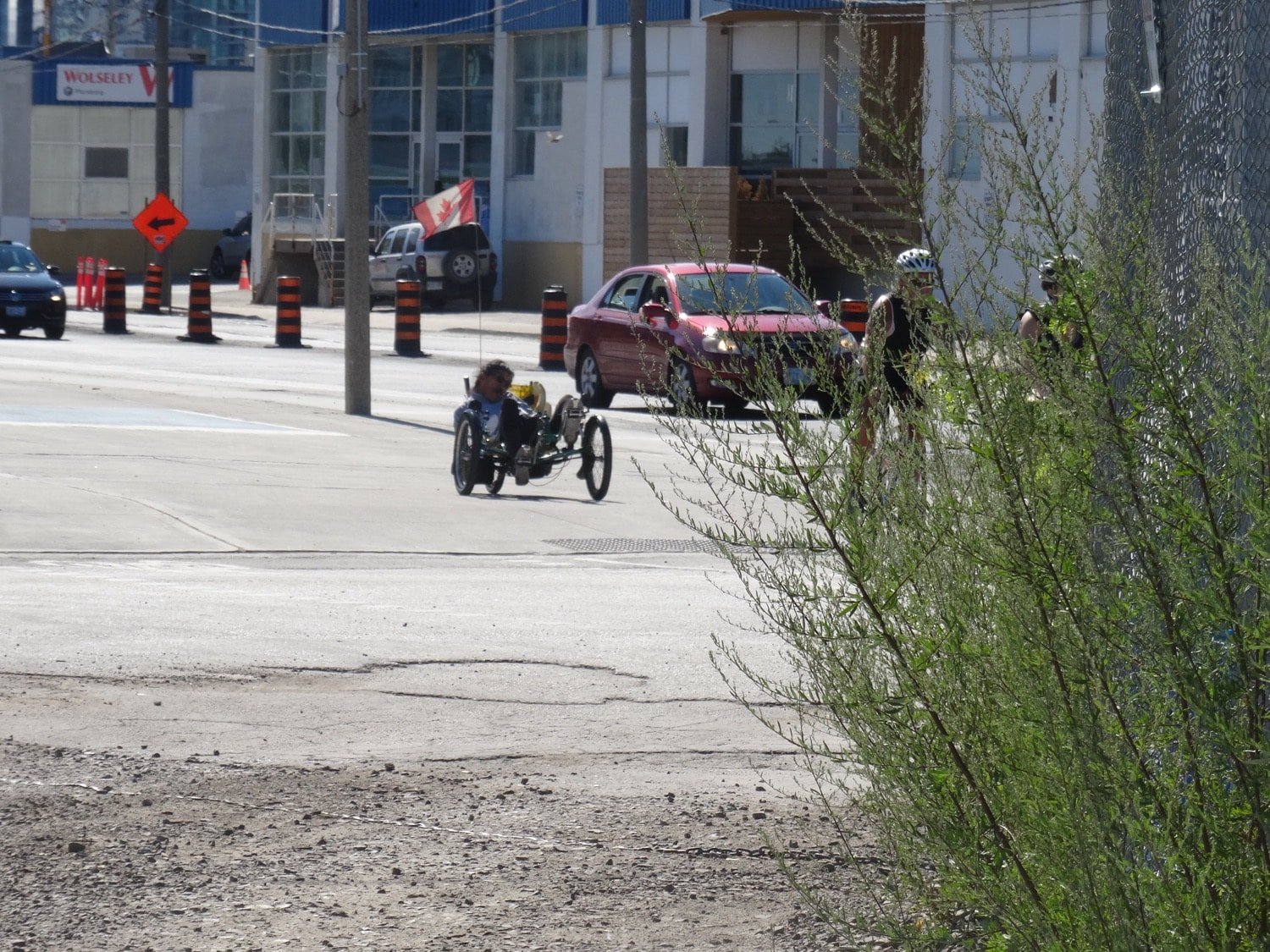
Electric trikes tip over for a simple reason: geometry. A three-wheeler is bought to remove the risk of falling, but a badly designed one introduces a different risk — lifting a wheel and rolling in a turn. Read owner reviews across the category and you will see it reported often enough to count as a design problem, not bad luck.
The good news is that electric trike stability is predictable from a few numbers, which means tip-over is preventable before a single unit is built. This guide covers the physics, the ratio that predicts it, and what to ask a manufacturer before you buy.
Why a trike rolls when a bicycle doesn’t
A bicycle doesn’t roll over in the trike sense — it falls sideways, and the rider stops that by balancing. A trike removes the balancing task, which is the whole point for a rider with reduced balance confidence. But in removing it, the trike takes on a car’s failure mode: with three fixed contact points, cornering force can lift the inside wheel and tip the vehicle over its outer edge.
Think of it as a contest between two forces acting through the centre of gravity: cornering pushes sideways and tries to rotate the trike around the line between its outer wheels, while gravity pulls down and resists. Whether it rolls comes down to one piece of geometry — how high the centre of gravity sits above the ground against how far it sits inboard of the outer wheels.
This is not a bicycle problem and bicycle intuition will not solve it; vehicle safety has a standard measure for it.
The one number that predicts tip-over
Vehicle engineers call it the Static Stability Factor (SSF), and the US National Highway Traffic Safety Administration defines it as track width divided by twice the centre-of-gravity height — T/2H. Read simply, it is the cornering force, in g, that the vehicle can survive before it begins to tip. Higher means safer.
For context from the car world: passenger cars typically sit between roughly 1.3 and 1.5, and taller SUVs between roughly 1.0 and 1.3 — and the difference in real-world rollover rates between those bands is large. The number is driven by exactly two things a designer controls: a wider track or a lower centre of gravity. Both raise the SSF. Everything else in stability engineering is in service of moving those two variables.
Trike research agrees. Design analyses converge on a plain rule of thumb: keep the centre of gravity below half the track width; a non-tilting three-wheeler only approaches four-wheeler rollover resistance when the centre of gravity is low and close to the paired wheels. This is why a stability claim that cannot be expressed as geometry is just decoration.
Where the rider’s weight sits — and why seat height is a safety decision
Here is where seating design stops being a comfort decision and becomes a safety one.
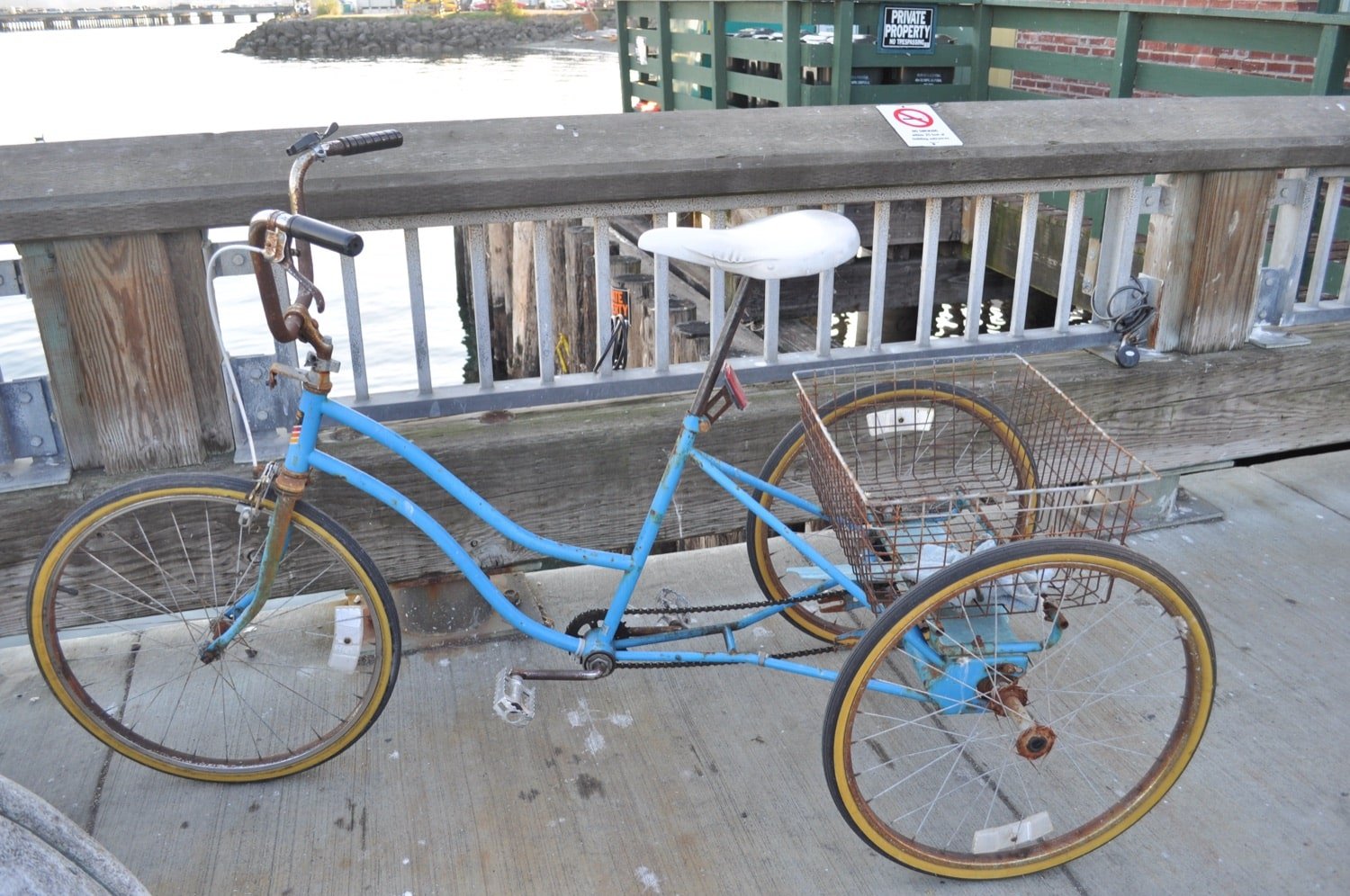
On an upright trike, the rider sits high, and the rider is most of the mass. A tall seat pushes the combined centre of gravity up, shrinking the SSF and bringing the tip-over threshold down into the range of ordinary riding — a brisk turn, a camber change, a swerve.
On a semi-recumbent platform, the rider sits low and reclined, placing that same mass much closer to the ground. The rider is positioned in the vehicle rather than on it, which is the single most effective lever a designer has on centre-of-gravity height, because the rider is the largest movable mass in the system.
That is the structural safety argument for the format, sitting underneath the comfort argument rather than beside it: the same reclined geometry that supports the back also lowers the centre of gravity. Comfort and stability are the same design decision.
Tadpole or delta? What the wheel layout changes
Wheel layout interacts with all of this. A tadpole — two wheels at the front, one at the rear — places the paired stabilising wheels ahead of the rider and generally corners with more composure, because the rider’s mass sits inside a supportive triangle under braking and turning. A delta — one front wheel, two rear — is more familiar and easier to step into, but the single steered front wheel is more prone to unwanted oversteer at speed.
Neither layout is a substitute for the centre-of-gravity-to-track ratio; the ratio dominates, and a good delta beats a bad tadpole. For a low-speed senior platform, the delta’s easy step-through entry is a genuine advantage, and its oversteer tendency rarely surfaces at the speeds this category rides — provided the ratio is correct.
The dangerous moment: braking while turning
Static geometry describes a trike standing still. Riders are not standing still, and the dangerous moment is a combination, not a single input.
The tip-over in real complaints is rarely a steady corner taken too fast; it is braking while turning — arriving at a junction, grabbing the brakes mid-corner, hitting a pothole in a bend. Braking shifts load forward, and in a turn that combines with the sideways cornering force to push the trike toward its tipping line. For a senior rider, who is more likely to brake late and hard precisely because reactions have slowed, this is not an edge case. It is Tuesday.
Two design responses follow, and both are decided before the product exists:
- Brake balance and modulation. Grabby, all-or-nothing braking provokes exactly the forward-and-sideways load transfer that tips a trike. Progressive, balanced braking — and, on heavier electric platforms, hydraulic discs rather than marginal mechanical ones — is a stability feature, not a luxury. The mechanical-disc complaints in owner feedback are describing this failure. Our guide to regenerative braking on e-bikes explains the wider braking picture on electric bikes.
- Käivituskiirus ja abistamise piiramine. Õrn, kiirust piirav eemaldumine, mitte järsk gaasipedaali tõuge, hoiab kolmerattalise stabiilses piirkonnas kahel kõige haavatavamal hetkel: startimisel ja manööverdamisel väikese kiirusega. See on kontrolleri otsus, mis on tehtud püsivaras ja määratud disainis.
Disainimine sõitjale, kes ei suuda end päästa
Iga stabiilsussüsteem autos eeldab juhti, kes reageerib. Iga stabiilsusotsus vanemate trike’i puhul peaks eeldama sõitjat, kes seda ei tee — või ei suuda õigel ajal. See on eeldus, mis eristab sellele turule projekteeritud trike’i üldotstarbelisest trike’ist, mida sinna müüakse.
See muudab ülesannet konkreetselt: trike peab olema stabiilne ilma korrigeeriva keharaskuse nihutamiseta, taluma valesti hinnatud sisenemiskiirust ja pidurdama prognoositavalt tugevast, hilisest sisendist — sest need on sisendid, mida ta saab. Ja ta peab seda kõike tegema täislastis, koos ostukottide, raskema sõitja ja kaldepinnaga, sest olulised on need varud, mis peavad vastu tegelikus kasutuses.
Kui valid mudelite vahel endale või pereliikmele, siis meie juhend parimate e-jalgrataste kohta eakatele sisaldab praktilisi ostukriteeriume, mida see kategooria vajab.
Mida küsida tootjalt (numbreid, mitte omadussõnu)
Elektrilise trike’i stabiilsusvestlus peaks olema konkreetne — ebamäärane rahustamine on hoiatav märk. Kasulikud küsimused:
- Mis on rööpmelaius ja milline on hinnanguline raskuskeskme kõrgus koos sõitjaga?
- Kas disain hoiab raskuskeskme allpool poolt rööpmelaiust, koormatuna?
- Tadpole või delta — ja miks see valik selle kasutusjuhu jaoks?
- Mis on pidurisüsteem ja kuidas see käitub kombineeritud pidurdamise ja pööramise korral?
- Kas kontrolleris on start-kiiruse või abistamiskiiruse piirang?
- Kas platvorm on stabiilsuseks testitud koormatuna — mitte ainult arvutatud?
- Kas tehas saab kohandada rööpmelaiust, istme kõrgust ja sõidukäitumist vastavalt kavandatud sõitja kaalule ja maastikule, või on see fikseeritud kataloogigeomeetria?
Tootja, kes vastab numbritega, projekteerib kasutusjuhu jaoks. See, kes vastab omadussõnadega, müüb sulle üldotstarbelist trike’i ja loodab. Kui võrdled täispikki rattaid pigem kui tegeled tehasega, siis meie kolmerattalise kaubaratta juhendis näitab, milline hea geomeetria praktikas välja näeb.
Korduma kippuvad küsimused
Miks elektrilised trike’id ümber kukuvad?
Sest jäik kolmerattaline alus võtab üle auto ümbermineku rikkeviisi: pöördes võib külgjõud läbi kõrge raskuskeskme tõsta sisemise ratta. Seda juhitakse rööpmelaiuse ja raskuskeskme kõrguse suhtega ning see on kõige tõenäolisem, kui pidurdamine ja pööramine kombineeruvad.
Mis teeb ühe elektrilise trike’i stabiilsemaks kui teise?
Peamiselt rööpmelaiuse ja raskuskeskme kõrguse suhe, väljendatuna staatilise stabiilsustegurina (T/2H). Laiem rööpmelaius ja madalam raskuskese mõlemad tõstavad seda. Istme kõrgus on tohutult oluline, sest sõitja on suurim liikuv mass; madal, lamav iste alandab raskuskeskme ja tõstab stabiilsust.
Kas pool-lamavad trike’id on stabiilsemad kui püstised?
Struktuurilt jah — madal istumisasend paigutab sõitja massi maapinnale lähemale, alandades kombineeritud raskuskeset ja parandades ümberminekukindlust. Rataste paigutus ja rööpmelaius on siiski olulised ning need tuleb igal juhul õigesti projekteerida.
Kas tadpole- või delta-trikk on ohutum?
Tadpole-paigutused (kaks ratast ees) kurvis üldiselt stabiilsemalt ja paigutavad sõitja massi pidurdamisel toetava kolmnurga sisse. Delta-paigutused (kaks ratast taga) on kergemini sisenetavad, kuid kiirusel kalduvad rohkem ülejuhtimisele. Kumbki ei kaalu üle raskuskeskme ja rööpmelaiuse suhet, mis on domineeriv tegur — hästi projekteeritud delta ületab halvasti projekteeritud tadpole’i.
Mida peaksin tootjalt stabiilsuse kohta küsima?
Küsi numbreid: rööpmelaius, hinnanguline koormatud raskuskeskme kõrgus, kas disain hoiab raskuskeskme koormatuna alla poole rööpmelaiusest, pidurisüsteemi käitumine kombineeritud pidurdamisel ja pööramisel, kas kontroller piirab stardikiirust ning kas stabiilsus on valideeritud koormatud testimisega, mitte ainult arvutusega.
Viited
- NHTSA — Ümberminekukindluse hindamise metoodika (staatiline stabiilsustegur)
- IRJET — Triki disaini analüüs: stabiilsus ja raskuskese
- JETIR — Kolmerattalise sõiduki dünaamika pidurdamisel ja pööramisel
- United Mobility — Elektrilise triki stabiilsustehnika: ümbermineku projekteerimine välja
- United Mobility — Pool-lamav vs püstine elektriline trikk: USA sõiduulatuse ehitamine