
 PT
PT  EN
EN  DE
DE  NL
NL  IT
IT  FR
FR  ES
ES  DA
DA  SV
SV  FI
FI  CS
CS  EL
EL  HU
HU  ET
ET  BG
BG  PL
PL  JA
JA  KO
KO If your cargo bike starts sounding rough, shifting poorly, or feeling inefficient under load, the drivetrain is usually the first place to look.
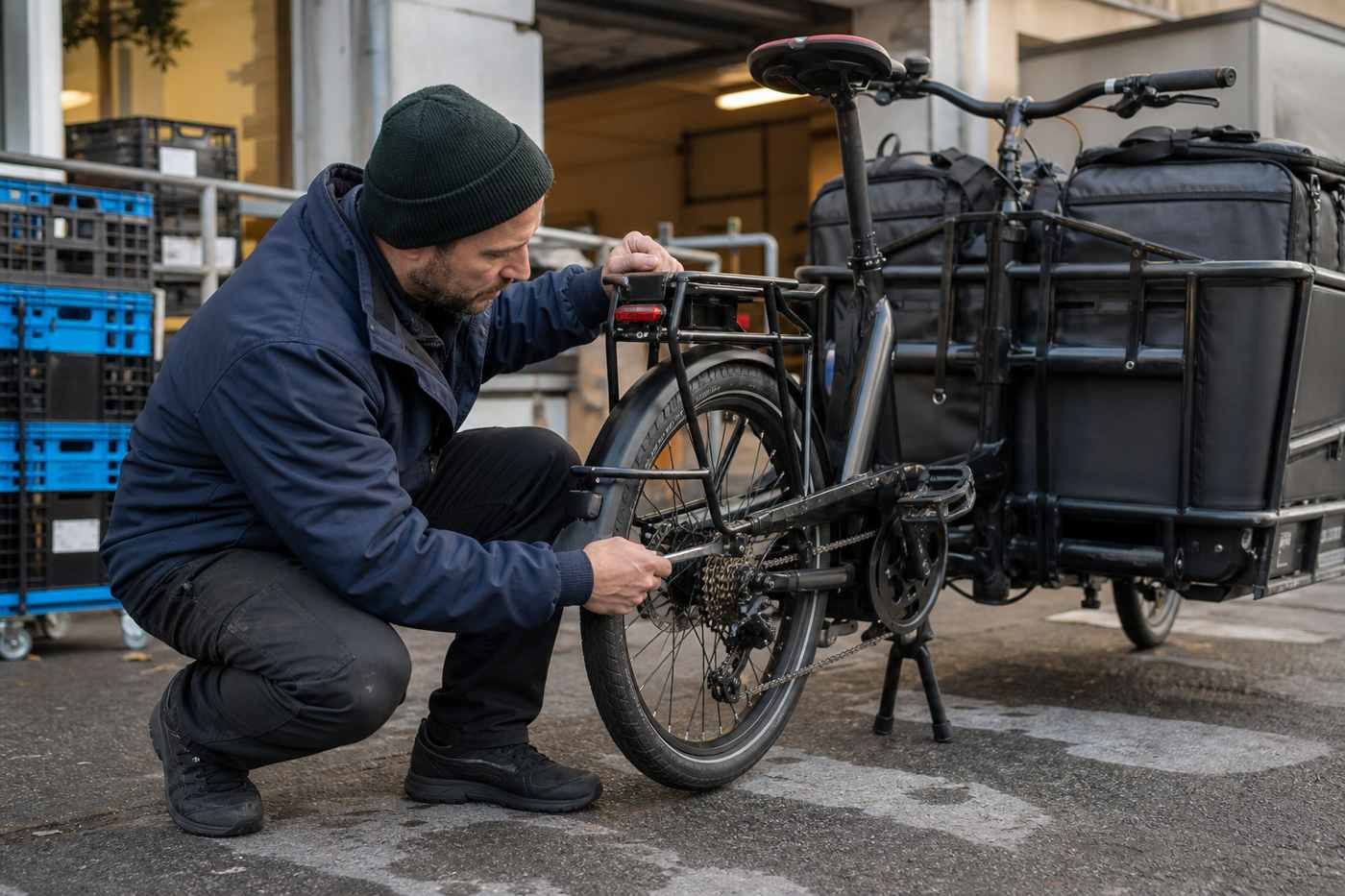
Ignoring it gets expensive quickly. A dry or overstretched chain does not just create noise. It accelerates cassette wear, weakens shifting under load, reduces rider confidence, and can turn a low-cost service routine into a much larger replacement bill. On a cargo bike, that risk is higher because heavier loads, stop-start riding, hills, and weather exposure punish the drivetrain harder than on a light commuter bike.
The short answer is this: clean and relubricate the chain regularly, check wear and tension before they become symptoms on the road, and replace the chain early enough that it does not destroy the rest of the drivetrain. The right maintenance interval depends less on the calendar alone and more on payload, road grime, weather, and how critical route reliability is for the bike's real job.
Why Drivetrain Care Matters More on Cargo Bikes
Cargo bikes ask more from the chain than ordinary city bikes do.
That is true because the drivetrain often has to handle:
- heavier system weight
- frequent starts from low speed
- repeated hill climbing under cargo load
- longer daily operating hours
- more severe consequences when shifting or drive efficiency deteriorates
On a leisure bike, a neglected chain might mean an annoying ride. On a cargo bike, it can mean missed deliveries, slower school runs, rider fatigue, and extra workshop time that could have been avoided with simple preventive maintenance.
Drivetrain care also affects the customer's impression of the whole bike. Riders often describe a worn chain or dirty cassette as "weak motor" or "bad battery" because the bike feels slower and harsher under load. That is why drivetrain hygiene is not just a maintenance detail. It is part of product performance.
What the Drivetrain Actually Needs
Most cargo-bike drivetrain problems come from three failures in sequence:
- contamination builds up
- lubrication quality drops
- wear continues until tension, shifting quality, and component life all get worse together
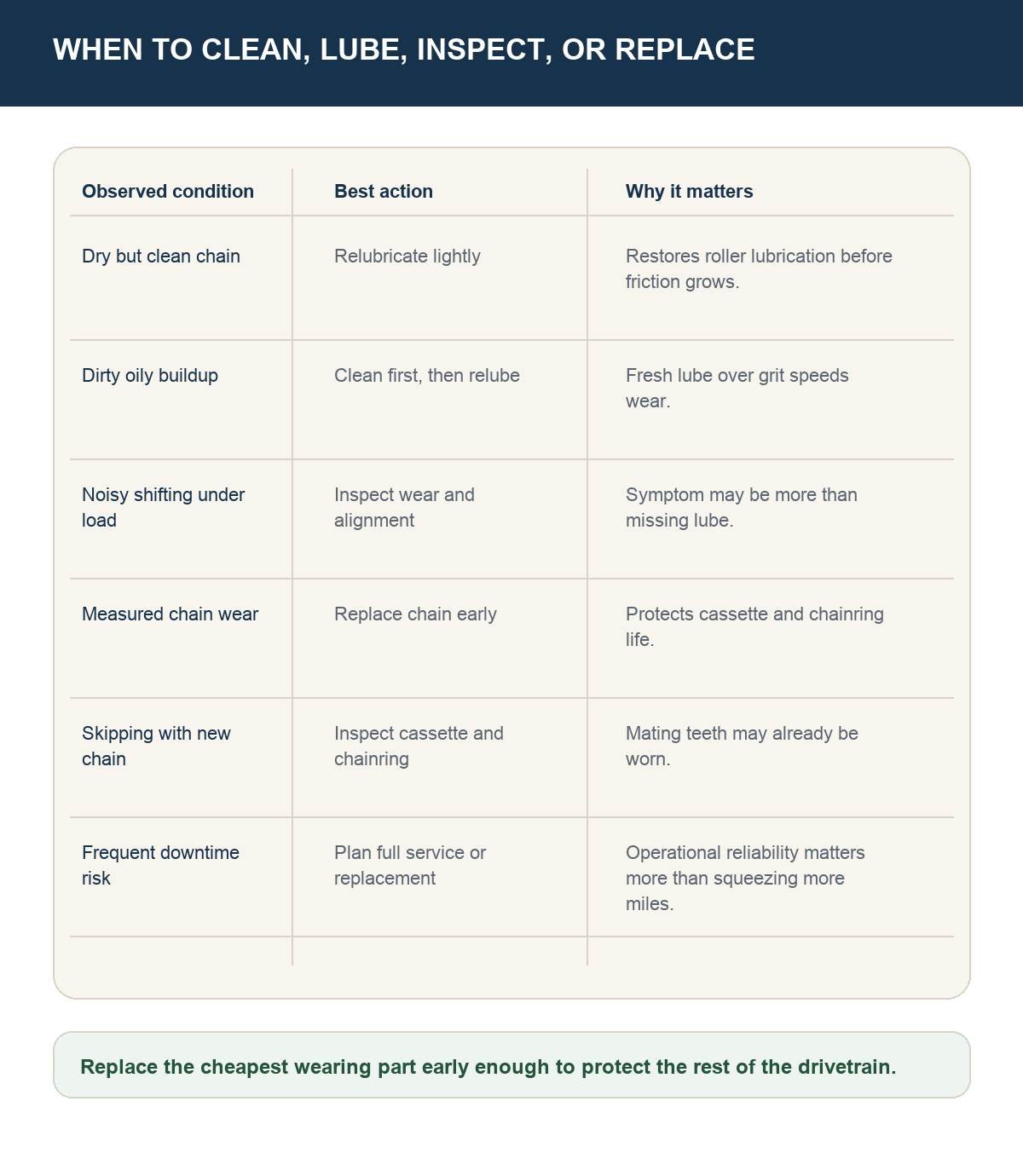
The solution is not to pour on more lube whenever the chain squeaks. Good care means doing the right task at the right moment:
- remove grit before it acts like grinding paste
- use the right amount of lubricant for the riding environment
- inspect chain wear before cassette and chainring wear become linked costs
- check alignment and tension whenever shifting or chain retention feels worse
How Often Should You Lubricate a Cargo Bike Chain?
There is no single universal interval, but there is a practical operating pattern.
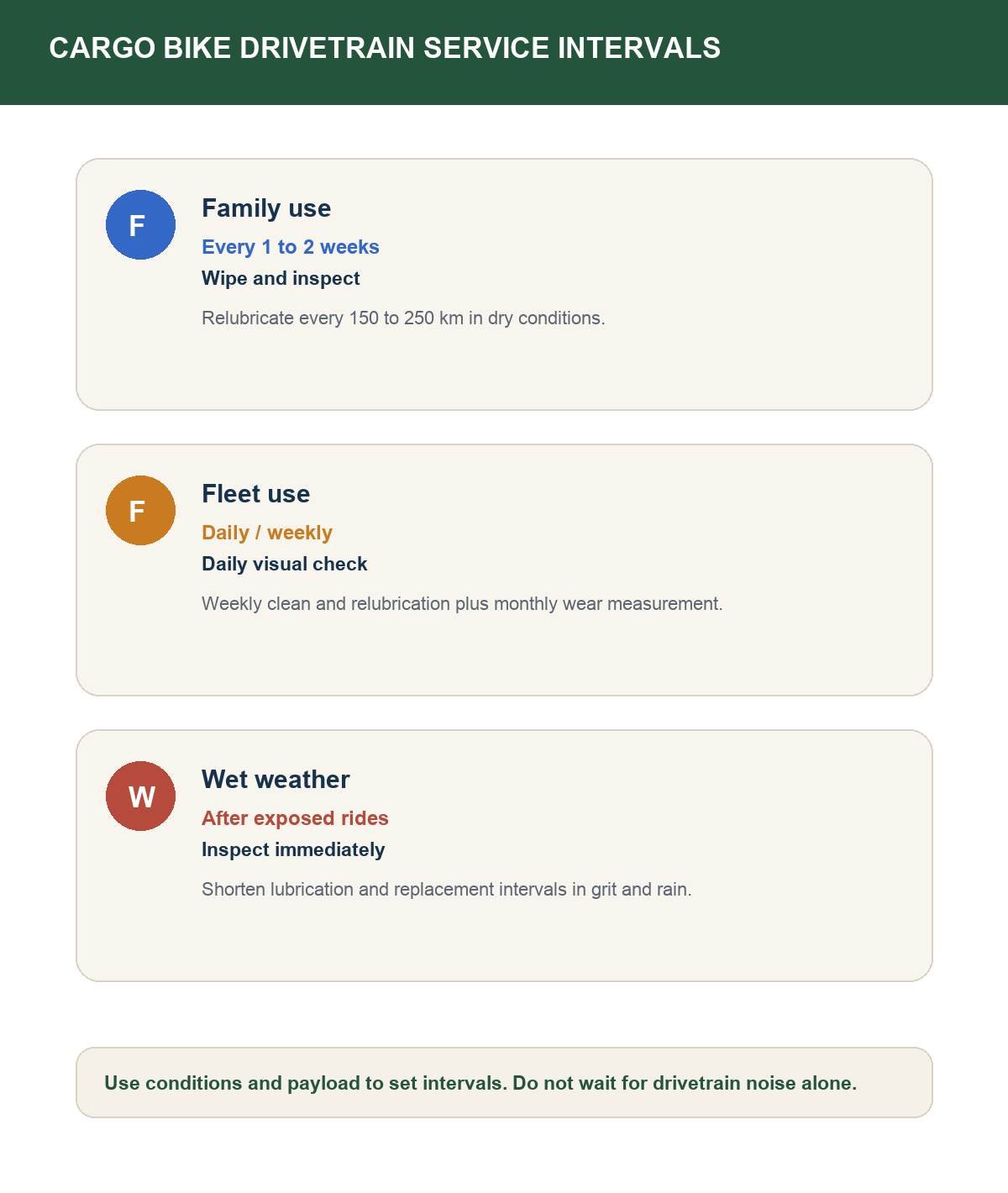
For family and light utility riding
- wipe and inspect the chain every 1 to 2 weeks
- relubricate roughly every 150 to 250 km in dry conditions
- relubricate sooner after wet rides, road salt, or dusty use
For delivery, rental, or fleet use
- quick visual check before each operating day
- wipe and relubricate every 80 to 150 km in mixed urban conditions
- perform a deeper clean on a fixed weekly schedule
For wet, dirty, or winter conditions
- inspect after every exposed ride
- relubricate as soon as the chain looks dry, noisy, or contaminated
- shorten replacement planning because grit and moisture accelerate wear across the whole drivetrain
If the team wants one simple rule, use this one: lubricate by operating conditions, not by guesswork. A cargo bike that carries weight daily through wet city streets will need attention much sooner than a lightly used family bike that stays indoors and rides only in dry weather.
How to Clean and Lubricate the Chain Properly
Step 1: Start with the chain you actually have
Before cleaning, confirm whether the bike uses:
- derailleur gears
- internal gears with chain drive
- belt drive instead of chain drive
This article is about chain-driven cargo bikes. If the bike uses a belt, the maintenance logic is different and over-lubricating would be the wrong move.
Step 2: Remove surface grime first
Use a rag to wipe the outer chain plates before adding fresh lubricant.
If the chain is heavily contaminated:
- use a chain cleaner or drivetrain-safe degreaser
- clean the jockey wheels, cassette teeth, and chainring at the same time
- let the drivetrain dry before relubrication
Adding fresh lube onto dirty grit usually makes the system worse.
Step 3: Apply lubricant to the rollers, not the whole bike
Rotate the pedals backward and apply a small amount of lube to the inside of the chain so it reaches the rollers and pins.
Then:
- let the lubricant settle for several minutes
- wipe off the excess from the outer plates
- avoid leaving a wet oily surface that will immediately attract dirt
More lube is not better. Correctly placed lubricant is better.
Step 4: Match the lubricant to the operating environment
- dry lube is cleaner in dry conditions but may need more frequent reapplication
- wet lube lasts longer in rain and road spray but attracts more grime if overused
- all-purpose lube is acceptable when the bike sees mixed use and the workshop wants one standard process
The correct choice depends on where the bike rides, how much cleaning discipline exists, and whether uptime or appearance matters more.
How to Check Chain Wear and Tension
Lubrication alone is not enough. A clean but worn chain still damages the drivetrain.
Desgaste da corrente
Use a chain wear gauge if possible. On higher-load cargo-bike use, do not wait until wear is obvious by eye.
Practical signs that inspection is overdue:
- shifting gets slower or harsher
- the chain skips under load
- the drivetrain gets noisier soon after lubrication
- cassette teeth begin looking hooked or sharpened
Replacing the chain at the right wear point is usually the cheapest decision because it helps preserve the cassette and chainring.
Chain tension
Chain tension matters most on setups without a rear derailleur taking up slack, but even derailleur bikes need attention when chain length, alignment, or clutch performance becomes questionable.
Check for:
- excessive slack or slap on rough roads
- chain drop under load
- inconsistent shifting across gears
- visible derailleur strain or poor chain line
If tension looks wrong, do not solve everything by tightening blindly. Confirm whether the issue is wear, misadjustment, bent components, or poor chain length.
Replacement Schedule: Chain First, Then the Rest if Needed
The most economical replacement schedule usually starts with the chain, not the cassette.
That is because:
- chains wear faster than cassettes
- a worn chain accelerates wear on mating teeth
- late chain replacement often forces a full drivetrain refresh
A practical rule for cargo-bike operators is:
- measure chain wear on a schedule
- replace the chain at the wear threshold recommended for that drivetrain type
- inspect cassette and chainring condition at the same time
- replace multiple parts together only when shifting performance or tooth wear justifies it
For heavier commercial use, mileage-based tracking is worth it. For family use, condition-based checks are usually enough, provided they happen consistently.
What This Means for Users
Family riders
Good drivetrain care makes the bike quieter, smoother, and more predictable with children or cargo onboard.
The user impact is practical:
- less effort starting from junctions
- more confident hill starts
- fewer dirty-trouser or chain-drop surprises
- lower risk of a ride being cut short by preventable mechanical issues
For families, drivetrain reliability is really about trust in the bike.
Operadores de frotas
For fleets, drivetrain care is a cost-control system.
It reduces:
- emergency repairs
- rider complaints about "weak assist"
- avoidable cassette and chainring replacement
- downtime caused by neglected daily-use bikes
One missed maintenance cycle across a fleet often turns into many repeated complaints because the same route conditions create the same wear pattern across bikes.
Dealers and OEM teams
For dealers, a quiet well-maintained drivetrain protects the customer's perception of quality. For OEM and after-sales teams, it lowers false diagnosis of motor or battery issues that are really friction and wear problems.
Real-World Maintenance Logic: What Different Operators Should Actually Do
Home user with one family cargo bike
Use a simple routine:
- wipe and inspect weekly
- relubricate after wet rides or every few dry weeks
- measure chain wear periodically
- replace early rather than waiting for noisy skipping
This keeps cost low without over-maintaining the bike.
Small delivery business
Use a scheduled maintenance sheet:
- daily visual check
- weekly clean and relubrication
- monthly wear measurement
- immediate inspection after heavy rain, winter grit, or rider complaints
This works because the cost of downtime is usually higher than the cost of preventive service.
Dealer service department
Standardize the check-in process:
- inspect chain contamination
- measure wear
- check shifting under load
- confirm whether the cassette still matches the new chain
That makes service recommendations easier to explain and easier to price.
Common Mistakes That Shorten Drivetrain Life
- over-lubricating and leaving excess oil on the chain
- lubricating without cleaning first
- ignoring wear until the cassette is already damaged
- using one fixed interval regardless of weather and load
- assuming a noisy drivetrain is an electrical problem
- delaying inspection after winter storage or wet-season riding
If the bike has also been parked for long periods, Regen's guide on how to store your electric cargo bike for winter is relevant because storage neglect often shows up later as corrosion, stiff links, and poor first-ride performance.
How Drivetrain Care Connects to Overall Bike Performance
Drivetrain condition affects more than chain life. It changes how the whole bike feels and how riders interpret other systems.
A dirty, worn drivetrain can make riders think:
- the motor feels weaker
- range seems worse than usual
- the bike rolls slower than expected
- the dashboard estimate is inaccurate
That is why drivetrain care should sit alongside broader maintenance checks. Regen's article on signs your e-cargo bike battery is degrading helps separate true battery aging from efficiency losses, while the dashboard guide on what the numbers on your e-bike dashboard really mean helps riders interpret assist and battery behaviour more accurately.
When Replacement Is the Better Decision Than More Maintenance
Keep maintaining the drivetrain when the parts are dirty but structurally sound.
Replace parts sooner when:
- chain wear is already beyond the service threshold
- the cassette no longer shifts cleanly with a fresh chain
- teeth are visibly worn
- the cost of repeated adjustment is higher than planned replacement
- route reliability matters more than squeezing a few more weeks from old parts
The right decision is not "replace everything early" or "run everything until failure." It is to replace the cheapest wearing part early enough that the rest of the system stays efficient, quiet, and dependable.
Conclusão
Cargo bike chain and drivetrain care is not complicated, but it does need discipline. Clean before lubricating, lubricate for the conditions, measure wear before it becomes damage, and plan replacement around route reliability rather than wishful thinking. That is the maintenance logic that keeps both family cargo bikes and commercial fleets working smoothly.