
 ES
ES  EN
EN  DE
DE  NL
NL  IT
IT  FR
FR  PT
PT  DA
DA  SV
SV  FI
FI  CS
CS  EL
EL  HU
HU  ET
ET  BG
BG  PL
PL  JA
JA  KO
KO Si tu bicicleta de carga eléctrica empieza a completar menos entregas, pierde asistencia antes en los trayectos escolares o baja las barras de batería mucho más rápido de lo habitual, la pregunta suele ser simple: ¿la batería realmente se está degradando, o algo más está causando el problema?
Esa confusión se vuelve costosa rápidemente. Los ciclistas a menudo reemplazan una batería demasiado pronto cuando el problema real es la presión de los neumáticos, el clima frío, la carga útil, los hábitos de carga o la resistencia de la transmisión. Con la misma frecuencia, siguen empujando una batería envejecida que ahora genera tiempo de inactividad, autonomía impredecible y un aumento en el trabajo de servicio. En una bicicleta de carga, eso importa más porque la batería soporta cargas más pesadas, aceleraciones y paradas repetidas, y casos de uso donde la fiabilidad importa más que en una e-bike ligera de ocio.
La respuesta corta es esta: una batería que se degrada generalmente se manifiesta como un patrón, no como un solo viaje malo. Si la autonomía disminuye de manera constante en condiciones similares, la bicicleta muestra una pérdida de potencia más fuerte bajo carga, el comportamiento de carga cambia o la batería se corta antes de lo esperado, debes tratar eso como un problema de salud de la batería y diagnosticarlo sistemáticamente. El reemplazo se convierte en la decisión correcta cuando la batería ya no soporta la ruta, la carga útil o el estándar de tiempo de actividad para el que se compró la bicicleta.
Por Qué la Degradación de la Batería Importa Más en las Bicicletas de Carga Eléctricas
Todas las baterías de iones de litio envejecen. La pregunta real no es si el envejecimiento existe, sino si el rendimiento restante de la batería aún se ajusta al trabajo.
Ese trabajo es más difícil en una bicicleta de carga eléctrica porque la bicicleta típicamente tiene:
- mayor peso total
- arranques con carga más frecuentes
- horas de trabajo más largas por día
- mayor dependencia de una asistencia predecible
- consecuencias más graves cuando la autonomía se queda corta
En una e-bike urbana ligera, la degradación de la batería puede sentirse como una molestia. En una bicicleta de carga, puede significar una ventana de entrega perdida, un viaje familiar incompleto o un ciclista que elige soluciones inseguras porque la asistencia se desvanece a mitad de una ruta cargada.
El envejecimiento de la batería también crea confusión evitable en el soporte postventa. Los clientes pueden reportar un motor débil, mal rendimiento en subidas o un tablero poco confiable cuando el problema real es la disminución de la capacidad útil de la batería. Para concesionarios, equipos OEM y gestores de flotas, poder separar el envejecimiento de la batería de problemas de configuración o uso es parte de controlar el costo de garantía y la precisión del servicio.
Cómo Se Ve Realmente la Degradación de la Batería
La degradación de la batería no es solo "la batería se siente peor"."
En uso práctico, la degradación generalmente significa una o ambas de estas cosas:
- el paquete almacena menos energía útil que antes
- el paquete lucha más bajo carga, especialmente durante aceleraciones, subidas o operación con carga pesada
Por eso los ciclistas no deberían juzgar la salud de la batería por un solo cambio en las barras del tablero. Una batería saludable aún puede mostrar caídas temporales en clima frío, durante subidas empinadas o cuando la bicicleta está muy cargada. La degradación real aparece cuando la batería rinde por debajo de lo esperado repetidamente en condiciones comparables.
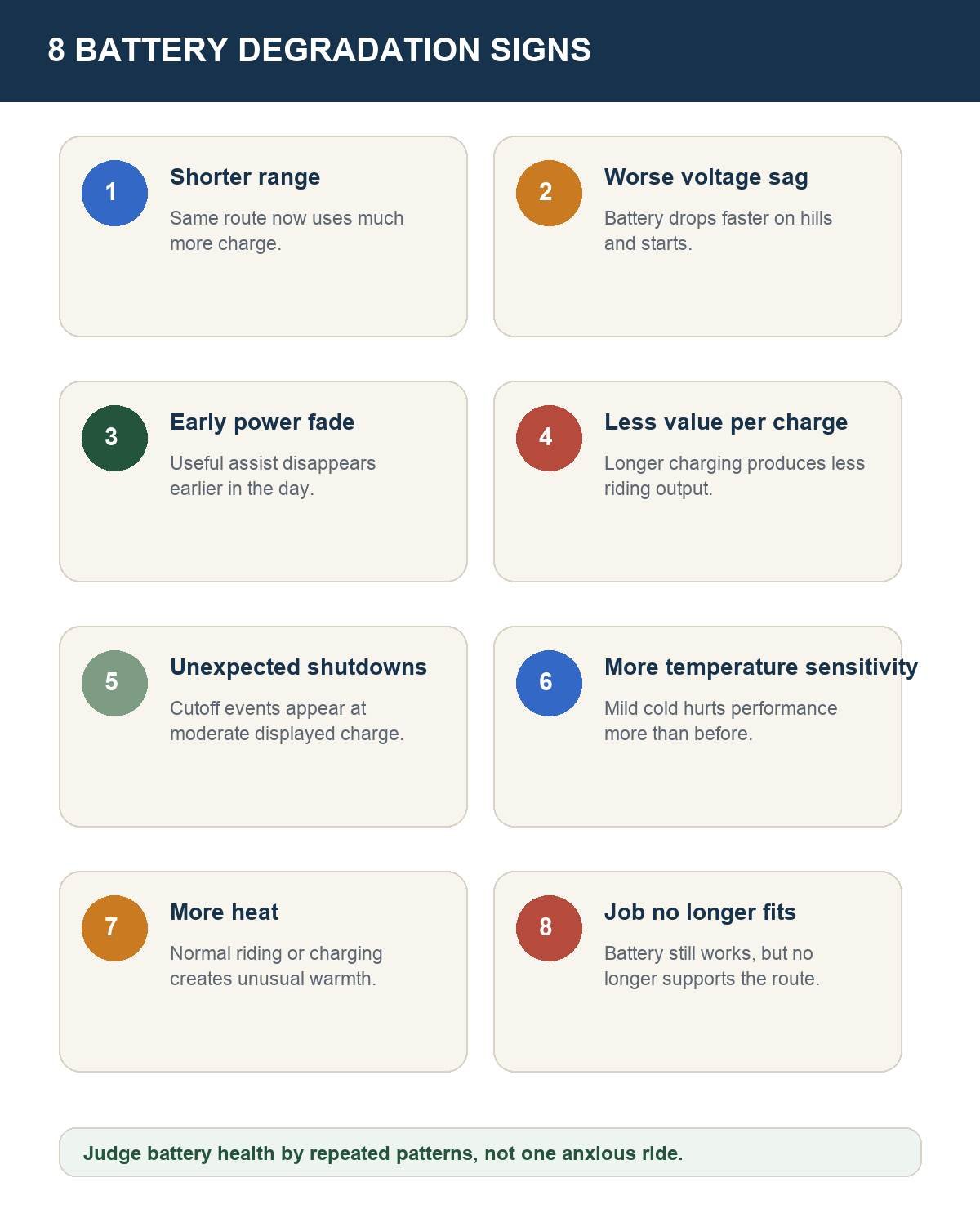
8 señales de que la batería de tu bicicleta de carga eléctrica se está degradando
La autonomía real sigue reduciéndose en condiciones similares
Esta es la señal más importante.
Si la ruta, el modo de asistencia, el comportamiento del ciclista, el clima y la carga útil son en general similares, pero la bicicleta ahora cubre materialmente menos distancia antes de recargar, el envejecimiento de la batería se convierte en un sospechoso serio.
Lo que importa no es un viaje excepcional. Lo que importa es un patrón repetido a lo largo de varios viajes.
Prueba práctica:
- Compara de tres a cinco viajes similares.
- Registra la carga inicial, la carga final, la distancia de la ruta, la carga aproximada y la temperatura exterior.
- Busca una disminución constante en lugar de una caída puntual.
Si la autonomía se reduce de manera constante mientras el uso sigue siendo en general comparable, la batería probablemente está perdiendo capacidad útil.
El porcentaje o las barras de la batería caen más rápido bajo carga pesada de lo que solían hacerlo
Las bicicletas de carga naturalmente estresan más la batería que las e-bikes ligeras. Algo de caída de voltaje temporal es normal. Pero cuando un paquete envejece, la caída durante aceleraciones o subidas a menudo se vuelve más pronunciada y frecuente.
Queja típica del ciclista:
- la bicicleta comienza una subida al 60 por ciento
- la pantalla cae repentinamente mucho más bajo bajo carga
- la asistencia se siente más débil antes de que la batería se recupere ligeramente en terreno plano
Si ese comportamiento empeora con el tiempo en clima templado y en rutas conocidas, a menudo apunta a una mayor resistencia interna y un rendimiento más débil bajo carga.
La bicicleta alcanza el modo de baja potencia mucho antes en el día
Muchos ciclistas no notan la pérdida de capacidad primero. Notan que la bicicleta se vuelve menos útil antes de estar completamente vacía.
Ejemplos:
- la asistencia se siente suave mucho antes en un turno de entregas
- el último tramo del trayecto escolar se siente lento en comparación con meses anteriores
- el ciclista comienza a evitar subidas o modos de asistencia más altos para conservar suficiente carga
Esto importa porque una batería puede técnicamente "funcionar" mientras ya está fallando en el caso de uso práctico.
La carga tarda más pero ofrece menos tiempo de conducción útil
Las baterías envejecidas a menudo crean la sensación frustrante de que la bicicleta pasa un tiempo normal o más largo en el cargador pero devuelve menos rendimiento en el mundo real.
Eso puede manifestarse como:
- carga frecuente para el mismo kilometraje semanal
- una carga completa que ya no soporta la ruta habitual
- una finalización de carga que se ve normal en el cargador pero no en la conducción real
Si el cargador y la rutina de carga no han cambiado, pero la utilidad de cada carga completa sigue disminuyendo, el problema suele ser la salud de la batería y no la percepción del ciclista.
La batería se corta o se apaga inesperadamente con una carga moderada en el display
Esta es una señal más grave.
Si la bici se apaga, pierde asistencia o activa la protección de la batería mientras el display todavía indica que queda carga significativa, la batería puede que ya no mantenga el voltaje de forma estable bajo carga real.
Eso no siempre significa que el pack en sí sea la única causa. Los contactos, el cableado o los problemas del controlador también pueden contribuir. Pero los eventos repetidos de corte inesperado nunca deben descartarse como envejecimiento normal de la batería. Requieren diagnóstico porque afectan directamente la confianza del ciclista y la fiabilidad de la ruta.
El rendimiento cambia mucho más con la temperatura que antes
El clima frío siempre reduce el rendimiento de la batería. El problema es cuando la batería se vuelve excesivamente sensible incluso en condiciones que la bici manejaba bien anteriormente.
Las señales incluyen:
- caída de autonomía inusual en clima fresco suave
- pérdida mayor de lo normal después de que la bici pase la noche parada
- comportamiento de la batería que ya no se estabiliza una vez que comienza el trayecto
Si los cambios de temperatura producen resultados mucho peores que antes, el envejecimiento puede estar reduciendo el margen operativo útil de la batería.
La batería se calienta más durante el uso normal o la carga
El calor es una señal de advertencia porque sugiere un estrés creciente dentro del sistema.
Algo de calor puede ser normal después de un uso intenso o de la carga, especialmente en baterías grandes de bicicletas de carga. Pero si el pack se calienta notablemente más en condiciones ordinarias que antes, o si la carga ahora se siente anormalmente caliente, eso merece una inspección.
Esto es especialmente importante para las flotas porque los ciclistas rara vez reportan "un poco más caliente de lo habitual" hasta que un pack ya se ha convertido en un problema de fiabilidad.
La batería está sana solo en el papel porque la ruta ha cambiado a su alrededor
Esta es la señal de la realidad empresarial más que la señal de laboratorio.
A veces la batería todavía funciona, pero la operación ha cambiado:
- las entregas son más largas
- las cargas son más pesadas
- los ciclistas ahora necesitan más reserva para los viajes de vuelta
- los usuarios familiares necesitan confianza durante todo el año con niños a bordo
En ese caso, la batería puede que no haya fallado técnicamente, pero está degradada comercialmente en relación con el trabajo. Eso igual hace racional el reemplazo.
Qué revisar antes de culpar a la batería
Muchos problemas aparentes de la batería son en realidad problemas de eficiencia del sistema.
Antes de concluir que el pack se está degradando, revisa primero esto:
- presión de neumáticos demasiado baja para la carga
- frenos que arrastran
- partes de la transmisión sucias o secas
- carga inusualmente pesada
- uso repetido del modo de asistencia máxima
- clima más frío de lo habitual
- problemas del cargador o hábitos de carga incompletos
- malentendido del dashboard
El artículo de Regen guía sobre qué significan los números del dashboard de una e-bike ayuda a los ciclistas a interpretar las lecturas de la batería con más precisión, mientras que la guía de mantenimiento del motor y la batería es útil para separar problemas operativos prevenibles del envejecimiento real de los componentes.
Si estos aspectos básicos están mal, una buena batería puede parecer mala.
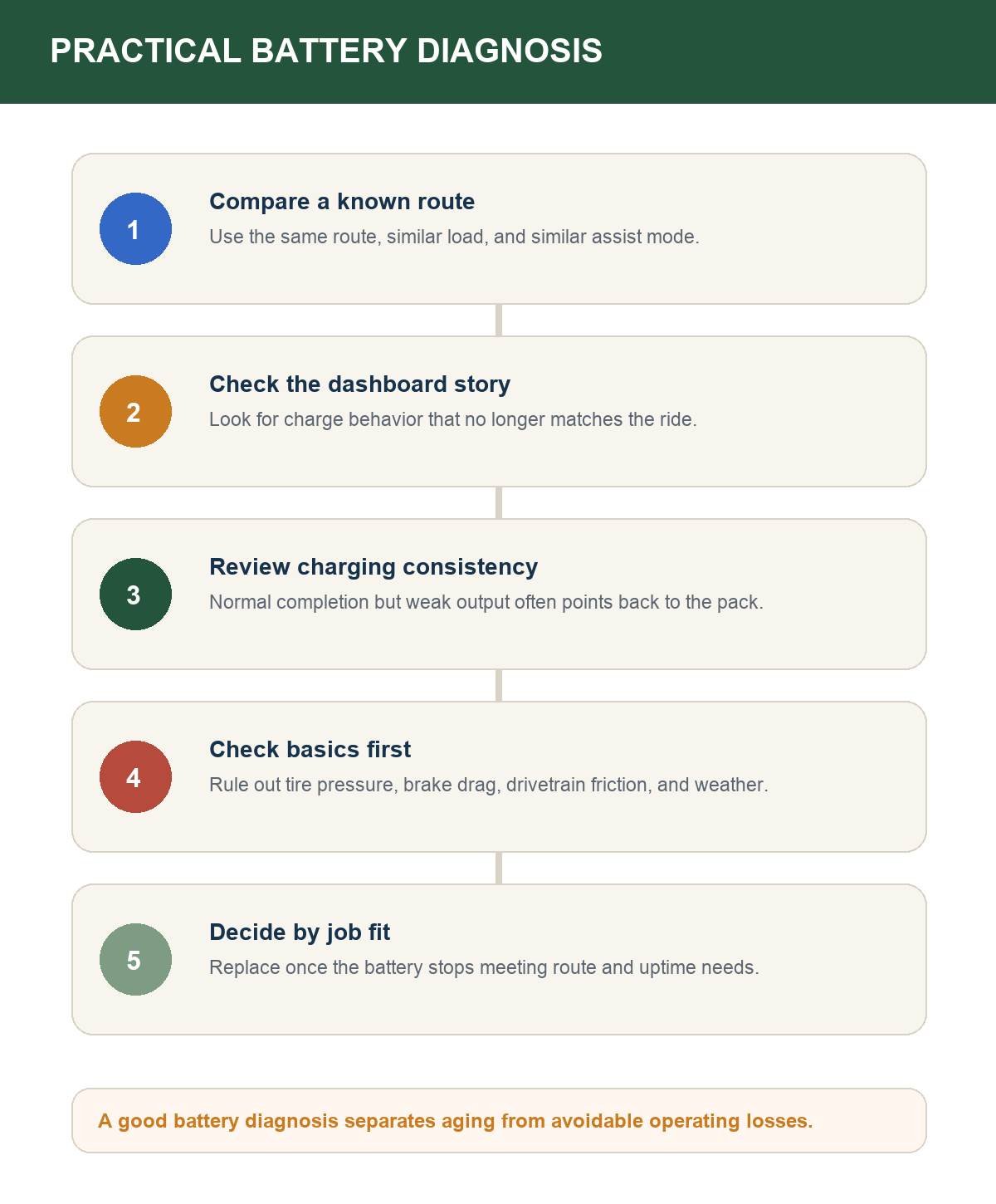
Cómo diagnosticar la salud de la batería de forma práctica
El diagnóstico de la batería debería ser lo suficientemente simple como para realizarlo en el campo, no solo en un taller.
Paso 1: Construir una comparación en la misma ruta
Usa una ruta que el ciclista conozca bien. Mantén estas variables lo más estables posible:
- carga similar
- nivel de asistencia similar
- franja climática similar
- ciclista similar
- carga inicial similar
Si la bici ahora consume significativamente más batería en esa misma ruta que antes, la señal es más fuerte.
Paso 2: Comparar la batería con la historia del dashboard
Pregunte si el comportamiento de carga mostrado coincide con el recorrido.
Ejemplos de discrepancia:
- caída rápida temprana seguida de recuperación inestable
- estimación de autonomía restante que se desploma demasiado rápido
- carga mostrada moderada con asistencia real débil
Cuando el relato de la pantalla y el relato real de conducción divergen repetidamente, se justifica una inspección más profunda.
Paso 3: Verificar la consistencia de carga
Busque:
- si el cargador alcanza la finalización normal
- si el tiempo de carga ha cambiado materialmente
- si la batería comienza llena pero rinde como si estuviera parcialmente cargada
Esto ayuda a distinguir el envejecimiento de la batería de problemas del cargador o de contacto.
Paso 4: Revisar la edad, la intensidad de ciclos y el historial de almacenamiento
Las baterías envejecen con el tiempo y el uso.
Los factores de riesgo incluyen:
- descarga profunda frecuente
- almacenamiento prolongado con carga muy alta o muy baja
- exposición repetida al calor
- largos periodos sin uso sin las comprobaciones de almacenamiento adecuadas
- ciclos comerciales de servicio pesado
El artículo reciente de Regen sobre almacenamiento invernal en Cómo guardar tu bicicleta de carga eléctrica para el invierno. importa aquí porque un mal almacenamiento fuera de temporada a menudo acelera las quejas que los ciclistas después describen como fallo repentino de la batería.
Paso 5: Decidir según la aptitud operativa, no la esperanza
Este es el paso que muchos propietarios omiten.
Si la batería ahora genera ansiedad de ruta, cambia cómo se puede programar la bicicleta o aumenta las interrupciones del servicio, ya es un problema comercial incluso si el paquete todavía enciende.
Qué impacto tiene una batería en degradación en los usuarios
Ciclistas familiares
La degradación de la batería cambia cuán segura y confiable se siente la bicicleta.
El problema no es solo la autonomía. Es la confianza:
- ¿Puede la bicicleta completar el viaje de ida y vuelta con niños a bordo?
- ¿Puede el ciclista tomar un desvío sin ansiedad?
- ¿Se mantendrá constante la asistencia al arrancar en subida en un cruce?
Para las familias, la incertidumbre de la batería se convierte rápidamente en una barrera de uso.
Operadores de flotas
Para las flotas, una batería en degradación es un problema de tiempo de actividad antes de ser un problema de piezas.
Afecta:
- planificación de rutas
- requisitos de bicicletas de repuesto
- productividad del ciclista
- volumen de quejas
- programación del servicio
Si una batería causa una interrupción adicional por semana en varias bicicletas, el costo operativo a menudo supera el costo de una planificación de reemplazo estructurada.
Concesionarios, OEM y compradores ODM
La orientación sobre la salud de la batería afecta directamente la satisfacción del cliente y la presión de garantía falsa.
Si los equipos no enseñan a los clientes cómo aparece realmente la degradación, reciben quejas vagas como:
- la bicicleta se siente débil
- la batería se agota demasiado rápido
- la autonomía ahora es mala
- el motor no tira como antes
Una lógica de diagnóstico clara reduce el reemplazo innecesario, pero también evita que los equipos dejen una batería realmente desgastada en servicio demasiado tiempo.
Lógica de decisión del mundo real: ¿Reparar, reutilizar o reemplazar?
La respuesta correcta depende del caso de uso.
| Escenario | Mejor lógica de decisión | Por qué |
|---|---|---|
| Bicicleta familiar para el trayecto escolar | Reemplazar antes si la confianza en la autonomía cae de forma significativa | La fiabilidad importa más que exprimir los últimos meses de la batería |
| Bicicleta de flota de reparto | Reemplazar cuando el coste de la interrupción de la ruta supera el coste de reemplazo | El tiempo de inactividad y la inconsistencia del ciclista se agravan rápidamente |
| Bicicleta de demostración del distribuidor | Reemplazar si un rendimiento débil podría distorsionar una prueba de venta | Una batería agotada hace que todo el producto se sienta peor |
| Bicicleta utilitaria de temporada | Volver a probar tras corregir problemas de almacenamiento, neumáticos y frenos | Algunos "problemas de batería" son en realidad problemas de negligencia |
| Muestra de OEM o flota piloto | Registrar formalmente el comportamiento de la batería antes del reemplazo | Los datos ayudan a distinguir problemas de diseño del producto del envejecimiento normal |
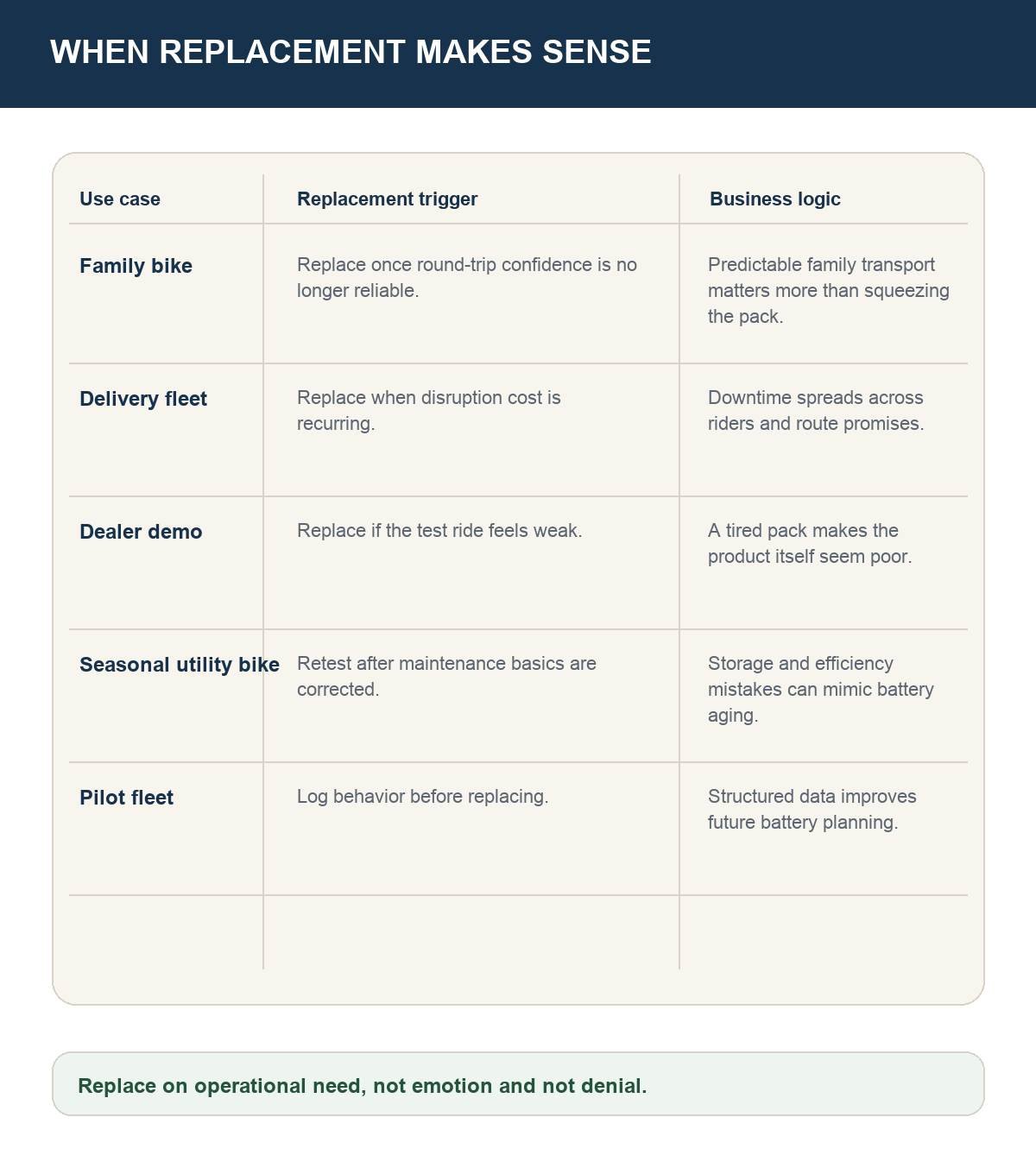
Por esto "cuándo reemplazar" no es un porcentaje universal. El umbral correcto es el punto en que la batería ya no respalda la promesa de servicio real de la bicicleta.
Errores de interpretación comunes que llevan a malas decisiones
"La batería bajó rápido una vez, así que debe estar mal."
Un trayecto no es una tendencia. La carga pesada, las cuestas, el viento en contra, el frío o el mal uso del modo de asistencia pueden distorsionar la percepción de la batería.
"La batería todavía enciende, así que reemplazarla sería un desperdicio."
Si ya no respalda el trabajo real, mantenerla en servicio puede costar más que reemplazarla.
"Una escalada débil siempre significa un problema del motor."
No necesariamente. El envejecimiento de la batería puede reducir la fuerza con que el sistema asiste en subidas con carga aunque el motor esté bien.
"Cargar más a menudo soluciona el problema."
Cargar con más frecuencia puede ocultar el problema temporalmente, pero no restaura la capacidad perdida ni mejora la estabilidad bajo carga.
Cuándo el reemplazo suele ser la decisión correcta
El reemplazo suele justificarse cuando varias de estas condiciones son ciertas al mismo tiempo:
- la misma ruta ahora consume mucha más batería que antes
- el comportamiento de baja potencia llega notablemente antes
- la caída de tensión relacionada con la carga sigue empeorando
- los ciclistas ya no confían en la autonomía restante
- la bicicleta es crítica para la misión en uso familiar o de flota
- ya se han corregido las comprobaciones básicas de eficiencia
En ese punto, el reemplazo tiene menos que ver con la perfección técnica y más con restaurar un servicio predecible.
Lista práctica de verificación de la salud de la batería
Use esta breve revisión antes de aprobar el reemplazo:
- Comparar la autonomía reciente con trayectos pasados similares.
- Revisar neumáticos, frenos, transmisión y supuestos de carga útil.
- Revisar el comportamiento de carga y la consistencia del cargador.
- Anotar si los eventos de corte o la caída de tensión severa son recurrentes.
- Evaluar la aptitud de la batería frente a la ruta real y el requisito de carga útil.
Si la batería falla repetidamente esa prueba, se está degradando de una manera que importa.
Ese es el estándar práctico que deben usar los ciclistas de bicicletas de carga, los gestores de flotas y los equipos de producto. No reemplace la batería por un solo trayecto de ansiedad, pero no siga defendiendo una batería envejecida una vez que claramente está socavando la confianza en la autonomía, la estabilidad de la asistencia y las operaciones del mundo real.