
 PL
PL  EN
EN  DE
DE  NL
NL  IT
IT  FR
FR  ES
ES  PT
PT  DA
DA  SV
SV  FI
FI  CS
CS  EL
EL  HU
HU  ET
ET  BG
BG  JA
JA  KO
KO Jeśli zaparkujesz elektryczny rower cargo na zimę bez planu, zwykle nie kończy się to jedną dramatyczną awarią. To kilka mniejszych problemów, które ujawniają się później: zmęczony akumulator, zardzewiałe elementy napędu, niedopompowane opony, zacinające się hamulce, wilgoć w złączach i nieprzyjemna pierwsza jazda wiosną.
To staje się droższe w przypadku roweru cargo, ponieważ system przenosi większy ciężar, używa droższych komponentów i często wspiera codzienny transport rodzinny lub pracę komercyjną. Rower dojazdowy, który źle stoi przez dwa miesiące, może wymagać przeglądu. Rower cargo, który źle stoi, może opóźnić dostawy, wywołać niepotrzebne reklamacje dotyczące akumulatora lub zmusić rodzinę do rozwiązywania problemów z rowerem podczas pierwszego szkolnego wyjazdu w sezonie.
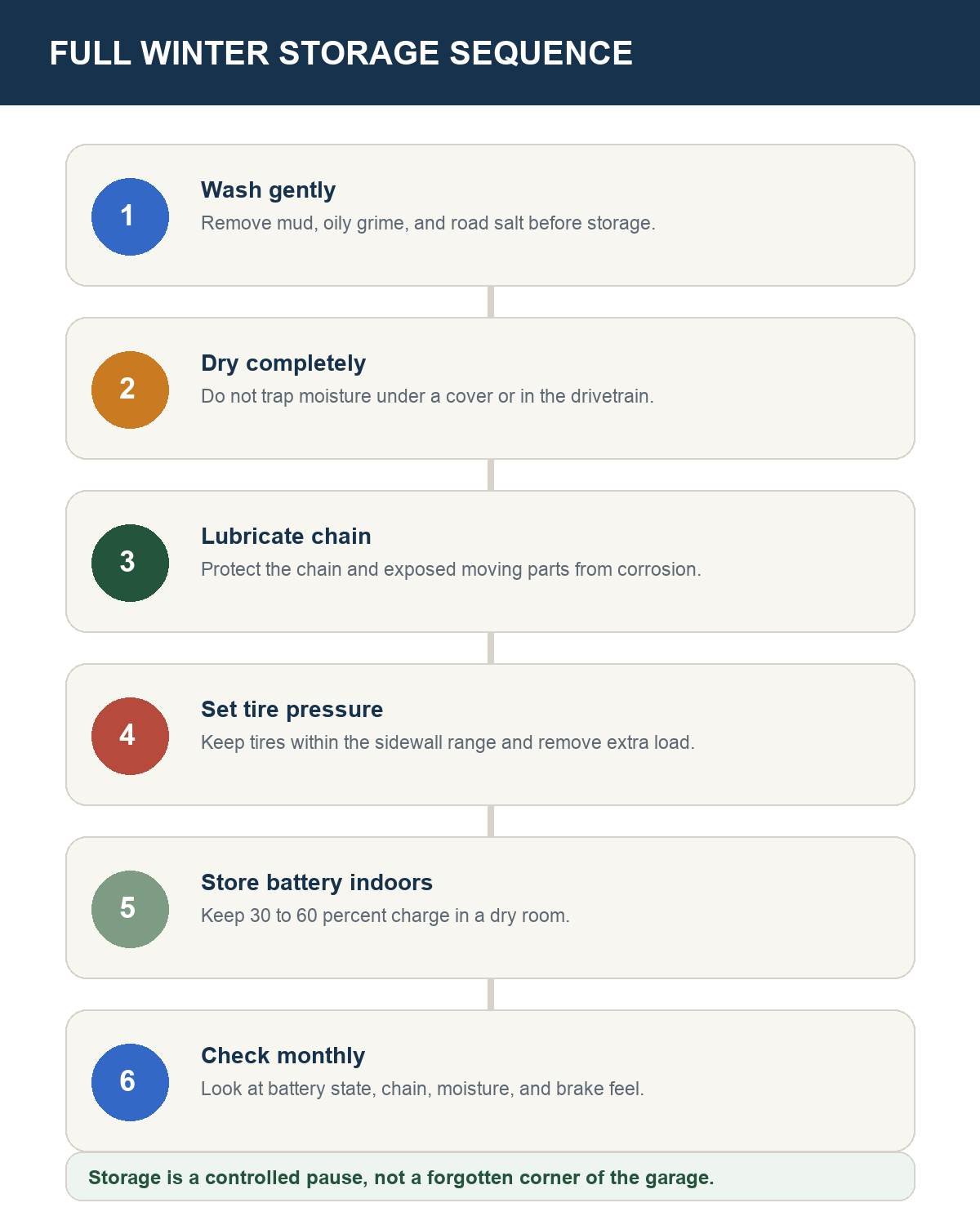
Krótka odpowiedź jest taka: zimowe przechowywanie powinno być traktowane jako kontrolowana pauza, a nie porzucenie. Dokładnie wyczyść rower, całkowicie go osusz, przechowuj akumulator osobno w pomieszczeniu w temperaturze pokojowej z około 30–60 procentami naładowania, chroń napęd i punkty styku, utrzymuj odpowiednie ciśnienie w oponach i sprawdzaj rower raz w miesiącu. Jeśli rower może być nadal używany w suche zimowe dni, zastosuj lżejszą rutynę przechowywania, ale nie pomijaj kontroli akumulatora i korozji.
Dlaczego zimowe przechowywanie ma większe znaczenie dla rowerów cargo
Rowery cargo cierpią bardziej z powodu złego przechowywania niż lżejsze e-rowery, ponieważ łączą:
- wyższą całkowitą masę systemu
- większe obciążenia hamulców i opon
- więcej odsłoniętego sprzętu użytkowego, takiego jak mocowania skrzyń, foteliki dziecięce, osłony przeciwdeszczowe i złącza
- większą zależność od akumulatora podczas jazdy start-stop
- większe oczekiwanie natychmiastowej gotowości, gdy zaczyna się wiosna
Artykuł Regen przewodnik konserwacji roweru cargo already covers day-to-day upkeep, but winter storage is a different job. The goal is not daily ride readiness. The goal is to prevent off-season damage while making spring recommissioning fast and predictable.
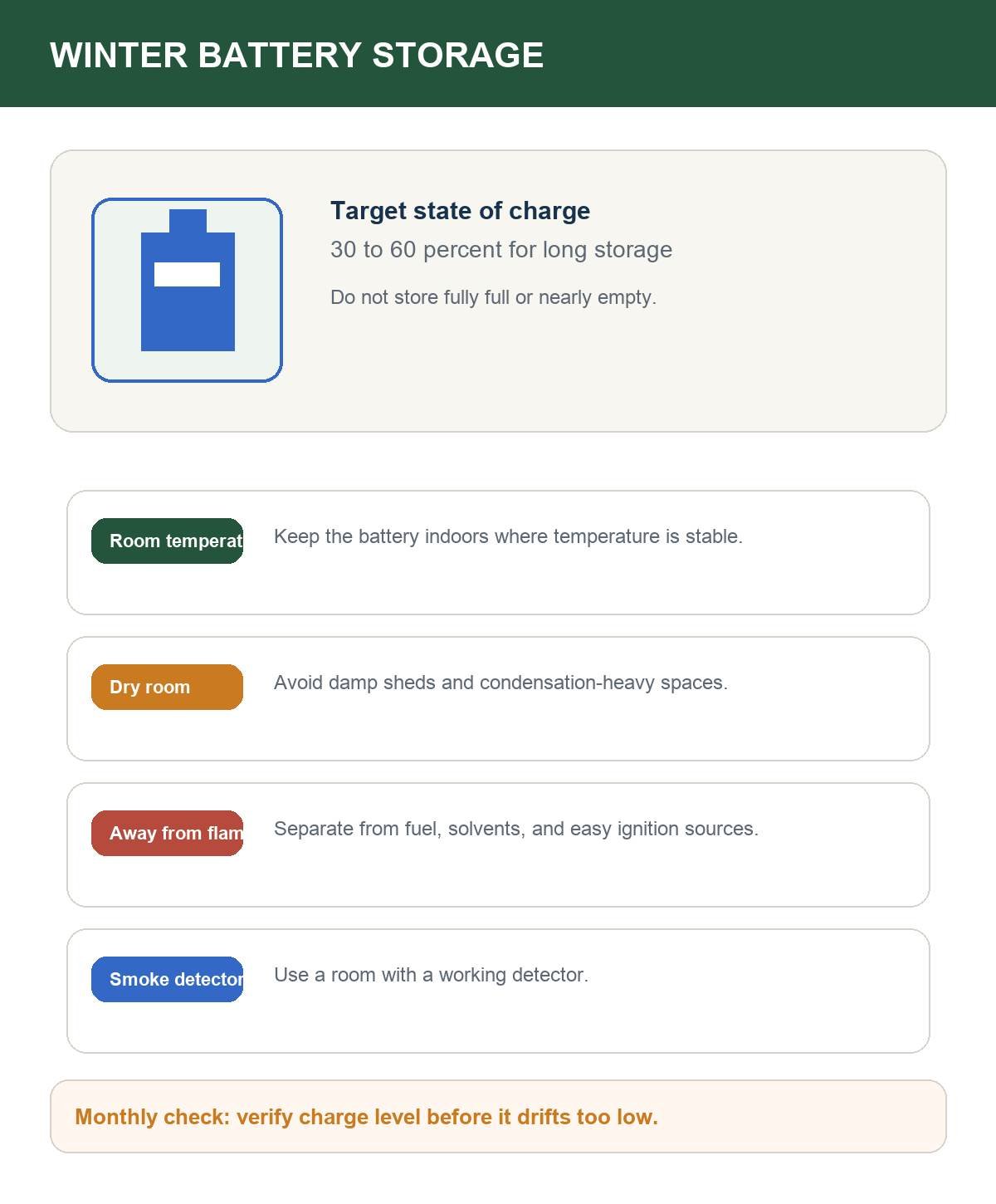
For batteries in particular, storage discipline matters. Bosch recommends storing e-bike batteries with around 30 to 60 percent charge, at room temperature, in a dry room, away from flammable objects, and in a room with a working smoke detector. That guidance is directly relevant to cargo-bike owners because battery misuse is the most expensive winter-storage mistake.
What Usually Goes Wrong When People Store the Bike Badly
Most winter storage mistakes are simple:
- the bike is put away dirty, with salt and grit still on the frame and drivetrain
- the battery is left fully charged for months or left nearly empty
- the battery is stored in a shed or garage that gets too cold or damp
- the tires are left soft under a heavy parked load
- the chain is not dried and lubricated after cleaning
- the bike is covered while still wet, trapping moisture
- nobody checks the bike for weeks, so small issues become spring repairs
These mistakes affect users differently.
For family riders, the impact is lost confidence and a delayed return to routine. For fleet operators, the impact is downtime, inconsistent battery performance, and higher pre-season service work. For OEM and private-label buyers, the impact is customer complaints that are often caused by storage behavior rather than a true product defect.
Choose the Right Winter Storage Mode First
Not every bike needs the same winter plan. The right process depends on how the bike will actually be used.
Mode 1: Full seasonal layup
Use this when the bike will not be ridden for four weeks or longer.
Recommended logic:
- complete full cleaning and drying
- remove or isolate the battery
- store the battery indoors
- reduce long-term stress on tires and drivetrain
- run a monthly inspection schedule
This is the correct mode for family bikes during harsh winters, demo bikes in inventory, and spare fleet units.
Mode 2: Intermittent winter use
Use this when the bike may still be used occasionally on dry or mild days.
Recommended logic:
- keep the bike ride-ready
- still store the battery at room temperature whenever possible
- clean off moisture and road salt after each winter ride
- check tires and brakes more often
- avoid repeated cold-soak plus neglect cycles
This mode fits commercial operators or urban riders who do not stop riding completely.
Mode 3: High-turnover fleet standby
Use this when the bike may be reassigned quickly.
Recommended logic:
- create a short standardized storage checklist
- keep battery state within a defined range
- label the last inspection date
- log tire pressure, odometer, and any pending service issue
- assign a recommissioning owner before the bike returns to service
This is the practical path for delivery fleets, dealer inventory, and test fleets.
How to Store an Electric Cargo Bike for Winter Step by Step
This is the implementation workflow that works in most real cases.
Wash the bike gently and remove grime before storage
Do not store the bike dirty.
Mud, oily dust, de-icing residue, and road salt keep attacking the bike even after it is parked. Regen's maintenance guide and Park Tool's cleaning guidance both reinforce the same operational rule: clean the bike gently, avoid high-pressure washing, dry it, and then lubricate the drivetrain afterward.
Practical method:
- Rinse lightly or wipe down with a damp cloth.
- Use bike-safe cleaner on the frame, fork, cargo box, and contact points.
- Degrease the drivetrain separately if it is dirty.
- Remove any visible salt, especially around brakes, spokes, chain, and mounting hardware.
- Dry the bike fully with clean cloths and ventilation before covering or parking it long term.
High-pressure water is the wrong shortcut because it can push moisture into bearings, seals, and electrical areas.
Dry and protect the drivetrain instead of just making it look clean
Winter storage is where cosmetic cleaning and protective cleaning diverge.
Once the chain and drivetrain are clean:
- let them dry completely
- apply a suitable bicycle chain lubricant
- wipe off excess lube so it does not attract grime
- check exposed cables, pivots, and hardware for early corrosion
Park Tool notes that regular chain lubrication helps reduce friction and protect against rust and corrosion. That matters more during storage than many riders realize, especially if the last rides of the season were wet.
If the bike uses a derailleur system, verify the derailleur pulleys and cassette are not holding dirty paste. If the bike uses an internal hub, the external chain still needs the same anti-corrosion attention.
Store the battery correctly because it is the highest-value winter item
This is the most important winter step.
For long storage, Bosch recommends:
- charge level around 30 to 60 percent
- room-temperature storage
- a dry room
- distance from flammable or combustible objects
- a room with a working smoke detector
That means the battery should usually not spend the winter in an unheated shed or in a damp outdoor box, even if the bike frame does.
Practical battery workflow:
- Finish the season with the battery partly charged, not at 100 percent and not near empty.
- Remove the battery if the bike will sit for weeks.
- Store it indoors where temperature and moisture are controlled.
- Use the original charger and charging routine when topping up.
- Check the charge monthly and bring it back into the recommended range if needed.
Artykuł Regen motor and battery maintenance guide already advises avoiding deep discharge and using the original charger. Winter storage is simply the long-idle version of that same battery-care logic.
Reduce tire and brake stress before the bike sits
Cargo bikes place higher standing load on tires than lighter bikes. If the bike sits for weeks with soft tires and full system weight pressing on the same contact patch, you create avoidable tire deformation and handling problems.
Before storage:
- inflate tires within the recommended sidewall range
- unload unnecessary cargo weight
- avoid leaving the bike parked with a heavily loaded box
- if practical, rotate wheel position occasionally or support the bike to reduce constant tire compression
- confirm brakes are not dragging before you leave the bike parked
This connects directly with Regen's e-bike and cargo bike tire lifespan guide, which emphasizes how underinflation and heavy loads accelerate wear. Winter storage should not create the same stress while the bike is not even being used.
Choose the storage environment based on moisture control, not convenience
The ideal storage space is dry, sheltered, and temperature-stable enough that condensation is minimized.
Best options:
- indoor storage room
- dry garage
- covered workshop space
- warehouse area with controlled moisture exposure
Less suitable options:
- open carports exposed to driving rain
- damp sheds with large temperature swings
- outdoor covers placed over a wet bike
- rooms where chemicals, fuel, or flammable materials are stored near the battery
If the frame must stay in a garage but the battery can go indoors, split the system. That is often the most practical real-world answer for cargo-bike owners with limited space.
Run a monthly storage check instead of waiting for spring
A stored bike should not be ignored for three months.
A simple monthly check should include:
- battery charge level
- visible corrosion
- tire pressure
- brake lever feel
- signs of moisture under the cover or around connectors
- chain condition
This takes only a few minutes but changes the spring outcome significantly. It also helps separate true product problems from avoidable storage neglect.
Recommission the bike methodically before the first spring ride
Do not assume a stored cargo bike is ready because it looks fine.
Spring recommissioning should include:
- reinstall and inspect the battery
- confirm charger and connector condition
- check tire pressure and visible tire aging
- test both brakes under load
- verify lights, display, and motor response
- listen for drivetrain noise on a short unloaded ride
- retorque or inspect cargo accessories, child seats, rain covers, and box hardware as needed
For fleet managers, this should be a checklist with signoff, not an informal guess.
What Impact Good Winter Storage Has on Users
The storage method changes user outcomes more than most buyers expect.
Rowerzyści rodzinni
Good storage means:
- predictable range on the first rides back
- lower chance of rust, sticky shifting, or brake noise
- less stress when returning to school runs or shopping routines
- better battery confidence after cold months
Bad storage means the bike feels unreliable at exactly the moment the family needs it again.
Operatorzy flot
Good storage means:
- lower pre-season service cost
- fewer battery complaints that are actually storage-related
- faster redeployment of spare units
- less downtime caused by tires, brakes, or neglected corrosion
For fleets, the winter-storage process is really an uptime policy.
OEM, ODM, and dealer teams
Good storage guidance reduces false warranty pressure and improves customer success.
If customers are not taught how to store the battery, how often to check the bike, and why moisture control matters, service teams end up diagnosing preventable issues as if they were product defects. That is why winterization advice belongs in manuals, dealer handover, and after-sales support.
Real-World Storage Logic by Use Case
The best winter plan depends on what the cargo bike actually does.
| Use case | Best storage focus | Why it matters |
|---|---|---|
| Family front-loader | battery indoors, clean child area, tire pressure, spring safety check | family use depends on immediate trust and safe restart |
| Delivery fleet bike | monthly log, battery-state control, corrosion watch, brake readiness | downtime is more expensive than storage labor |
| Dealer inventory bike | cosmetic condition, battery health, documented inspections | the bike may need to sell or demo quickly |
| Municipal or campus utility bike | accessory readiness, connector health, anti-rust discipline | mocowania i okucia codziennego użytku tworzą więcej punktów awarii |
| próbka OEM lub rower testowy | zarejestrowany stan przechowywania i lista kontrolna ponownego uruchomienia | chroni spójność oceny i zapobiega fałszywym opiniom |
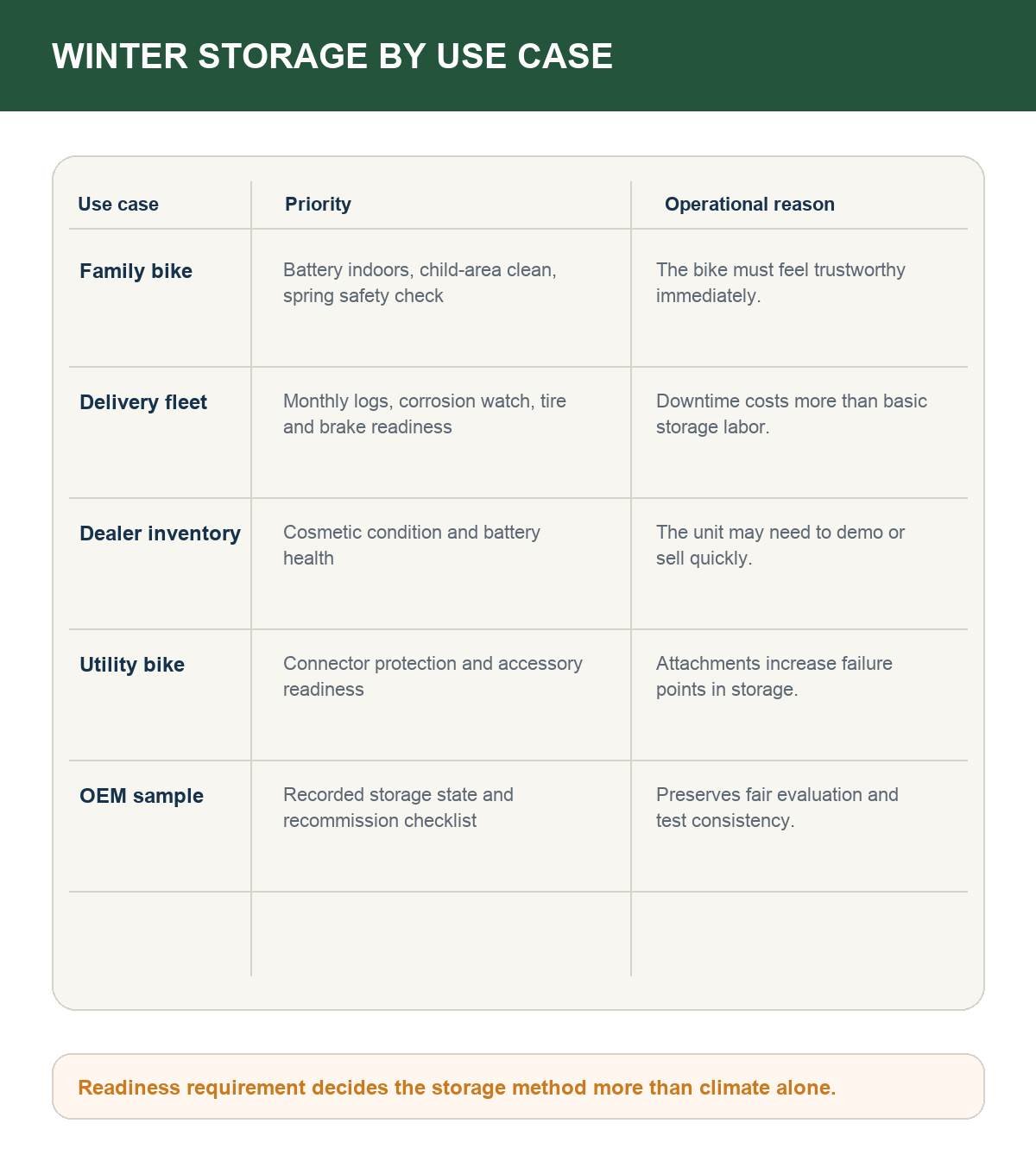
To jest komercyjna logika stojąca za zimowym przechowywaniem. Prawidłowy proces jest definiowany przez wymagania gotowości, a nie tylko przez klimat.
Częste błędy w zimowym przechowywaniu, których należy unikać
Unikaj tych decyzji:
- przechowywanie baterii w pełni naładowanej przez miesiące
- przechowywanie baterii prawie pustej przez miesiące
- pozostawianie baterii w zamarzających lub wilgotnych warunkach
- parkowanie roweru w brudzie po jeździe po solonych drogach
- natychmiastowe przykrywanie mokrego roweru
- zapominanie o ciśnieniu w oponach, ponieważ rower nie jest używany
- pomijanie wiosennej kontroli bezpieczeństwa
Najczęstszym błędnym założeniem jest to, że "nieużywany" oznacza "bezpieczny". W rzeczywistości długie okresy bezczynności stwarzają własne ryzyka konserwacyjne.
Praktyczna lista kontrolna zimowego przechowywania
Jeśli potrzebujesz jednej prostej listy kontrolnej, użyj tej:
- Wyczyść rower i usuń całą sól oraz brud.
- Całkowicie osusz rower.
- Odpowiednio nasmaruj łańcuch i odsłonięte ruchome części.
- Ustaw baterię na około 30 do 60 procent i przechowuj ją w pomieszczeniu.
- Prawidłowo napompuj opony i usuń zbędny ładunek z roweru.
- Zaparkuj rower w suchym, osłoniętym miejscu.
- Sprawdzaj baterię, opony, łańcuch i wilgoć raz w miesiącu.
- Starannie przygotuj rower do ponownego użytku przed pierwszą wiosenną jazdą z pełnym obciążeniem.
To jest praktyczny standard przechowywania elektrycznego roweru cargo przez zimę bez tworzenia późniejszych problemów z baterią, korozją, oponami lub dostępnością.
Referencje wykorzystane w tym przewodniku
- Bosch eBike Systems: Przechowywanie, gdy nie jest używany przez dłuższy okres
- Bosch eBike Systems: Jak przygotować baterię Bosch eBike do optymalnego zimowego przechowywania?
- Park Tool: Jak umyć rower
- Park Tool: Jak czyścić i smarować łańcuch