
 NL
NL  EN
EN  DE
DE  IT
IT  FR
FR  ES
ES  PT
PT  DA
DA  SV
SV  FI
FI  CS
CS  EL
EL  HU
HU  ET
ET  BG
BG  PL
PL  JA
JA  KO
KO 
The electric trike for seniors in Germany lives in two markets that share a product and nothing else. One runs on prescriptions, insurance case files and an eight-digit registry number; the other runs on showroom floors, CE conformity and Selbstzahler — customers paying out of their own pocket.
Which of the two you sell into determines your product spec, your margin structure, your dealer partners — and whether you can enter at all this year or in two years. This guide maps both.
The number that splits the market: the Hilfsmittelnummer
Germany’s statutory health insurers fund mobility aids under §33 of the Social Code. Products approved for this route are listed in the Hilfsmittelverzeichnis, the national assistive-device registry, each under its own Hilfsmittelnummer — adaptive trikes sit in product group 22.
Three mechanics matter to anyone selling into this:
- The manufacturer applies, not the dealer. Getting a number means the maker submits the product for technical review — a process the industry itself describes as slow and costly. No downstream partner can fix a missing number.
- The registry is a gate in practice, not in law. Germany’s Federal Social Court has ruled the registry is not an exhaustive list, so a medically necessary trike can be approved without a listing. But in the real world, approval sits with the individual case officer, and an unlisted product means a case-by-case fight most customers won’t take on.
- The industry runs a dual-SKU play. Established manufacturers commonly sell the same trike in two versions: one carrying a Hilfsmittelnummer for the reimbursement channel, one without for self-payers. That practice is the clearest evidence that German suppliers themselves treat these as two separate markets.
The strategic read: without an existing German registry footprint, the reimbursement track is a 12–24 month regulatory project, not a sales project. The consumer track is open now. The mistake is trying to sell one product into both with one motion.
Why the adult senior market is really a retail market
German insurers pay for a therapy trike with real consistency in exactly one situation: children and adolescents, where the case law and practice are settled.
For adults, the picture inverts. Approval requires a detailed medical prescription — diagnosis, therapeutic justification, ideally the exact model and its registry number — and even then the outcome rests on the case officer’s discretion. Federal courts have repeatedly forced insurers to pay where the trike secures the success of ongoing treatment, and those rulings matter as a backstop. But a purchase path that runs through a legal precedent is not a purchase path most 68-year-olds pursue.
The consequence is the single most useful fact in this market: the active German senior — the 60–75 rider leaving a two-wheeler for stability reasons rather than a diagnosed condition — buys at retail, with their own money, through a bike dealer or specialist trike dealer. They see the full price. They compare. And they are the growth segment, in Europe’s largest e-bike market, in a country where the demographic curve does the forecasting for you.

What “trust” means in a German spec sheet
German buyers of this category — and more importantly, the advisors who steer them — filter on serviceability before features. The question is never only what does it do, but who repairs it in Osnabrück in four years. Recent moves by domestic manufacturers to standardise on major-brand drive systems confirm the direction: the drive system is being used as a service-network promise, not a performance claim.
That translates into concrete sourcing requirements:
- Flagship configurations need a major-brand drive option. For the mid and high-end German channel, a Bosch or Shimano STEPS drive option is close to an entry ticket, because it plugs the product into a nationwide service network no importer can replicate alone. Value drives belong in entry configurations.
- Ergonomic claims must be measurable. In a market where a therapist’s nod moves the sale, “easy to get on” is noise. Seat height in millimetres, step-in clearance, the hip-abduction angle required to board — these are the data points that let a professional advisor recommend a product in writing.
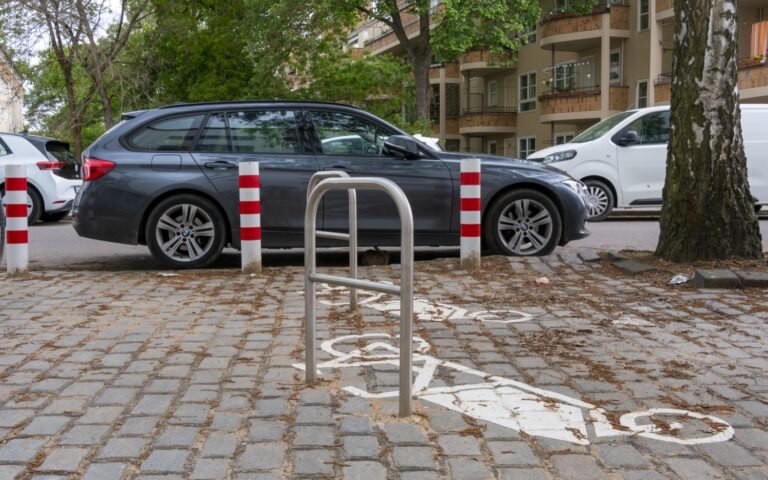
- Comfort over broken surfaces is a documented pain point. German user feedback on upright trikes clusters on vibration over cobbles and brick paving. Seat suspension and a reclined weight distribution address this at the design level, spreading load between backrest and seat rather than stacking it on the spine.
Three doors, in the right order
Specialist trike and adaptive-mobility dealers. Germany has a genuine specialist tier — dealers whose whole business is adult trikes and adaptive cycles, often with test-ride parks and therapist relationships. They are the natural first door: they already serve self-payers, understand the assessment conversation, and many carry multiple brands.
Mainstream e-bike retail. The regular e-bike channel reaches the “active chooser” before they self-identify as needing an adaptive product — precisely the moment de-medicalised design wins. The pitch to these dealers is category expansion: a stability product in city-bike clothing, for the customer they’re currently losing to no-sale.
The medical-reimbursement ecosystem — later, via partnership. The insurance channel rewards patience: margins are protected, switching costs are high, and access requires the registry number. The pragmatic route for a new entrant is a white-label or co-development arrangement with a partner that already holds registry access, while the retail business funds the wait.
For the rules of the road once you are actually selling there, our e-bike fietsregels in Duitsland guide covers the legal side; for the buyer side, the best e-bikes for seniors guide shows what this customer group actually searches for.
The factory decides your options
Notice how many of the calls above are made at the factory, not in the market: dual-configuration capability, major-brand drive integration, measurable ergonomic documentation, a documented CE conformity file under the Machinery Directive (tested in accordance with EN 15194 as applied to tricycles), and vibration management at the platform level.
If you are comparing platforms rather than running a factory programme, our driewielige vrachtfietsgids en de electric trike stability explainer cover what separates a credible product from a catalogue one.
Veelgestelde vragen
Will a German Krankenkasse pay for an electric trike for seniors?
Reliably only for children and adolescents up to 15. For adults, funding under §33 of the Social Code is possible with a detailed medical prescription, but approval is discretionary and frequently contested. Most buyers over 60 without a specific diagnosis purchase privately.
What is a Hilfsmittelnummer, and does a trike need one?
It’s the product’s registration number in the Hilfsmittelverzeichnis, the national assistive-device registry of the statutory insurers. Legally it isn’t mandatory — courts have confirmed the registry is not an exhaustive list — but practically, insurance approval without one is rare. For retail sale to self-payers, no number is needed at all.
What matters more in Germany: price or service?
For this category, service. Buyers and their advisors prioritise a repairable product with a reachable service network, which is why major-brand drive systems dominate the mid and high end. Price competition happens mainly in the entry retail tier.
Is a semi-recumbent trike suitable for German road surfaces?
It’s arguably the format best suited to them. Cobbles and brick paving transmit vibration that upright trikes send into the lower spine; a semi-recumbent seat with backrest distributes that load and pairs naturally with seat suspension.
Can a distributor build a Germany-specific configuration?
Yes, provided the factory supports it: dual-configuration development (retail spec and reimbursement-track spec), major-brand or value drive options, documented ergonomic data for the advisor channel, and EN 15194 conformity are all configuration decisions, not retrofits.
Referenties
- gesetze-im-internet.de — Social Code Book V, §33: Assistive devices
- GKV-Spitzenverband — Hilfsmittelverzeichnis (assistive device registry)
- United Mobility — Electric Trike for Seniors in Germany