
 CS
CS  EN
EN  DE
DE  NL
NL  IT
IT  FR
FR  ES
ES  PT
PT  DA
DA  SV
SV  FI
FI  EL
EL  HU
HU  ET
ET  BG
BG  PL
PL  JA
JA  KO
KO Poslední aktualizace: červen 2026
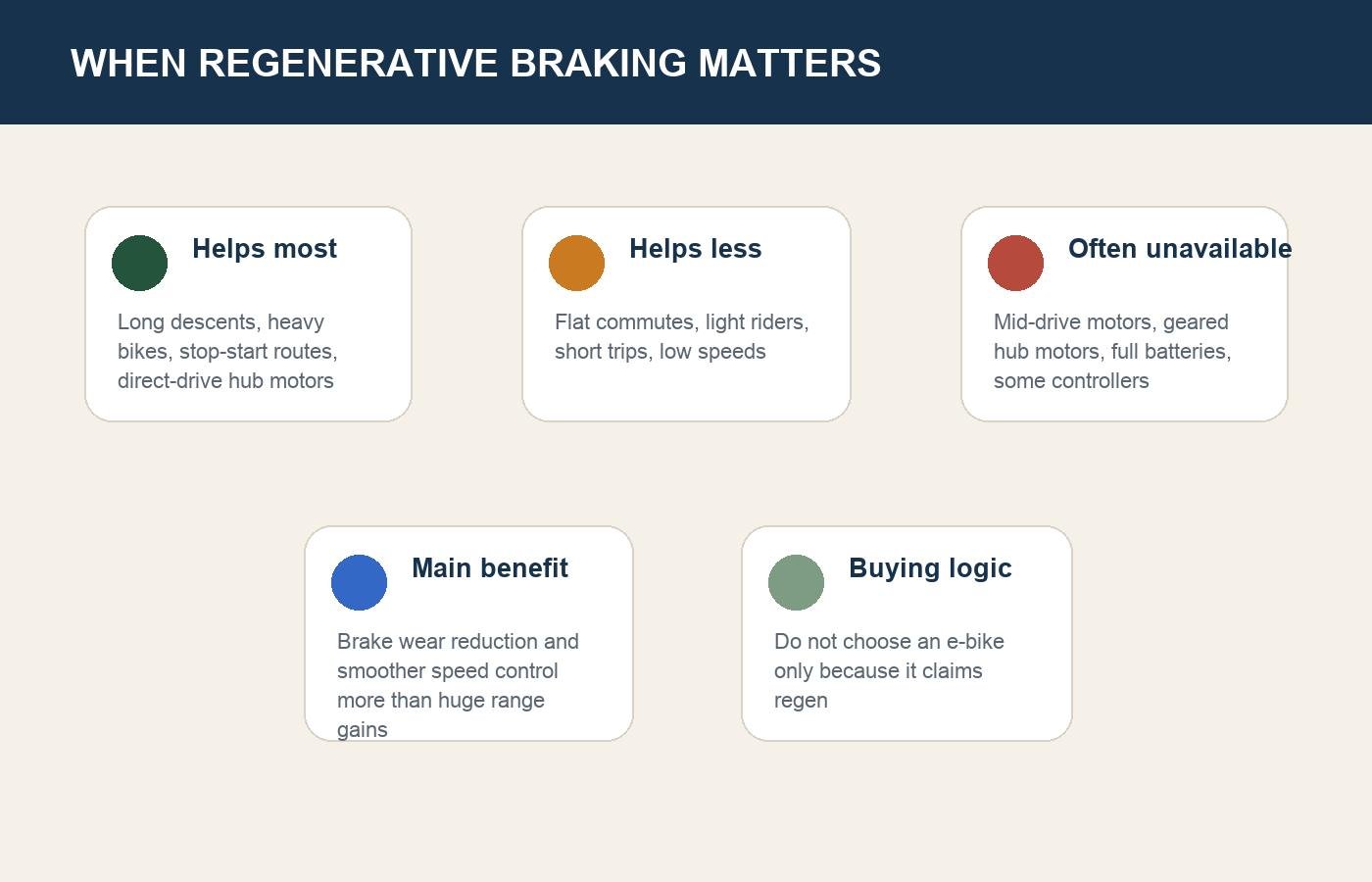
Regenerativní brzdění na e-biku zní jednoduše: brzděte, získejte energii, jeďte dál. V praxi je to omezenější. Regen funguje nejlépe s nábojovými motory s přímým pohonem, dlouhými sjezdy, těžšími koly a regulátory navrženými tak, aby bezpečně vracely energii do baterie.
Pro většinu běžných jezdců je rekuperační brzdění užitečné, ale ne kouzelné. Může zjemnit regulaci rychlosti a snížit opotřebení brzdových destiček, zejména v kopcích. Obvykle nepromění baterii s krátkým dojezdem na baterii s dlouhým dojezdem a nemělo by být hlavním důvodem, proč si vyberete jeden e-bike před druhým.
Jak Regenerativní brzdění na e-biku funguje
Elektromotor může často pracovat ve dvou směrech. Při běžné jízdě posílá baterie elektrickou energii do motoru a motor otáčí kolem. Při rekuperačním brzdění roztočí pohybující se kolo motor a motor funguje jako generátor. Tato vyrobená energie je posílána zpět přes regulátor do baterie.
Základní tok je:
- Jezdec brzdí, uvolní plyn nebo aktivuje režim rekuperace.
- Regulátor změní chování motoru z pohonu na brzdění.
- Motor klade odpor proti otáčení kola a vytváří elektrickou energii.
- Regulátor tuto energii řídí a posílá přijatelný proud zpět do baterie.
- Systém správy baterie rozhodne, zda může baterie bezpečně přijmout nabíjení.
Tento poslední bod je důležitý. Regenerativní brzdění není jen funkce motoru. Vyžaduje motor, regulátor, kabeláž, brzdový signál a bateriový systém, které všechny zvládnou bezpečně zpětný tok energie.
Proč mnoho e-biků nemá Regenerativní brzdění
Mnoho e-biků nemá rekuperační brzdění, protože jejich typ motoru není vhodný.
Nábojové motory s přímým pohonem jsou nejběžnějším nastavením e-biků pro užitečnou rekuperaci. Tyto motory nemají vnitřní volnoběžku mezi kolem a motorem, takže když se kolo otáčí, může roztočit motor způsobem, který umožňuje chování generátoru.
Geared hub motors often use internal reduction gears and a one-way clutch or freewheel. That design helps the motor feel lighter and more efficient when coasting, but it usually prevents meaningful regenerative braking because the wheel is not always driving the motor backward.
Mid-drive motors are also usually poor candidates for regen on normal bicycles. A mid-drive sends power through the chain, cassette, and freehub. The drivetrain is not designed to back-drive the motor cleanly during braking in most e-bike layouts.
This is why regen appears more often on heavier direct-drive hub motor bikes, some utility e-bikes, conversion kits, and electric mopeds than on lightweight mid-drive commuter bikes.
Výhody rekuperačního brzdění u e-kol
Rekuperační brzdění může být stále užitečné, když kolo a trasa odpovídají technologii.
Může snížit opotřebení brzd
To je často nejpraktičtější přínos. Při dlouhých sjezdech nebo častých rozjezdech a zastávkách může rekuperace ulevit mechanickým brzdám. To může znamenat méně tepla, méně opotřebení destiček a plynulejší řízení rychlosti.
To je důležité pro nákladní kola, doručovací kola a těžší e-kola, protože hmotnost zvyšuje nároky na brzdění. I když rekuperace nepřidá mnoho dojezdu, snížení zátěže brzd může být stále cenné.
Může zlepšit kontrolu při sjezdu
Může to působit jako elektronická brzda. Místo opakovaného mačkání brzdových pák na dlouhém kopci může jezdec použít nastavení rekuperace k plynulejšímu udržení rychlosti.
To může udělat sjezd klidnějším, zejména na těžkých kolech.
Může získat zpět část energie
Ano, rekuperační brzdění může vracet energii do baterie. Ale množství silně závisí na terénu, rychlosti, typu motoru, nastavení regulátoru, hmotnosti jezdce, stavu nabití baterie a četnosti brzdění.
Rovinaté jízdy nevytvářejí mnoho brzdné energie k rekuperaci. Dlouhé sjezdy vytvářejí více. Městská jízda s častými zastávkami vytváří něco, ale každé brzdění je krátké a ztráty systému jsou reálné.
Může snížit zahřívání mechanických brzd
On long downhills, mechanical brakes can heat up. Regen braking can share the load. That does not replace good brakes, but it can support them.
Limits of Regenerative Braking on an E-Bike
The limits matter more than the marketing.
Range gains are usually modest
Most e-bike riders should not expect dramatic range improvement from regen. Bicycles are light compared with cars, and many rides do not include enough long braking events to recover large energy amounts.
On a normal flat commute, regen may barely matter for range. On a hilly route with a heavy bike, it can matter more, but it still will not recover all the energy used to climb.
Full batteries may not accept regen
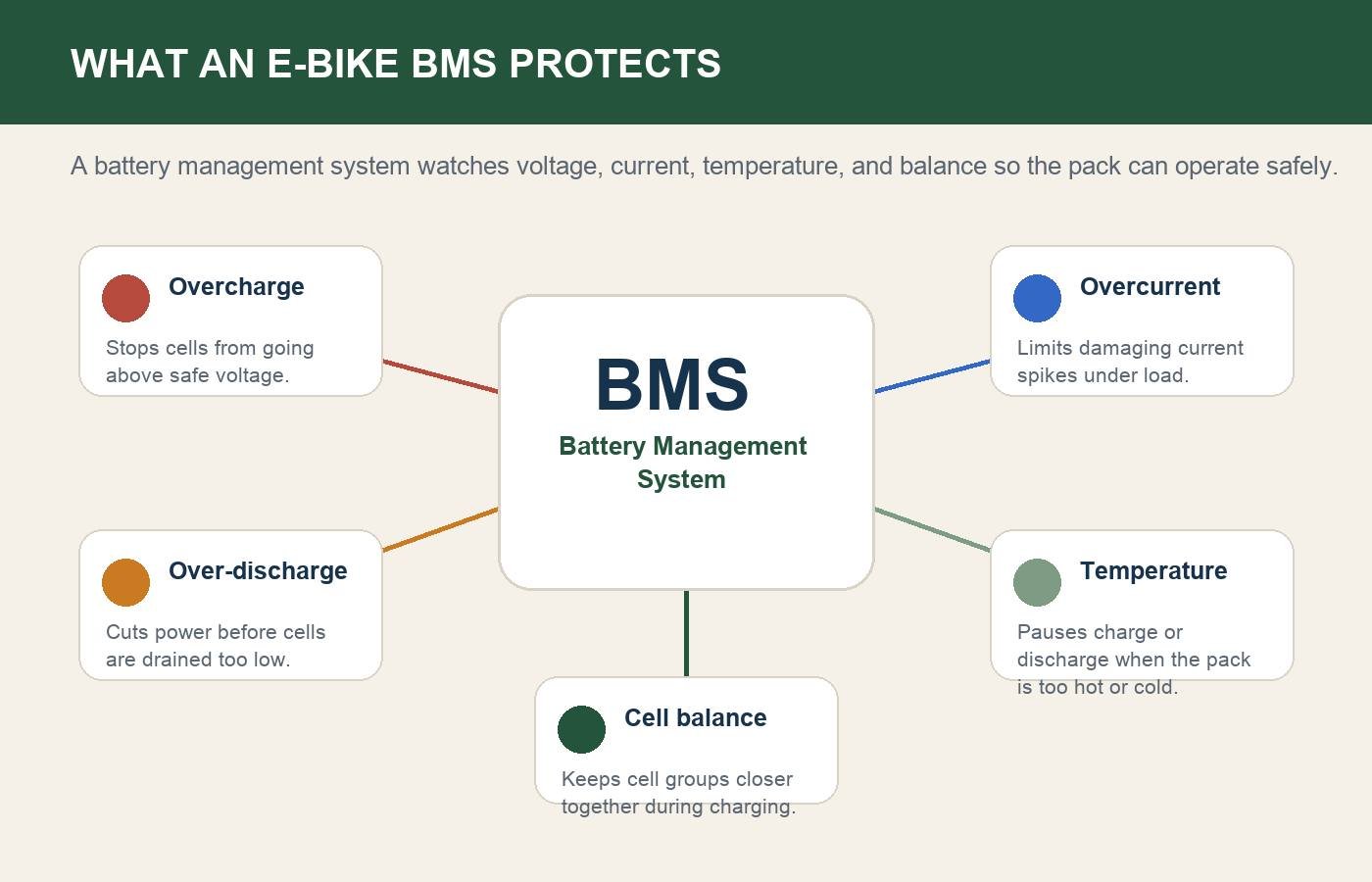
If the battery is already full, the battery management system may limit or block regenerative charging. There is nowhere safe for the recovered energy to go. That means regen may be unavailable or reduced at the beginning of a downhill ride after a full charge.
It does not replace mechanical brakes
Every e-bike still needs proper mechanical brakes. Regen can assist braking, but it should not be treated as the only braking system. It may be unavailable at low speed, with a full battery, during faults, or on systems not designed for it.
It can change ride feel
Regen adds drag when active. Some riders like that controlled feeling. Others find it less natural, especially if the controller tuning is abrupt.
It adds system complexity
Useful regen requires compatible hardware and software. A direct-drive hub motor, controller, brake input, display setting, and battery must all cooperate. That can make troubleshooting more involved.
When Regenerative Braking Actually Matters
Regenerative braking matters most when braking energy is frequent, predictable, and large enough to recover.
It is most useful for:
- long downhill routes
- heavy cargo e-bikes
- delivery bikes with many stops
- hilly cities
- direct-drive hub motor builds
- riders who want to reduce brake pad wear
- riders who value electronic speed control on descents
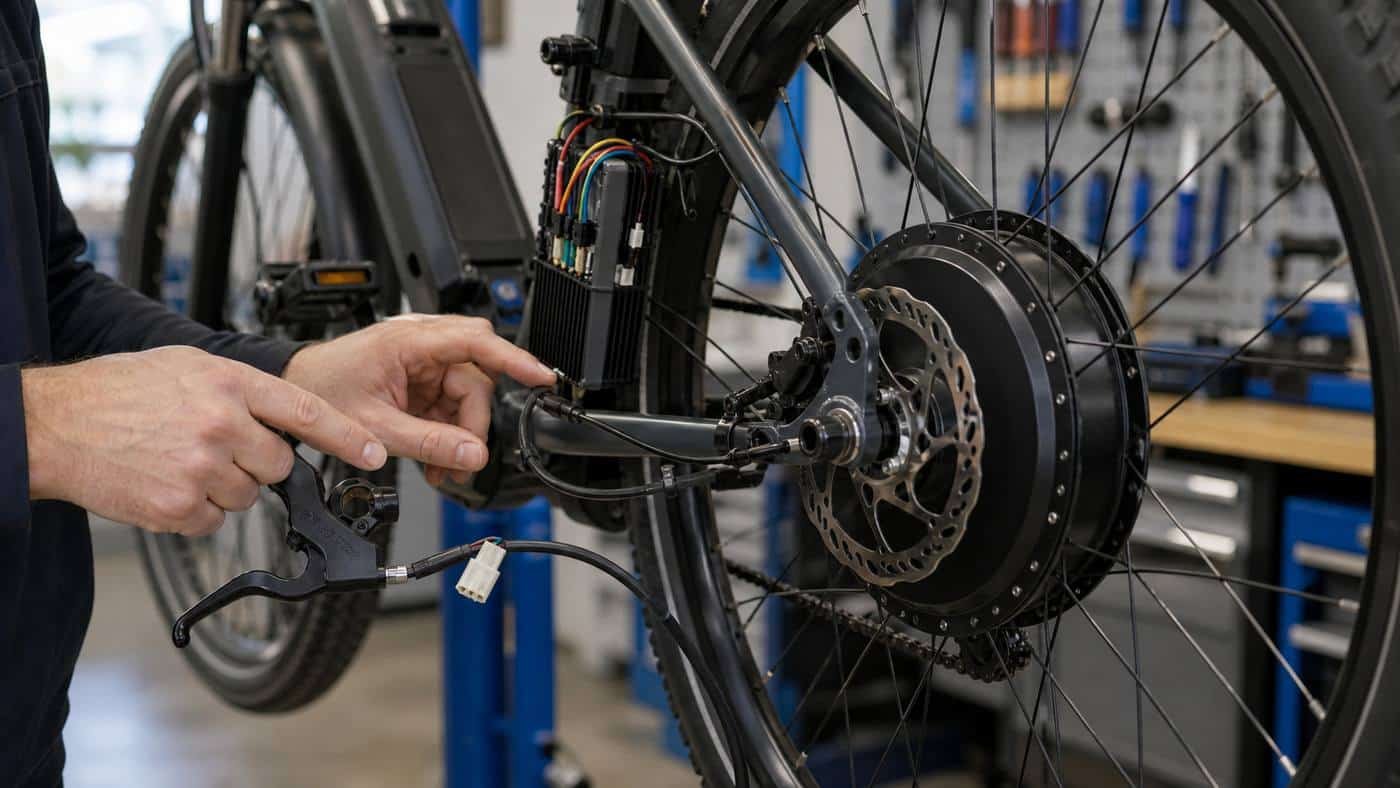
It matters less for:
- ploché předměstské dojíždění
- lehká fitness elektrokola
- krátké jízdy po okolí
- elektrokola se středovým motorem
- elektrokola s převodovým motorem v náboji
- jezdci, kterým jde hlavně o maximální dojezd za každou korunu
Pokud je vaše trasa rovná a brzdy vám už dlouho vydrží, rekuperace by měla být příjemný bonus, ne nutnost. Pokud denně jezdíte na těžkém kole z kopce, stává se mnohem důležitější.
Rekuperační brzdění vs. běžné brzdy
Běžné brzdy přeměňují pohyb na teplo třením. Kotoučové brzdy stlačují destičky proti rotoru. Ráfkové brzdy stlačují destičky proti ráfku. Jsou přímé, silné a nutné pro bezpečnost.
Rekuperační brzdění přeměňuje část pohybu na elektrickou energii prostřednictvím motoru. Vytváří odpor a může mírně dobíjet baterii, ale jeho brzdná síla je obvykle omezena konstrukcí motoru, nastavením regulátoru, přijatelností baterie a rychlostí.
Nejlepší systémy používají obojí:
- rekuperaci pro plynulý odpor a získávání energie, když to podmínky dovolí
- hydraulické nebo mechanické brzdy pro spolehlivý brzdný výkon
Nekupujte e-kolo se slabými mechanickými brzdami jen proto, že inzeruje rekuperaci. Brzdový hardware stále rozhoduje o brzdné dráze a nouzovém ovládání.
Prodlužuje rekuperační brzdění dojezd e-kola?
Může, ale zisk je obvykle malý, pokud trasa není kopcovitá nebo kolo není těžké.
Představte si rekuperaci jako získávání části energie, která by se jinak při brzdění ztratila. Pokud vaše jízda nezahrnuje mnoho brzdění nebo klesání, není moc energie k získání. Pokud vaše jízda zahrnuje dlouhá klesání po stoupáních, je příležitostí více.
I tak má systém ztráty. Motor, regulátor, kabeláž, chemie baterie a BMS všechny snižují, kolik energie se skutečně vrátí jako použitelné nabití.
Pro většinu jezdců jsou lepší investice do dojezdu stále:
- správný tlak v pneumatikách
- mírná úroveň asistence
- nižší cestovní rychlost
- čistý pohon
- zdravá baterie
- správné nabíjení a skladování
- výběr správné kapacity baterie při nákupu
Pokud váš dojezd náhle klesá, nepředpokládejte, že chybějící rekuperace je problém. Zdraví baterie a provozní podmínky jsou důležitější. Náš průvodce 8 příznacích degradace baterie e-nákladního kola vysvětluje, jak rozpoznat skutečný pokles baterie.
Měli byste si koupit e-kolo, protože má rekuperaci?
Obvykle ne. Rekuperační brzdění je užitečná funkce, když celé kolo odpovídá vaší trase, ale nemělo by převyšovat základy.
Prioritizujte:
- kvalitu a kapacitu baterie
- typ motoru, který odpovídá vašemu terénu
- kvalitu brzd
- vhodnost rámu
- servisní podporu
- výběr pneumatik
- nosnost, pokud je potřeba
- právní třídu a rychlostní limit
Pak berte rekuperaci jako bonus, pokud ji vaše trasa a typ motoru činí užitečnou.
Pro kopcovité, těžké užitkové kolo s přímým náhonem může být rekuperační brzdění smysluplné. Pro dojíždějícího po rovině s lehkým motorem ve středu může být nedostupné a nemusí být postrádáno.
Často kladené otázky
Q1: Co je rekuperační brzdění na e-kole?
I'm sorry, but I need the actual text to translate. You've only provided "1. A:" which is just a label and letter. Please provide the full text you'd like translated from English to Czech. Rekuperační brzdění používá motor jako generátor při brzdění nebo klesání. Vytváří brzdný odpor a posílá část energie zpět do baterie.
Q2: Mají všechna e-kola rekuperační brzdění?
I'm sorry, but I need the actual text to translate. You've only provided "1. A:" which is just a label and letter. Please provide the full text you'd like translated from English to Czech. Ne. Mnoho e-kol rekuperaci nemá, zejména kola s motorem ve středu a kola s převodovým motorem v náboji. Nejběžnější je u systémů s přímým náhonem v náboji a u některých konverzních sad.
Q3: Přidává rekuperační brzdění hodně dojezdu?
I'm sorry, but I need the actual text to translate. You've only provided "1. A:" which is just a label and letter. Please provide the full text you'd like translated from English to Czech. Obvykle ne. Může přidat nějaký dojezd na kopcovitých trasách nebo trasách se zastávkami, ale pro většinu jezdců je zisk dojezdu mírný. Snížení opotřebení brzd a kontrola při klesání jsou často praktičtější výhody.
Q4: Může rekuperační brzdění nahradit běžné brzdy?
I'm sorry, but I need the actual text to translate. You've only provided "1. A:" which is just a label and letter. Please provide the full text you'd like translated from English to Czech. Ne. E-kola stále potřebují řádné mechanické brzdy. Rekuperace může asistovat brzdění, ale může být omezená nebo nedostupná v závislosti na rychlosti, stavu baterie a systémových podmínkách.
Q5: Proč rekuperace nefunguje, když je baterie plná?
I'm sorry, but I need the actual text to translate. You've only provided "1. A:" which is just a label and letter. Please provide the full text you'd like translated from English to Czech. Plná baterie nemusí být schopna bezpečně přijmout další nabití. BMS nebo regulátor může omezit nebo zablokovat rekuperaci, dokud není v baterii místo.
Q6: Je rekuperační brzdění lepší na nákladních e-kolech?
I'm sorry, but I need the actual text to translate. You've only provided "1. A:" which is just a label and letter. Please provide the full text you'd like translated from English to Czech. Může být užitečnější na těžších nákladních e-kolech, protože vytvářejí větší brzdnou potřebu, zejména na kopcích. Ale kolo stále potřebuje kompatibilní motor a regulátor.
Zdroje
- Technický materiál Grin Technologies o motorech s přímým náhonem v náboji a rekuperačním brzdění.
- Technické a produktové informace Bosch eBike Systems ukazující, proč mnoho systémů s motorem ve středu neinzeruje rekuperační brzdění jako základní funkci.
- Obecné principy správy baterií a chování regulátorů používané běžnými systémy elektrokol.