
 DE
DE  EN
EN  NL
NL  IT
IT  FR
FR  ES
ES  PT
PT  DA
DA  SV
SV  FI
FI  CS
CS  EL
EL  HU
HU  ET
ET  BG
BG  PL
PL  JA
JA  KO
KO Wenn Sie ein elektrisches Lastenrad ohne Plan überwintern lassen, ist das übliche Ergebnis kein einzelner dramatischer Ausfall. Es sind mehrere kleinere Probleme, die später auftauchen: ein erschöpfter Akku, rostige Antriebsteile, zu wenig Luft in den Reifen, klebende Bremsen, Feuchtigkeit in Steckverbindern und eine unangenehme erste Fahrt im Frühling.
Das wird bei einem Lastenrad teurer, weil das System mehr Gewicht trägt, teurere Komponenten verwendet und oft täglichen Familientransport oder gewerbliche Arbeit unterstützt. Ein Pendlerrad, das zwei Monate schlecht steht, braucht vielleicht eine Inspektion. Ein Lastenrad, das schlecht steht, kann Lieferungen verzögern, vermeidbare Akku-Beschwerden verursachen oder eine Familie dazu zwingen, das Rad am ersten Schultag der Saison zu reparieren.
Die kurze Antwort ist: Winterlagerung sollte als kontrollierte Pause behandelt werden, nicht als Aufgabe. Reinigen Sie das Rad gründlich, trocknen Sie es vollständig, lagern Sie den Akku separat drinnen bei Raumtemperatur mit etwa 30 bis 60 Prozent Ladung, schützen Sie Antrieb und Kontaktpunkte, halten Sie die Reifen richtig aufgepumpt und überprüfen Sie das Rad einmal im Monat. Wenn das Rad an trockenen Wintertagen noch genutzt werden soll, verwenden Sie eine leichtere Lagerungsroutine, aber überspringen Sie nicht die Akku- und Korrosionskontrolle.
Warum Winterlagerung bei Lastenrädern wichtiger ist
Lastenräder leiden mehr unter schlechter Lagerung als leichtere E-Bikes, weil sie kombinieren:
- höheres Gesamtsystemgewicht
- größere Brems- und Reifenlasten
- mehr exponierte Nutzausstattung wie Kastenhalterungen, Kindersitze, Regenabdeckungen und Steckverbinder
- höhere Akku-Abhängigkeit bei Stop-and-go-Nutzung
- größere Erwartung sofortiger Einsatzbereitschaft, wenn der Frühling beginnt
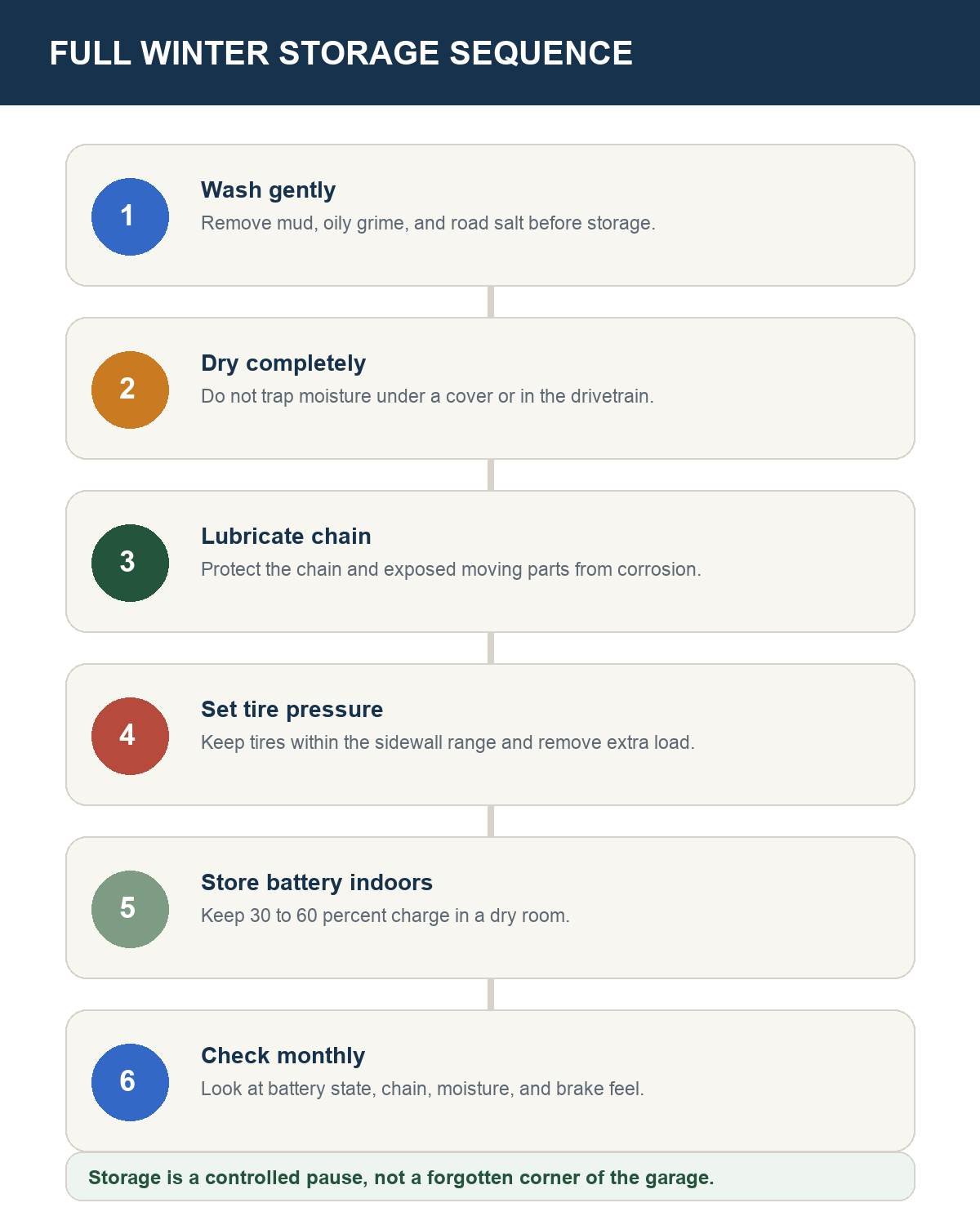
Regen's Lastenrad-Wartungsleitfaden deckt bereits die tägliche Pflege ab, aber Winterlagerung ist eine andere Aufgabe. Das Ziel ist nicht tägliche Fahrbereitschaft. Das Ziel ist, Schäden außerhalb der Saison zu verhindern und die Wiederinbetriebnahme im Frühling schnell und vorhersehbar zu machen.
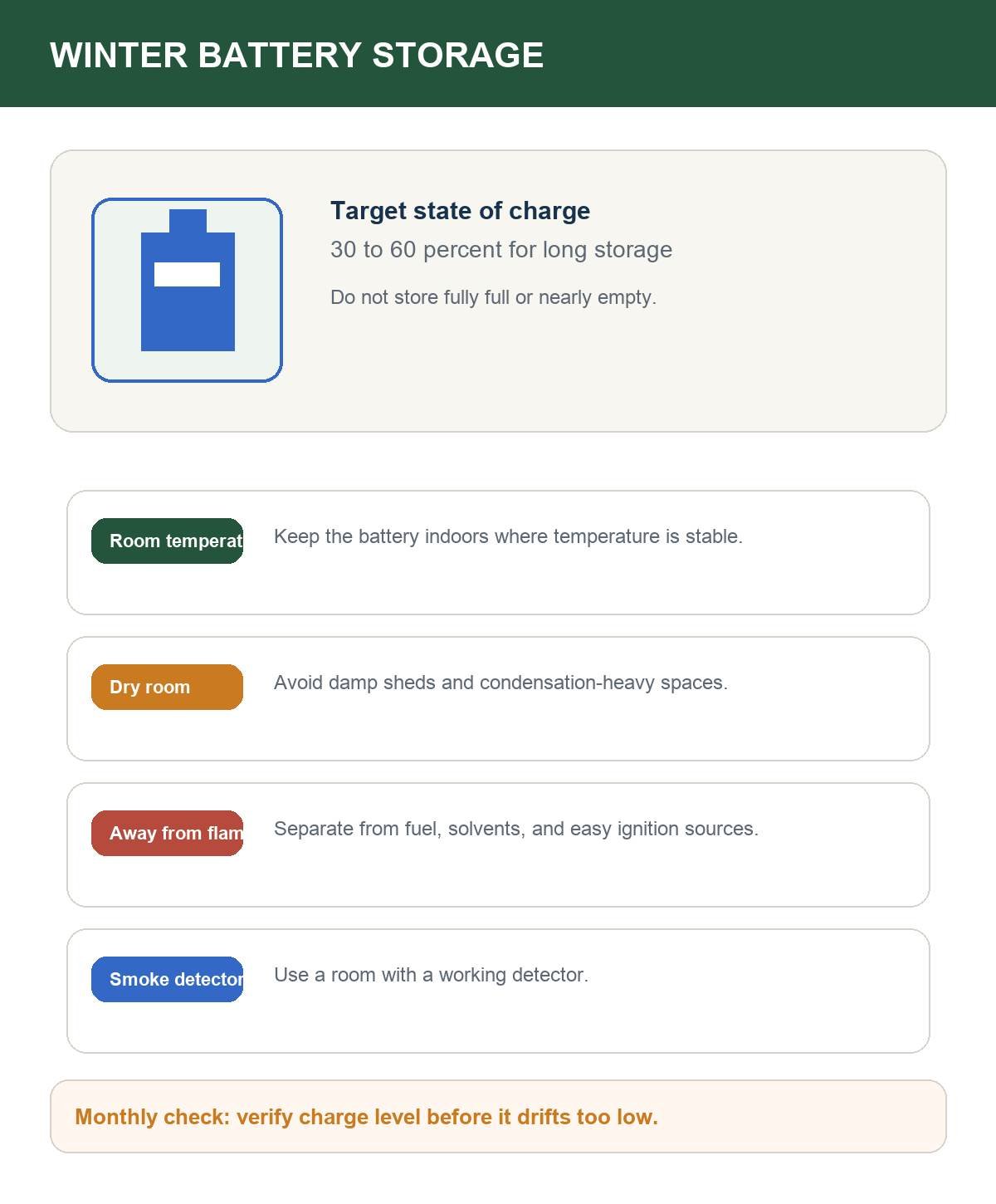
Besonders bei Akkus ist Lagerungsdisziplin wichtig. Bosch empfiehlt, E-Bike-Akkus mit etwa 30 bis 60 Prozent Ladung bei Raumtemperatur in einem trockenen Raum, fern von brennbaren Gegenständen und in einem Raum mit funktionierendem Rauchmelder zu lagern. Diese Anleitung ist direkt relevant für Lastenradbesitzer, weil Akku-Missbrauch der teuerste Winterlagerungsfehler ist.
Was normalerweise schiefgeht, wenn Menschen das Rad schlecht lagern
Die meisten Winterlagerungsfehler sind einfach:
- das Rad wird schmutzig weggeräumt, mit Salz und Grit auf Rahmen und Antrieb
- der Akku wird monatelang voll geladen oder fast leer gelassen
- der Akku wird in einem Schuppen oder einer Garage gelagert, die zu kalt oder feucht wird
- die Reifen werden unter schwerer Parklast weich gelassen
- die Kette wird nach der Reinigung nicht getrocknet und geschmiert
- das Rad wird noch nass abgedeckt, was Feuchtigkeit einschließt
- niemand überprüft das Rad wochenlang, sodass kleine Probleme zu Frühlingsreparaturen werden
Diese Fehler betreffen Nutzer unterschiedlich.
Für Familienfahrer ist die Auswirkung verlorenes Vertrauen und eine verzögerte Rückkehr zur Routine. Für Flottenbetreiber ist die Auswirkung Ausfallzeiten, inkonsistente Akkuleistung und höherer Vor-Saison-Serviceaufwand. Für OEM- und Private-Label-Käufer ist die Auswirkung Kundenbeschwerden, die oft durch Lagerungsverhalten verursacht werden und nicht durch einen echten Produktfehler.
Wählen Sie zuerst den richtigen Winterlagerungsmodus
Nicht jedes Rad braucht denselben Winterplan. Der richtige Prozess hängt davon ab, wie das Rad tatsächlich genutzt wird.
Modus 1: Vollständige saisonale Stilllegung
Verwenden Sie dies, wenn das Rad vier Wochen oder länger nicht gefahren wird.
Empfohlene Logik:
- vollständige Reinigung und Trocknung abschließen
- Akku entfernen oder isolieren
- Akku drinnen lagern
- Langzeitstress auf Reifen und Antrieb reduzieren
- monatlichen Inspektionsplan durchführen
Dies ist der richtige Modus für Familienräder in strengen Wintern, Demoräder im Bestand und Ersatzflotteneinheiten.
Modus 2: Intermittierende Winternutzung
Verwenden Sie dies, wenn das Rad gelegentlich an trockenen oder milden Tagen noch genutzt wird.
Empfohlene Logik:
- das Rad fahrbereit halten
- den Akku wann immer möglich bei Raumtemperatur lagern
- Feuchtigkeit und Straßensalz nach jeder Winterfahrt entfernen
- Reifen und Bremsen häufiger überprüfen
- wiederholte Kälte-Einwirkungs- plus Vernachlässigungszyklen vermeiden
Dieser Modus passt für gewerbliche Betreiber oder Stadtfahrer, die nicht komplett aufhören zu fahren.
Modus 3: Hochfrequente Flottenbereitschaft
Verwenden Sie dies, wenn das Rad schnell neu zugewiesen werden kann.
Empfohlene Logik:
- eine kurze standardisierte Lagerungs-Checkliste erstellen
- Akkuzustand innerhalb eines definierten Bereichs halten
- das letzte Inspektionsdatum beschriften
- Reifendruck, Kilometerstand und alle ausstehenden Serviceprobleme protokollieren
- einen Wiederinbetriebnahme-Verantwortlichen zuweisen, bevor das Fahrrad wieder in Betrieb genommen wird
Dies ist der praktische Weg für Lieferflotten, Händlerbestände und Testflotten.
So lagern Sie ein elektrisches Lastenfahrrad über den Winter – Schritt für Schritt
Dies ist der Implementierungsworkflow, der in den meisten realen Fällen funktioniert.
Waschen Sie das Fahrrad sanft und entfernen Sie Schmutz vor der Lagerung
Lagern Sie das Fahrrad nicht schmutzig.
Schlamm, öliger Staub, Enteisungsrückstände und Streusalz greifen das Fahrrad weiter an, auch wenn es bereits abgestellt ist. Regens Wartungsleitfaden und die Reinigungsanleitung von Park Tool bestätigen beide dieselbe operative Regel: Reinigen Sie das Fahrrad sanft, vermeiden Sie Hochdruckwäsche, trocknen Sie es und schmieren Sie anschließend den Antriebsstrang.
Praktische Methode:
- Leicht abspülen oder mit einem feuchten Tuch abwischen.
- Verwenden Sie einen fahrradsicheren Reiniger auf Rahmen, Gabel, Transportbox und Kontaktpunkten.
- Entfetten Sie den Antriebsstrang separat, wenn er schmutzig ist.
- Entfernen Sie sichtbares Salz, besonders an Bremsen, Speichen, Kette und Montagehardware.
- Trocknen Sie das Fahrrad vollständig mit sauberen Tüchern und Belüftung, bevor Sie es abdecken oder langfristig abstellen.
Hochdruckwasser ist die falsche Abkürzung, weil es Feuchtigkeit in Lager, Dichtungen und elektrische Bereiche drücken kann.
Trocknen und schützen Sie den Antriebsstrang, statt ihn nur sauber aussehen zu lassen
Bei der Winterlagerung trennen sich kosmetische Reinigung und schützende Reinigung.
Sobald Kette und Antriebsstrang sauber sind:
- lassen Sie sie vollständig trocknen
- tragen Sie ein geeignetes Fahrradketten-Schmiermittel auf
- wischen Sie überschüssiges Schmiermittel ab, damit es keinen Schmutz anzieht
- prüfen Sie freiliegende Kabel, Drehpunkte und Hardware auf beginnende Korrosion
Park Tool weist darauf hin, dass regelmäßige Kettenschmierung hilft, Reibung zu reduzieren und vor Rost und Korrosion zu schützen. Das ist während der Lagerung wichtiger, als viele Fahrer erkennen, besonders wenn die letzten Fahrten der Saison nass waren.
Wenn das Fahrrad ein Schaltungssystem verwendet, prüfen Sie, ob die Schaltwerksrollen und Kassette keine schmutzige Paste halten. Wenn das Fahrrad eine Nabenschaltung verwendet, braucht die externe Kette trotzdem dieselbe Aufmerksamkeit gegen Korrosion.
Lagern Sie den Akku korrekt, denn er ist der wertvollste Wintergegenstand
Dies ist der wichtigste Winter-Schritt.
Für die Langzeitlagerung empfiehlt Bosch:
- Ladezustand etwa 30 bis 60 Prozent
- Lagerung bei Raumtemperatur
- einen trockenen Raum
- Abstand zu brennbaren oder entzündlichen Gegenständen
- einen Raum mit funktionierendem Rauchmelder
Das bedeutet, dass der Akku normalerweise nicht den Winter in einem unbeheizten Schuppen oder in einer feuchten Außenbox verbringen sollte, selbst wenn der Fahrradrahmen dort steht.
Praktischer Akku-Workflow:
- Beenden Sie die Saison mit dem Akku teilweise geladen, nicht bei 100 Prozent und nicht fast leer.
- Entfernen Sie den Akku, wenn das Fahrrad wochenlang steht.
- Lagern Sie ihn drinnen, wo Temperatur und Feuchtigkeit kontrolliert sind.
- Verwenden Sie das Original-Ladegerät und die übliche Laderoutine beim Nachladen.
- Prüfen Sie die Ladung monatlich und bringen Sie sie bei Bedarf wieder in den empfohlenen Bereich.
Regen's Motor- und Akku-Wartungsleitfaden empfiehlt bereits, Tiefentladung zu vermeiden und das Original-Ladegerät zu verwenden. Winterlagerung ist einfach die langfristige Leerlaufversion derselben Akku-Pflegelogik.
Reduzieren Sie Reifen- und Bremsbelastung, bevor das Fahrrad steht
Lastenfahrräder üben eine höhere stehende Last auf die Reifen aus als leichtere Fahrräder. Wenn das Fahrrad wochenlang mit weichen Reifen und vollem Systemgewicht auf derselben Aufstandsfläche steht, erzeugen Sie vermeidbare Reifenverformung und Fahrprobleme.
Vor der Lagerung:
- Reifen innerhalb des empfohlenen Seitenwandbereichs aufpumpen
- unnötiges Frachtgewicht entladen
- vermeiden Sie, das Fahrrad mit einer schwer beladenen Box abzustellen
- wenn praktisch, Radposition gelegentlich drehen oder das Fahrrad abstützen, um ständige Reifenkompression zu reduzieren
- bestätigen Sie, dass die Bremsen nicht schleifen, bevor Sie das Fahrrad abgestellt lassen
Dies hängt direkt mit Regens zusammen Leitfaden zur Lebensdauer von E-Bike- und Lastenfahrradreifen, was betont, wie Unterinflation und schwere Lasten den Verschleiß beschleunigen. Die Winterlagerung sollte nicht denselben Stress erzeugen, während das Fahrrad nicht einmal benutzt wird.
Wählen Sie die Lagerumgebung basierend auf Feuchtigkeitskontrolle, nicht auf Bequemlichkeit
Der ideale Lagerraum ist trocken, geschützt und ausreichend temperaturstabil, sodass Kondensation minimiert wird.
Beste Optionen:
- Innenlagerraum
- trockene Garage
- überdachter Werkstattbereich
- Lagerbereich mit kontrollierter Feuchtigkeitsexposition
Weniger geeignete Optionen:
- offene Carports, die Schlagregen ausgesetzt sind
- feuchte Schuppen mit großen Temperaturschwankungen
- Außenabdeckungen, die über ein nasses Fahrrad gelegt werden
- Räume, in denen Chemikalien, Kraftstoff oder brennbare Materialien in der Nähe der Batterie gelagert werden
Wenn der Rahmen in einer Garage bleiben muss, die Batterie aber drinnen aufbewahrt werden kann, teilen Sie das System auf. Das ist oft die praktischste Antwort aus der realen Welt für Cargo-Bike-Besitzer mit begrenztem Platz.
Führen Sie eine monatliche Lagerprüfung durch, anstatt auf den Frühling zu warten
Ein eingelagertes Fahrrad sollte nicht drei Monate lang ignoriert werden.
Eine einfache monatliche Prüfung sollte umfassen:
- Batterieladestand
- sichtbare Korrosion
- Reifendruck
- Gefühl des Bremshebels
- Anzeichen von Feuchtigkeit unter der Abdeckung oder um Anschlüsse herum
- Kettenzustand
Dies dauert nur wenige Minuten, verändert aber das Frühlingsergebnis erheblich. Es hilft auch, echte Produktprobleme von vermeidbarer Lagervernachlässigung zu unterscheiden.
Nehmen Sie das Fahrrad methodisch wieder in Betrieb, bevor Sie die erste Frühlingsfahrt machen
Gehen Sie nicht davon aus, dass ein eingelagertes Cargo-Bike bereit ist, nur weil es gut aussieht.
Die Frühjahrs-Wiederinbetriebnahme sollte umfassen:
- die Batterie wieder einbauen und inspizieren
- den Zustand von Ladegerät und Anschluss bestätigen
- Reifendruck und sichtbare Reifenalterung prüfen
- beide Bremsen unter Last testen
- Lichter, Display und Motorreaktion überprüfen
- auf Antriebsgeräusche bei einer kurzen unbeladenen Fahrt achten
- Cargo-Zubehör, Kindersitze, Regenschutz und Box-Hardware nach Bedarf nachziehen oder inspizieren
Für Flottenmanager sollte dies eine Checkliste mit Freigabe sein, keine informelle Vermutung.
Welchen Einfluss gute Winterlagerung auf Nutzer hat
Die Lagermethode verändert die Nutzerergebnisse stärker, als die meisten Käufer erwarten.
Familienfahrer
Gute Lagerung bedeutet:
- vorhersehbare Reichweite bei den ersten Fahrten danach
- geringere Wahrscheinlichkeit von Rost, klebrigem Schalten oder Bremsgeräuschen
- weniger Stress bei der Rückkehr zu Schulwegen oder Einkaufsroutinen
- besseres Batterievertrauen nach den kalten Monaten
Schlechte Lagerung bedeutet, dass sich das Fahrrad genau in dem Moment unzuverlässig anfühlt, in dem die Familie es wieder braucht.
Flottenbetreiber
Gute Lagerung bedeutet:
- geringere Servicekosten vor der Saison
- weniger Batteriebeschwerden, die tatsächlich lagerungsbedingt sind
- schnellere Wiederinbetriebnahme von Ersatzgeräten
- weniger Ausfallzeit durch Reifen, Bremsen oder vernachlässigte Korrosion
Für Flotten ist der Winterlagerungsprozess wirklich eine Uptime-Richtlinie.
OEM-, ODM- und Händlerteams
Gute Lagerungsanleitung reduziert falschen Garantiedruck und verbessert den Kundenerfolg.
Wenn Kunden nicht beigebracht wird, wie sie die Batterie lagern, wie oft sie das Fahrrad prüfen und warum Feuchtigkeitskontrolle wichtig ist, diagnostizieren Serviceteams am Ende vermeidbare Probleme, als wären es Produktfehler. Deshalb gehört Winterisierungsberatung in Handbücher, Händlerübergabe und After-Sales-Support.
Praxisnahe Speicherlogik nach Anwendungsfall
Der beste Winterplan hängt davon ab, was das Lastenrad tatsächlich tut.
| Anwendungsfall | Bester Speicherfokus | Warum es wichtig ist |
|---|---|---|
| Familien-Frontlader | Akku drinnen, sauberer Kinderbereich, Reifendruck, Sicherheitscheck im Frühling | Die familiäre Nutzung hängt von unmittelbarem Vertrauen und sicherem Neustart ab |
| Lieferflotten-Bike | monatliches Protokoll, Kontrolle des Akkuzustands, Korrosionsüberwachung, Bremsbereitschaft | Stillstand ist teurer als Lagerarbeit |
| Händlerbestand-Rad | optischer Zustand, Akkugesundheit, dokumentierte Inspektionen | das Rad muss möglicherweise schnell verkauft oder vorgeführt werden |
| Kommunal- oder Campus-Nutzungsrad | Zubehörbereitschaft, Steckergesundheit, Anti-Rost-Disziplin | Anbauteile und Alltags-Hardware schaffen mehr Fehlerquellen |
| OEM-Muster- oder Testrad | dokumentierter Lagerzustand und Wiederinbetriebnahme-Checkliste | schützt die Konsistenz der Bewertung und verhindert falsches Feedback |
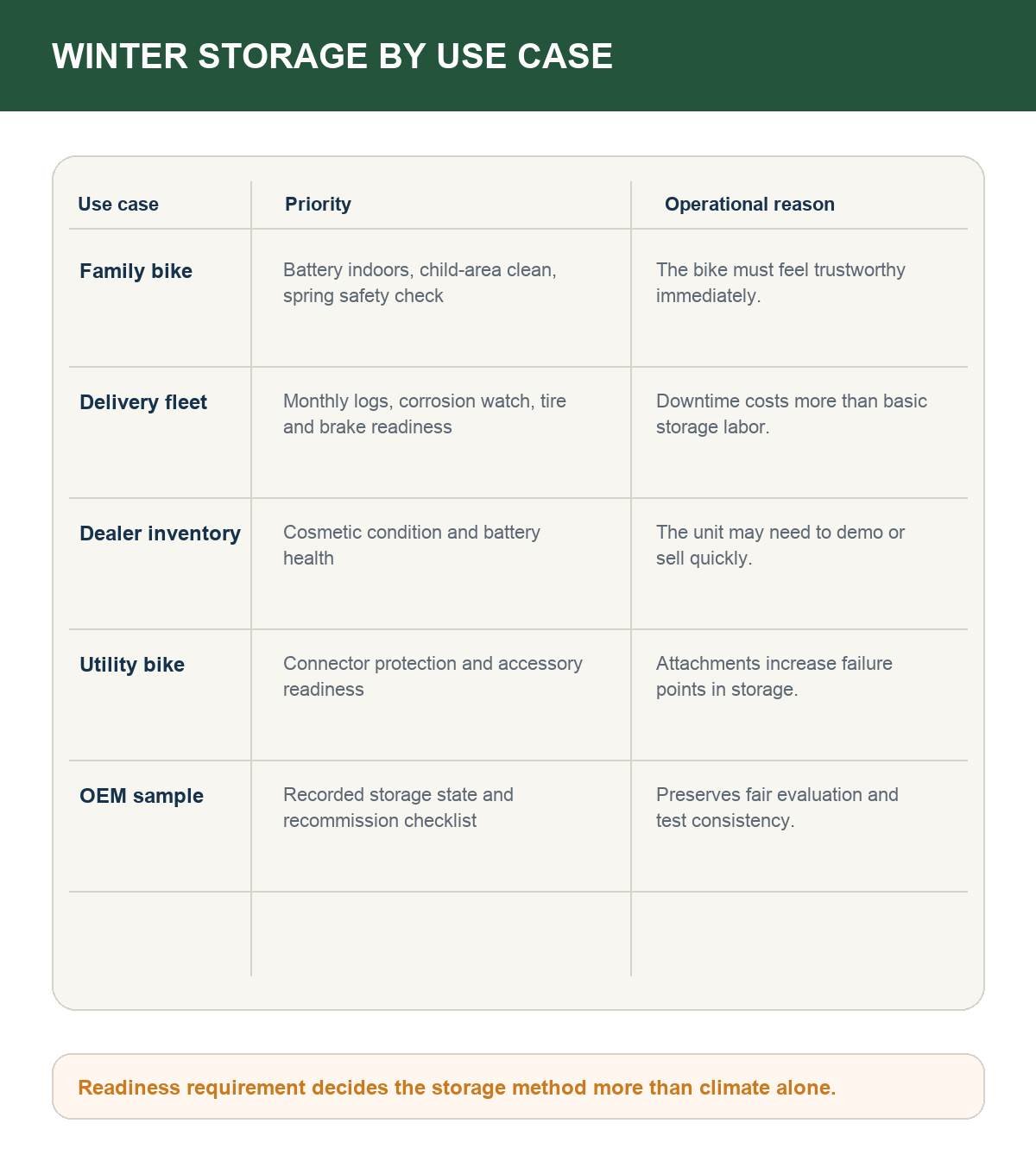
Das ist die kommerzielle Logik hinter der Winterlagerung. Der richtige Prozess wird durch Bereitschaftsanforderungen definiert, nicht allein durch das Klima.
Häufige Fehler bei der Winterlagerung, die vermieden werden sollten
Vermeiden Sie diese Entscheidungen:
- den Akku monatelang voll lagern
- den Akku monatelang nahezu leer lagern
- den Akku unter frostigen oder feuchten Bedingungen lassen
- das Rad nach Nutzung auf gestreuten Straßen schmutzig abstellen
- ein nasses Rad sofort abdecken
- den Reifendruck vergessen, weil das Rad nicht bewegt wird
- einen Sicherheitscheck im Frühling überspringen
Die häufigste falsche Annahme ist, dass "ungenutzt" "sicher" bedeutet. In Wirklichkeit schaffen lange Stillstandszeiten ihre eigenen Wartungsrisiken.
Eine praktische Checkliste für die Winterlagerung
Wenn Sie eine einfache Checkliste brauchen, verwenden Sie diese:
- Reinigen Sie das Rad und entfernen Sie jegliches Salz und jeglichen Schmutz.
- Trocknen Sie das Rad vollständig.
- Schmieren Sie Kette und freiliegende bewegliche Teile angemessen.
- Stellen Sie den Akku auf etwa 30 bis 60 Prozent und lagern Sie ihn drinnen.
- Pumpen Sie die Reifen korrekt auf und entfernen Sie unnötige Last vom Rad.
- Stellen Sie das Rad an einem trockenen, geschützten Ort ab.
- Prüfen Sie Akku, Reifen, Kette und Feuchtigkeit einmal pro Monat.
- Nehmen Sie das Rad vor der ersten Vollast-Fahrt im Frühling sorgfältig wieder in Betrieb.
Das ist der praktische Standard, um ein elektrisches Lastenrad über den Winter zu lagern, ohne später vermeidbare Probleme mit Akku, Korrosion, Reifen oder Betriebsbereitschaft zu verursachen.
In diesem Leitfaden verwendete Referenzen
- Bosch eBike-Systeme: Lagerung bei längerer Nichtnutzung
- Bosch eBike-Systeme: Wie kann ich meinen Bosch eBike-Akku optimal auf die Winterlagerung vorbereiten?
- Park Tool: Wie man ein Fahrrad wäscht
- Park Tool: Wie man eine Kette reinigt und schmiert