
 KO
KO  EN
EN  DE
DE  NL
NL  IT
IT  FR
FR  ES
ES  PT
PT  DA
DA  SV
SV  FI
FI  CS
CS  EL
EL  HU
HU  ET
ET  BG
BG  PL
PL  JA
JA 마지막 업데이트: 2026년 6월
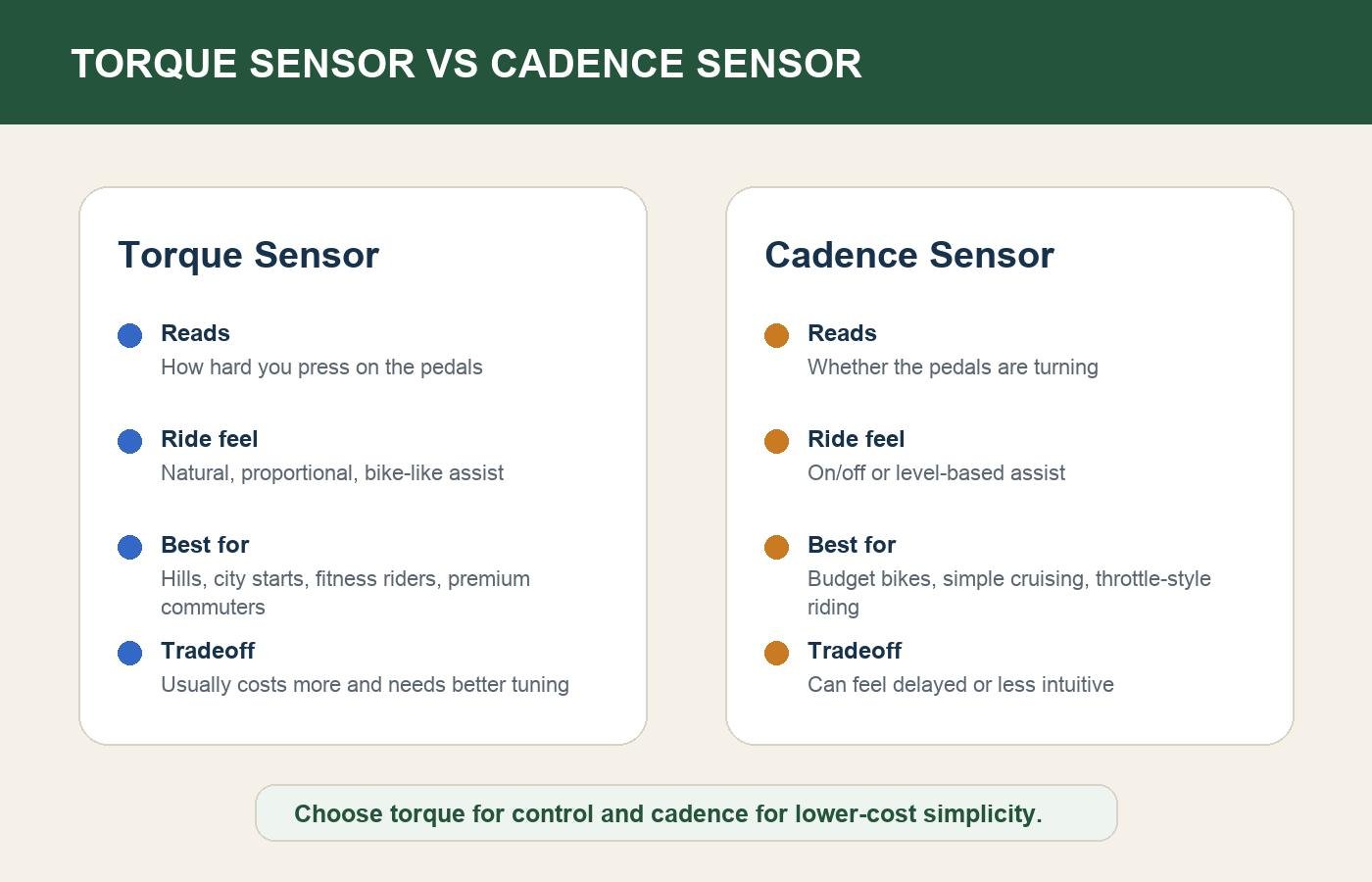
토크 센서와 케이던스 센서의 가장 큰 차이점은 전기 자전거가 무엇에 반응하는지입니다. 토크 센서는 페달 압력에 반응하므로 더 세게 밟으면 모터가 더 많은 도움을 제공합니다. 케이던스 센서는 페달 움직임에 반응하므로 크랭크가 회전하는 것을 감지하면 모터가 켜집니다.
이 하나의 차이점이 전체 주행을 바꿉니다. 토크 센서 전기 자전거는 자신의 다리가 강해진 느낌에 더 가깝습니다. 케이던스 센서 전기 자전거는 파워 레벨을 선택하고 페달을 밟기 시작하면 자전거가 더 많은 작업을 대신하는 느낌에 더 가깝습니다. 어느 시스템도 자동으로 잘못된 것은 아니지만, 서로 다른 라이더, 예산, 지형에 맞습니다.
토크 센서 vs 케이던스 센서: 간단한 차이점
두 시스템 모두 페달 어시스트의 일부입니다. 컨트롤러에 배터리에서 모터로 전력을 보낼 시기를 알려줍니다. 차이점은 보내는 신호입니다.
| 기능 | 토크 센서 | 케이던스 센서 |
|---|---|---|
| 측정하는 것 | 페달 힘 | 페달 회전 |
| 주행 느낌 | 자연스럽고 비례적 | 더 온/오프 또는 레벨 기반 |
| 정지 상태에서 출발 | 잘 튜닝되면 부드러움 | 지연되거나 급격하게 치솟는 느낌이 들 수 있음 |
| 언덕 오르기 | 일반적으로 더 나은 제어 | 어시스트 레벨과 모터 출력에 크게 의존 |
| 배터리 사용 | 종종 더 효율적 | 높은 어시스트가 유지되면 더 많은 전력을 사용할 수 있음 |
| 비용 | 일반적으로 더 높음 | 일반적으로 더 낮음 |
| 최상의 대상 | 통근, 언덕, 피트니스, 프리미엄 자전거 | 예산 중심 라이더, 캐주얼 크루징, 평평한 경로 |
자전거가 직관적으로 느껴지길 원한다면 예산이 허락할 때 토크 센서를 선택하세요. 저렴한 전기 자전거를 원하고 덜 정교한 어시스트 느낌을 괜찮게 여긴다면 케이던스 센서도 여전히 합리적일 수 있습니다.
전기 자전거 토크 센서란 무엇인가?
전기 자전거 토크 센서는 페달, 크랭크, 바텀 브래킷 또는 구동계를 통해 가하는 힘을 측정합니다. 더 세게 누르면 컨트롤러가 그 노력을 읽고 모터에 더 많은 지원을 제공하라고 지시합니다. 부드럽게 페달을 밟으면 모터가 지원을 줄입니다.
그래서 토크 감지 페달 어시스트가 종종 자연스럽게 느껴집니다. 자전거는 “페달이 움직이고 있나요?”라고 묻는 것이 아니라 “라이더가 지금 얼마나 노력하고 있나요?”라고 묻는 것입니다.”
이것은 실제 상황에서 도움이 됩니다:
- 교차로에서 정지 상태에서 출발할 때
- 짐이나 식료품을 싣고 언덕을 오를 때
- 맞바람을 뚫고 달릴 때
- 붐비는 자전거 도로를 천천히 지나갈 때
- 긴 통근에서 배터리를 절약할 때
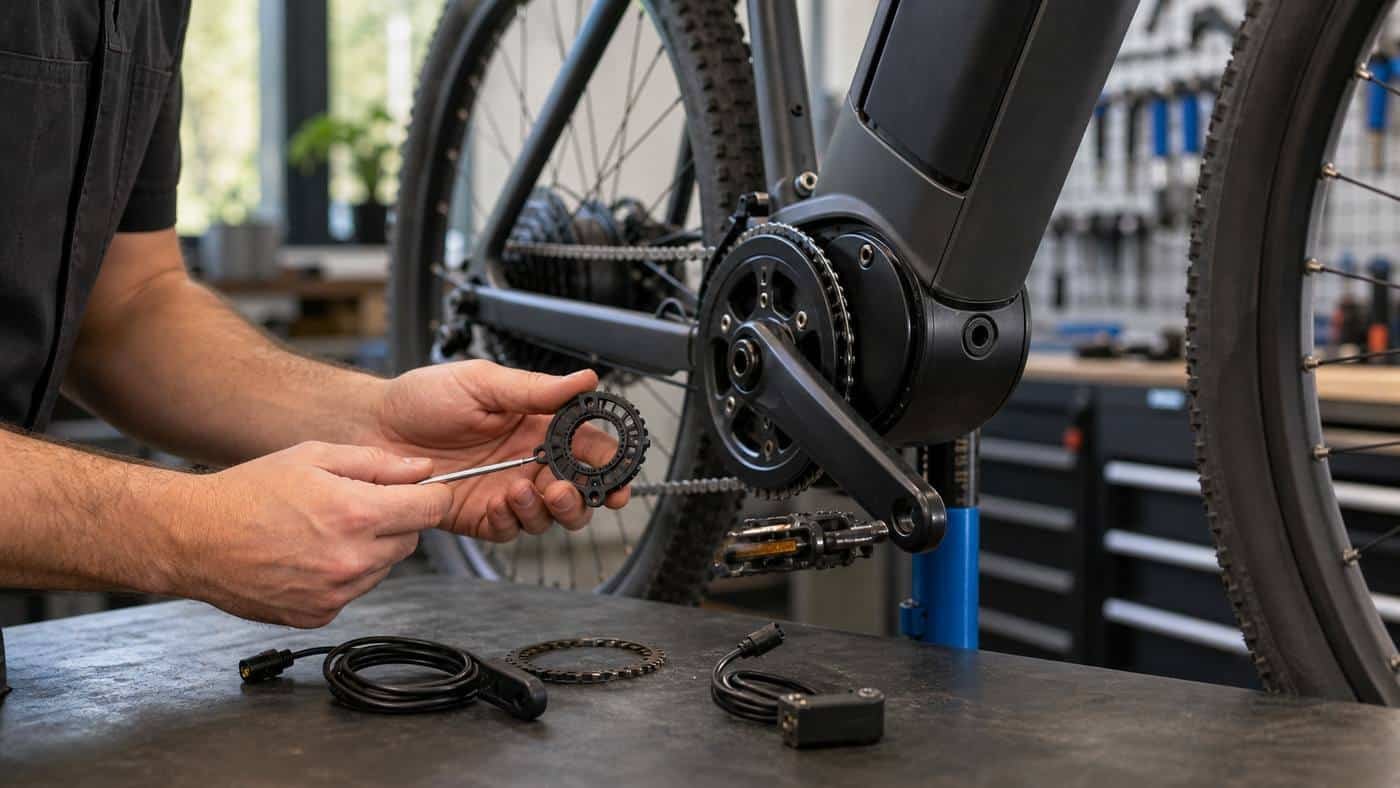
잘 튜닝된 토크 센서는 모터가 다리와 연결된 느낌을 줍니다. 여전히 어시스트 레벨을 선택하지만, 그 레벨 내에서 시스템은 노력에 반응합니다. 낮은 노력에는 가벼운 도움이 제공됩니다. 강한 노력에는 더 강한 도움이 제공됩니다.
단점은 비용입니다. 토크 센서는 일반적으로 더 잘 갖춰진 통근, 화물, 트레킹 및 성능 전기 자전거에 나타납니다. 또한 좋은 소프트웨어 튜닝이 필요합니다. 컨트롤러 튜닝이 좋지 않은 저렴한 토크 센서도 여전히 어색하게 느껴질 수 있습니다.
케이던스 센서 전기 자전거란 무엇인가?
케이던스 센서는 페달 회전을 감지합니다. 자석이나 센서 시스템이 크랭크가 회전하는 것을 확인하면 컨트롤러는 선택된 어시스트 레벨에 따라 모터 지원을 활성화합니다.
쉽게 말하면, 케이던스 센서는 "페달을 밟고 있나요, 아니요?"라고 묻습니다.
많은 케이던스 센서 전기 자전거에서 어시스트는 얼마나 세게 누르는지에 따라 크게 변하지 않습니다. 자전거가 어시스트 레벨 3으로 설정된 경우 페달이 계속 움직이는 한 프로그래밍된 양의 전력을 제공할 수 있습니다. 이것은 특히 평평한 지면에서 쉽고 편안하게 느껴질 수 있습니다.
대가는 제어입니다. 일부 케이던스 시스템은 시작하거나 멈출 때 약간의 지연이 있습니다. 일부는 어시스트가 시작될 때 급격하게 치솟을 수 있습니다. 일부는 라이더가 모터가 대부분의 작업을 하는 동안 페달을 가볍게 돌리는 “유령 페달링”을 조장할 수 있습니다.
그것이 항상 나쁜 것은 아닙니다. 많은 라이더가 그 느낌을 원합니다. 평평한 경로를 타거나, 피로에서 회복하거나, 여유로운 지역 이동을 위한 예산 전기 자전거를 선택한다면 케이던스 어시스트가 정확히 기대하는 것일 수 있습니다.
각 페달 어시스트 센서가 도로에서 어떻게 느껴지는가
토크 센서와 케이던스 센서 동작을 이해하는 가장 좋은 방법은 같은 주행을 두 대의 자전거에서 상상하는 것입니다.
정지 상태에서 출발
토크 센서를 사용하면 페달을 누르는 즉시 모터가 반응합니다. 좋은 시스템은 모터 출력이 노력에 따라 상승하기 때문에 제어된 느낌을 줍니다.
케이던스 센서를 사용하면 모터는 일반적으로 크랭크 회전을 감지할 때까지 기다립니다. 이것은 짧은 지연을 만들 수 있습니다. 어시스트가 도착하면 자전거가 한 번에 깨어나는 느낌이 들 수 있습니다.
자신감 있는 라이더에게는 관리할 수 있습니다. 초보 라이더, 노인, 화물 라이더 또는 교통 상황에서 출발하는 통근자에게는 부드러운 출발 동작이 매우 중요합니다.
언덕 오르기
토크 센서는 라이더가 더 세게 밀 때 전력을 추가하기 때문에 언덕에서 일반적으로 더 좋게 느껴집니다. 이것은 오르막을 예측 가능하게 만듭니다. 약간 힘을 빼면 자전거도 함께 힘을 뺍니다.
케이던스 센서도 모터가 강하고 어시스트 레벨이 높으면 여전히 잘 오를 수 있습니다. 그러나 전력이 페달 압력보다 어시스트 설정에 더 많이 연결되어 있기 때문에 자전거가 덜 정밀하게 느껴질 수 있습니다.
교통 상황에서 주행
정지-출발 도시 주행은 부드러운 제어에 보상을 줍니다. 토크 센서는 라이더 노력의 작은 변화가 모터 출력의 작은 변화를 만들기 때문에 도움이 됩니다.
케이던스 센서는 자전거 도로나 조용한 거리에서는 괜찮을 수 있지만, 어시스트가 너무 갑자기 켜지면 혼잡한 교통에서 어색하게 느껴질 수 있습니다.
긴 여유로운 크루징
케이던스 센서는 여기서 빛을 발할 수 있습니다. 경로가 평평하고 라이더가 낮은 노력을 원한다면 케이던스 센서 전기 자전거는 페달에 많은 압력을 가하지 않고도 쉽고 모페드 같은 리듬을 유지할 수 있습니다.
토크 센서도 여전히 잘 작동하지만 일반적으로 라이더에게 더 실제적인 페달링 노력을 기대합니다.
주행 거리에 어떤 센서가 더 좋은가?
토크 센서는 모터 출력이 라이더 노력을 더 밀접하게 따르기 때문에 주행 거리에 종종 도움이 됩니다. 평평한 도로에서 부드럽게 페달을 밟으면 자전거는 언덕에서 사용할 전력을 쏟아부을 필요가 없습니다. 이것은 어시스트를 더 효율적으로 느끼게 할 수 있습니다.
페달 보조 센서는 라이더가 높은 보조 레벨을 선택하고 페달을 가볍게 계속 돌릴 때 배터리를 더 많이 사용할 수 있습니다. 더 적은 전력으로 충분한 상황에서도 자전거가 비교적 고정된 양의 도움을 계속 제공할 수 있습니다.
즉, 주행 거리는 센서만으로 결정되지 않습니다. 실제 주행 거리는 다음 요소에도 달려 있습니다:
- 배터리 용량
- 모터 유형 및 튜닝
- 라이더 체중
- 타이어 공기압
- 속도
- 언덕
- 바람
- 화물
- 온도
- 정지-출발 주행
두 대의 유사한 전기자전거를 같은 사람이 같은 통근 경로에서 탄다면, 토크 센서 자전거가 효율적으로 관리하기 더 쉬운 느낌을 주는 경우가 많습니다. 하지만 잘 타는 페달 보조 센서 자전거도 라이더가 낮은 보조 레벨을 사용하고 타이어 공기압, 구동계, 충전 습관을 관리한다면 좋은 주행 거리를 제공할 수 있습니다.
배터리 동작 및 주행 거리 진단에 대해서는 다음 가이드를 참조하세요: 전자 화물 자전거 배터리 성능 저하의 8가지 징후.
통근에 어떤 센서가 더 좋을까요?
대부분의 일상 통근자에게는 가격이 합리적이라면 토크 센서가 더 좋습니다. 통근에는 교차로, 언덕, 속도 변화, 보행자, 신호등, 그리고 원시적인 모터 출력보다 예측 가능한 제어가 더 중요한 순간들이 포함됩니다.
다음과 같은 경우 통근용으로 토크 센서를 선택하세요:
- 경로에 언덕이 있는 경우
- 교통 상황에서 주행하는 경우
- 배낭, 식료품, 또는 유아용 시트를 운반하는 경우
- 자전거가 자연스러운 자전거 타기처럼 느껴지길 원하는 경우
- 배터리 효율을 중요하게 생각하는 경우
- 중급 또는 프리미엄 통근용 전기자전거를 구매하는 경우
다음과 같은 경우 통근용으로 페달 보조 센서를 선택하세요:
- 경로가 평평한 경우
- 더 낮은 구매 가격을 원하는 경우
- 매우 가벼운 페달링 노력을 선호하는 경우
- 법적으로 허용되는 곳에서 스로틀을 자주 사용하는 경우
- 주로 자전거 도로, 주거 지역, 또는 짧은 거리를 주행하는 경우
통근자는 또한 지역 등급 규정을 고려해야 합니다. 센서 자체가 자전거가 클래스 1, 클래스 2, 또는 클래스 3인지 결정하지는 않지만, 보조 동작, 스로틀 가용성, 최대 보조 속도는 자전거가 주행 가능한 지역에 영향을 미칩니다.
노인이나 초보 라이더에게 어떤 센서가 더 좋을까요?
이것은 라이더에 따라 다릅니다.
토크 센서는 부드러운 출발, 예측 가능한 속도 제어, 그리고 라이더의 노력에 자연스럽게 반응하는 자전거를 원하는 라이더에게 종종 더 좋습니다. 이는 노인, 신중한 라이더, 그리고 갑작스러운 가속을 싫어하는 사람에게 도움이 될 수 있습니다.
페달 보조 센서는 무릎 통증, 피로, 또는 힘이 부족하고 가벼운 페달 압력으로 더 많은 보조를 받고 싶은 라이더에게 더 좋을 수 있습니다. 일부 라이더는 모터 도움을 받기 위해 세게 밀 필요가 없기 때문에 페달 보조 시스템을 선호합니다.
중요한 세부 사항은 튜닝입니다. 잘 제어된 시작 동작을 가진 부드러운 페달 보조 시스템은 제대로 튜닝되지 않은 토크 시스템보다 더 쉬울 수 있습니다. 거친 페달 보조 시스템은 불안하게 느껴질 수 있습니다. 가능하면 구매 전에 두 가지를 모두 시승해 보세요.
구매 조언: 토크 센서 vs 페달 보조 센서
전기자전거가 중간 예산 이상이고 통근용, 화물용, 트레킹용, 또는 프리미엄 도시용 자전거로 판매된다면, 토크 센서는 큰 장점입니다. 라이더가 매 마일 느끼는 것, 즉 자전거가 얼마나 자연스럽게 반응하는지를 개선합니다.
자전거가 저가형 폴더, 크루저, 또는 주거 지역용 전기자전거라면, 페달 보조 센서는 수용 가능한 절충안일 수 있습니다. 가격을 낮추면서 유용한 전기 보조를 제공합니다.
이 빠른 구매 논리를 사용하세요:
- 자연스러운 주행 느낌을 원하면 토크 센서를 선택하세요.
- 경로에 언덕이나 교통이 있으면 토크 센서를 선택하세요.
- 적극적으로 페달링하고 싶다면 토크 센서를 선택하세요.
- 가격이 가장 중요하다면 페달 보조 센서를 선택하세요.
- 경로가 평평하고 여유롭다면 페달 보조 센서를 선택하세요.
- 일정한 속도에서 매우 쉬운 페달링을 원한다면 페달 보조 센서를 선택하세요.
최고의 전기자전거는 종이상 가장 화려한 센서를 가진 것이 아닙니다. 보조 동작이 실제 주행 방식과 일치하는 자전거가 최고입니다.
자주 묻는 질문
Q1: 토크 센서가 페달 보조 센서보다 더 좋나요?
I notice you've provided only "1. A:" without the actual English text to translate. Could you please provide the full English content you'd like me to translate into Korean? 토크 센서는 일반적으로 자연스러운 주행 느낌, 언덕, 통근, 효율성에 더 좋습니다. 페달 보조 센서는 일반적으로 더 저렴하며 평평하고 여유로운 주행에 좋을 수 있습니다.
Q2: 전기자전거에서 페달 보조 센서는 무엇을 하나요?
I notice you've provided only "1. A:" without the actual English text to translate. Could you please provide the full English content you'd like me to translate into Korean? 페달 보조 센서는 페달이 회전하는지 감지합니다. 페달링을 감지하면 선택된 보조 레벨에 따라 컨트롤러에 보조를 제공하도록 지시합니다.
Q3: 전기자전거에서 토크 센서는 무엇을 하나요?
I notice you've provided only "1. A:" without the actual English text to translate. Could you please provide the full English content you'd like me to translate into Korean? 토크 센서는 라이더가 페달을 얼마나 세게 누르는지 측정합니다. 그런 다음 모터는 라이더의 노력에 비례하여 보조를 추가합니다.
Q4: 토크 센서 전기자전거는 배터리를 덜 사용하나요?
I notice you've provided only "1. A:" without the actual English text to translate. Could you please provide the full English content you'd like me to translate into Korean? 종종 그렇습니다, 모터 출력이 라이더의 노력을 더 밀접하게 따르기 때문입니다. 하지만 총 주행 거리는 여전히 배터리 크기, 속도, 언덕, 라이더 체중, 타이어 공기압, 보조 레벨에 달려 있습니다.
Q5: 페달 보조 센서 전기자전거는 언덕을 오를 수 있나요?
I notice you've provided only "1. A:" without the actual English text to translate. Could you please provide the full English content you'd like me to translate into Korean? 네, 모터, 기어, 배터리가 충분히 강하다면 가능합니다. 보조가 페달 압력에 직접적으로 연결되지 않기 때문에 토크 센서 자전거만큼 정밀하게 느껴지지 않을 수 있습니다.
Q6: 초보자는 토크 또는 페달 보조를 선택해야 하나요?
I notice you've provided only "1. A:" without the actual English text to translate. Could you please provide the full English content you'd like me to translate into Korean? 부드럽고 자전거 같은 제어를 원하는 초보자는 토크 센서 쪽으로 기울어야 합니다. 낮은 노력과 낮은 비용을 원하는 초보자는 특히 평평한 경로에서 페달 보조 센서를 선호할 수 있습니다.
출처
- Bosch eBike Systems, 공식 구동 장치 및 센서 설명.
- Aventon의 토크 센서 및 페달 보조 센서에 대한 교육 자료.
- Shimano STEPS 지원 및 페달 보조 동작에 대한 전기자전거 시스템 설명.