 SV
SV  EN
EN  DE
DE  NL
NL  IT
IT  FR
FR  ES
ES  PT
PT  DA
DA  FI
FI  CS
CS  EL
EL  HU
HU  ET
ET  BG
BG  PL
PL  JA
JA  KO
KO Senast uppdaterad: juli 2026
Om du köper, importerar eller säljer e-cyklar för en levnad har första halvan av 2026 varit en av de mest högljudda perioderna på åratal. En federal batteriregel landade i USA. En tariffstrid slutade i en sällsynt branschvinst. Eurobike såg mindre ut medan kinesiska drivenhetstillverkare tog mer av rampljuset. Välj fel ögonblick att lägga en containerorder just nu och du kan sitta med lager som antingen är bristfälliga eller tekniskt föråldrade inom arton månader.
Här är de fem berättelserna värda din uppmärksamhet, vad var och en betyder för köpare, och var fällorna finns.
CPSC vill ha obligatoriska batterisäkerhetsregler, och kommentarsfönstret stänger den 24 augusti
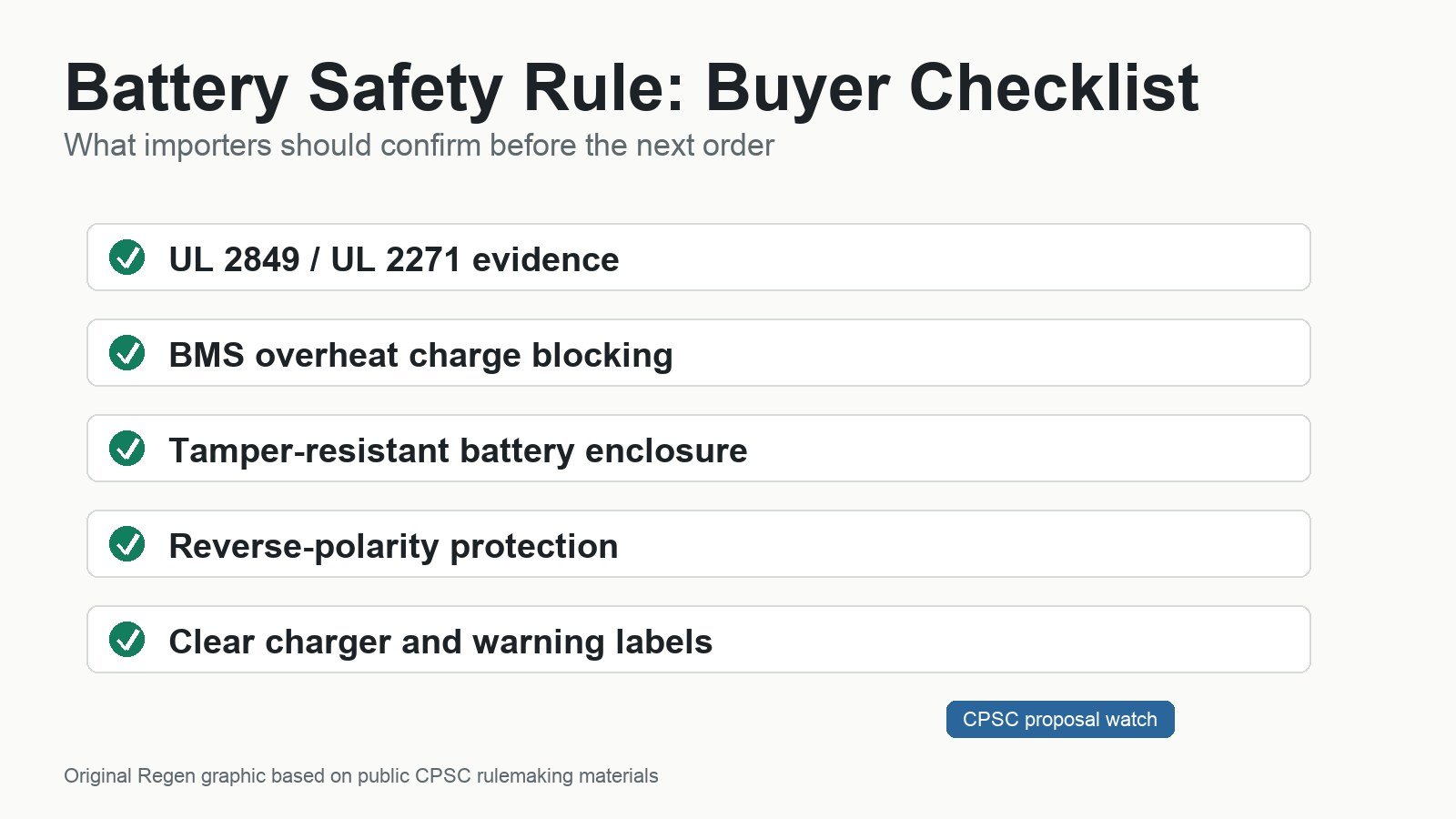
U.S. Consumer Product Safety Commission publicerade en föreslagen federal regel den 24 juni 2026 som skulle göra säkerhetskrav för litiumjonbatterier obligatoriska för mikromobilitetsprodukter, inklusive e-cyklar. Skriftliga kommentarer ska vara inne senast den 24 augusti 2026.
Omfattningen är den del många köpare underskattar. Förslaget täcker kompletta e-cyklar, elsystem, användarutbytbara batteripaket, laddare, batterihanteringssystem, konverteringssatskomponenter och andra elektriska delar kopplade till mikromobilitetsprodukter.
För varumärken som redan skickar system testade enligt UL 2849 eller UL 2271 är detta mestadels en fråga om dokumentation, testning och leverantörskontroll. Förslaget lägger också till meningsfulla ändringar, inklusive manipulationssäkra batterihöljen, BMS-testning som förhindrar laddning av överhettade celler, omvänd polaritetsskydd mot inkompatibla laddare och reviderad säkerhetsmärkning.
Företagen som borde vara nervösa är de som säljer billiga ocertifierade paket via marknadsplatser eller löst dokumenterade importkanaler. Om en leverantör inte kan visa aktuella tredjepartstestrapporter idag, kanske den leverantören inte är en pålitlig amerikansk inköpspartner om två år. Jag skulle behandla detta förslag som ett inköpsfilter nu snarare än att vänta på den slutgiltiga regeln.
Branschen kämpade mot nya Section 232-tariffer och vann
I april 2026 bekräftade Vita huset att cyklar, e-cyklar och ramar inte skulle omfattas av nya Section 232-tariffer på stål och aluminium. Vissa befintliga tariffer kopplade till metallinnehåll i e-cyklar togs också bort.
Det ursprungliga förslaget skulle ha tvingat importerare att beräkna det exakta stål- och aluminiuminnehållet i varje importerad cykel eller ram och betala tariffer på den delen. Alla som har försökt få en detaljerad materialförteckning uppdelad efter metallvikt från en utländsk montör vet vilket efterlevnadsproblem det skulle ha skapat.
PeopleForBikes samordnade mycket av motståndet. Mer än 1 300 offentliga kommentarer lämnades in mot tarifferna, vilket gjorde cykel- och e-cykelsektorn till ett av de mest aktiva branschsvaren som rapporterats i processen.
Läxan för mindre importerare är tydlig: handelspolitik är nu en normal del av e-cykelinköpsrisken, och den kan svänga åt båda hållen inom en enda ordercykel. Vissa varumärken pausade USA-importen när tidigare tariffpress slog till. De som hanterar detta bättre tenderar att ha diversifierade monteringsalternativ, inte en enlandsförsörjningskedja.
Eurobike 2026 krympte medan kinesiska drivenhetstillverkare tog centrum
Eurobike 2026 var märkbart tystare än tidigare år. Pinkbike rapporterade att antalet utställare minskade med nästan hälften jämfört med föregående år, medan stora namn som Bosch och SRAM var frånvarande. De största montrarna tillhörde istället kinesiska företag som Avinox, Amflow och Gobao.
Läs det som en signal om försörjningskedjan, inte bara mässskvaller. Uppmärksamheten har skiftat från traditionella europeiska utställningslokaler mot kinesisk komponentutveckling, där motor-, batteri- och mjukvarucykler rör sig snabbt.
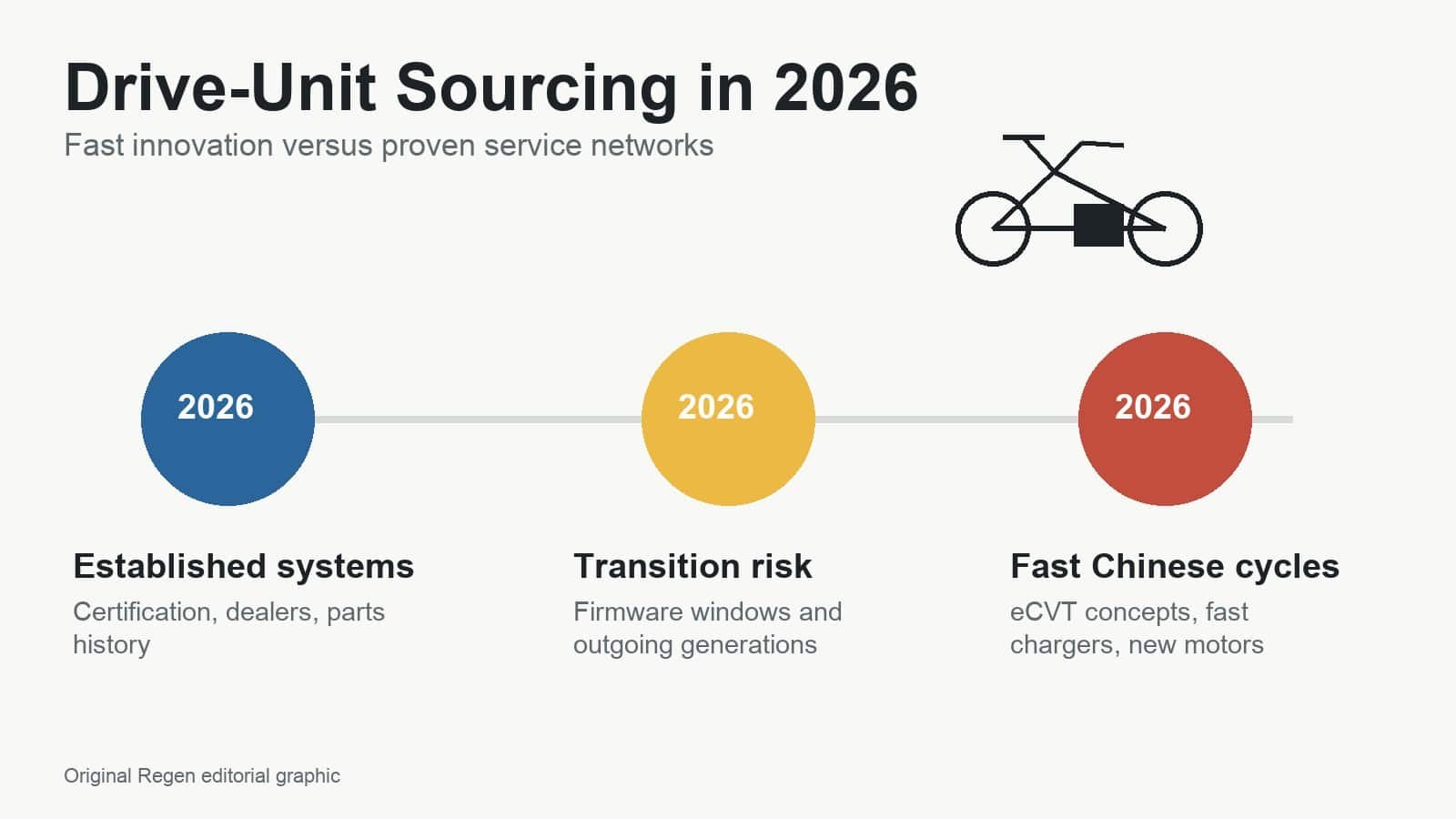
Avinox lanserade sin M1-motor, följde upp med den kraftfullare M2S och visade sedan ett eCVT-koncept inom ett kort fönster. Pinkbike kontrasterade den takten med Bosch:s CX-motorhårdvara, senast uppdaterad 2024. För köpare är risken inte bara om en ny motor är kraftfull. Risken är om generationen du specificerar idag fortfarande kommer att ha firmwarestöd, reservdelar och serviceuppmärksamhet när dina cyklar når kunderna.
Om du specificerar en flotta eller en containerorder kring en nyare kinesisk drivenhet, fråga leverantören direkt om firmwarestödsfönster, reservdelsåtaganden, diagnosverktyg och vad som händer med den utgående generationen när nästa motor lanseras.
Gobaos 1 500 W eCVT-motor tar bort växel och kassett
Gobaos X1P var ett av de mest omtalade drivsystemen kring Eurobike. Enheten kombinerar en 1 500 W toppeffektmotor, 150 Nm vridmoment och en kontinuerligt variabel transmission i ett 3,85 kg-paket. Konceptet tar bort växeln, kassetten och traditionell växelväljare från drivlinan.
Ryttaren kan ställa in en föredragen kadens, och systemet justerar utväxlingen kontinuerligt istället för att växla genom fasta kuggar. Pinkbike rapporterade också batterialternativ på 500 Wh, 750 Wh och 900 Wh, med 750 Wh-paketet påstått ladda till 80% på 28 minuter med Gobaos 30 A-laddare.
För uthyrningsflottor och leveransoperatörer är laddningstid inte en specifikationsdetalj. Det ändrar utnyttjandegraden. En cykel som kan vändas på en halvtimme är en annan affärsmodell än en som står i flera timmar.
Min varning: ingen större eMTB-tillverkare hade offentligt antagit systemet vid tidpunkten för rapporten, och första generationens drivenheter från vilken leverantör som helst bär servicenätverksrisk. Håll koll på det, testa det om du kan, men jag skulle inte bygga en hel 2027-produktplan kring det förrän reservdelar, återförsäljarverktyg och garantihantering finns utanför Kina.
Bosch lanserar Certified by Bosch för begagnade e-cyklar
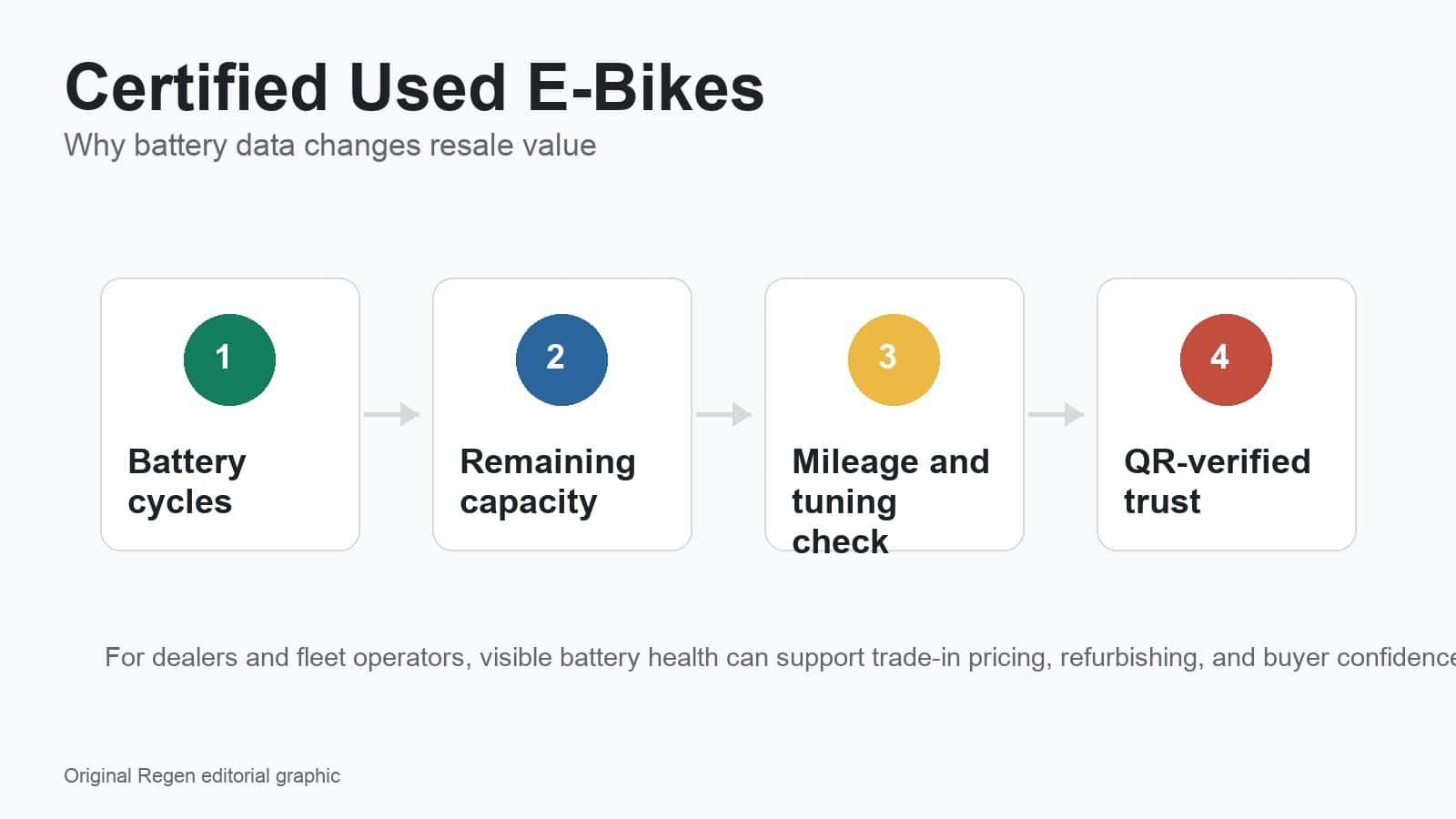
Bosch eBike Systems har gett sig in på marknaden för certifierade begagnade produkter med "Certified by Bosch", ett digitalt certifikat för begagnade e-cyklar. Certifikatet visar batteri- och drivaggregatets skick, laddcykler, återstående batterikapacitet, körsträcka, trimningsindikatorer, stöldstatus i eBike Flow-appen och QR-kodsverifiering.
Rebike blir den första partnern, med certifierade e-cyklar med Bosch-system tillgängliga från juli 2026 i Tyskland, Österrike, Schweiz, Frankrike och Nederländerna. Bosch uppger att specialiserade cykelåterförsäljare kommer att kunna utfärda certifikat från början av 2027.
Begagnade e-cyklar har alltid haft ett svårt problem: batteriet är dyrt och dess skick är svårt att bedöma från utsidan. Ett certifikat som visar laddcykler och återstående kapacitet förändrar restvärdesmatematiken för leasingbolag, flottoperatörer, återförsäljare som tar in inbyten och konsumenter som jämför begagnade premiumcyklar med nya budgetmodeller.
Den strategiska vinkeln är värd att notera. Certifierade begagnade Bosch-cyklar konkurrerar med förtroende, restvärde och servicetransparens snarare än rå motorprestanda. Bosch hoppade över Eurobike och lanserade detta istället. Det är inte reträtt; det är ett annat slagfält.
Vad detta innebär för köpare
Två krafter drar branschen i motsatta riktningar samtidigt. Reglering höjer golvet och pressar ut de minst dokumenterade leverantörerna. Kinesisk drivaggregatsinnovation höjer taket snabbare än etablerade aktörer kan svara.
Den praktiska mitten är där jag skulle koncentrera inköp under de kommande tolv månaderna: mellanklasscyklar med beprövade system, riktig certifieringsdokumentation, förutsägbart servicesupport och leverantörer som kan förklara vad som händer när en motor- eller batterigeneration förändras.
Innan din nästa beställning, bekräfta aktuella testrapporter från varje batterileverantör, fråga motorleverantörer om reservdelsstöd för utgående generationer och kontrollera om din målmarknad har pågående reglering. För USA är CPSC-förslaget det att hålla koll på nu. För delstatsnivåregler, håll ett öga på förändringar i batteri-, märknings-, ålders- och klassramverk innan du importerar lager.
Om du väger ett specifikt inköpsbeslut – en drivsystemsspecifikation, en certifieringslucka eller en containerbeställning du inte är säker på – hör av dig så kan vi granska det mot vad som kommer i regleringspipelinen. Ett kort samtal nu är billigare än att omcertifiera lager senare.
Källor
- Federal Register – CPSC föreslagen litiumjonbatterisäkerhetsregel, 24 juni 2026
- Electrek – Ny CPSC-regel kan dramatiskt förändra e-cyklar i USA
- Electrek – Hur e-cykelbranschen kämpade tillbaka och vann på vissa tullar
- Pinkbike – 6 lärdomar från Eurobike 2026
- Pinkbike – Gobaos nya 1500W-motor eliminerar traditionell växling
- Bosch Media Service – Certified by Bosch pressmeddelande
- Bike Europe – Bosch går in i certifierade begagnade e-cykelsegmentet