
 IT
IT  EN
EN  DE
DE  NL
NL  FR
FR  ES
ES  PT
PT  DA
DA  SV
SV  FI
FI  CS
CS  EL
EL  HU
HU  ET
ET  BG
BG  PL
PL  JA
JA  KO
KO Se la tua e-cargo bike inizia a completare meno consegne, perde assistenza prima durante i tragitti scolastici, o perde segmenti della batteria molto più velocemente di prima, la domanda di solito è semplice: la batteria si sta davvero degradando, o è qualcos'altro a causare il problema?
Questa confusione diventa costosa in fretta. I rider spesso sostituiscono una batteria troppo presto quando il vero problema è la pressione degli pneumatici, il freddo, il carico, le abitudini di ricarica o la resistenza della trasmissione. Altrettanto spesso, continuano a spingere una batteria invecchiata che ora crea tempi di inattività, autonomia imprevedibile e un aumento del lavoro di assistenza. Su una cargo bike, questo conta di più perché la batteria supporta carichi più pesanti, accelerazioni e arresti ripetuti, e scenari d'uso in cui l'affidabilità conta più che su una e-bike leggera da svago.
La risposta breve è questa: una batteria che si degrada di solito si manifesta come un modello, non come un singolo giro negativo. Se l'autonomia cala costantemente in condizioni simili, la bici mostra una perdita di potenza più marcata sotto carico, il comportamento di ricarica cambia, o la batteria si interrompe prima del previsto, dovresti trattarlo come un problema di salute della batteria e diagnosticarlo sistematicamente. La sostituzione diventa la mossa giusta quando la batteria non supporta più il percorso, il carico o lo standard di operatività per cui la bici è stata acquistata.
Perché il Degrado della Batteria Conta di Più sulle E-Cargo Bike
Tutte le batterie agli ioni di litio invecchiano. La vera domanda non è se l'invecchiamento esista, ma se le prestazioni residue della batteria siano ancora adatte al lavoro.
Quel lavoro è più duro su una e-cargo bike perché la bici ha tipicamente:
- peso totale più elevato
- partenze con carico più frequenti
- ore di lavoro più lunghe al giorno
- maggiore dipendenza da un'assistenza prevedibile
- conseguenze più gravi quando l'autonomia non basta
Su una e-bike urbana leggera, il degrado della batteria può sembrare un inconveniente. Su una cargo bike, può significare una finestra di consegna mancata, un viaggio di famiglia incompiuto, o un rider che sceglie soluzioni non sicure perché l'assistenza svanisce a metà di un percorso con carico.
L'invecchiamento della batteria crea anche confusione evitabile nell'assistenza post-vendita. I clienti possono segnalare un motore debole, una scarsa arrampicata o un display inaffidabile quando il vero problema è il calo della capacità utile della batteria. Per concessionari, team OEM e gestori di flotte, saper separare l'invecchiamento della batteria da problemi di configurazione o utilizzo fa parte del controllo dei costi di garanzia e dell'accuratezza dell'assistenza.
Come Appare Realmente il Degrado della Batteria
Il degrado della batteria non è solo "la batteria sembra peggiore"."
Nell'uso pratico, il degrado di solito significa una o entrambe queste cose:
- il pacco immagazzina meno energia utile di prima
- il pacco fatica di più sotto carico, specialmente durante accelerazioni, salite o operazioni con carichi pesanti
Ecco perché i rider non dovrebbero giudicare la salute della batteria da un singolo cambiamento di segmento sul display. Una batteria sana può comunque mostrare cali temporanei con il freddo, durante salite ripide o quando la bici è molto carica. Il vero degrado appare quando la batteria sottoperforma ripetutamente in condizioni comparabili.
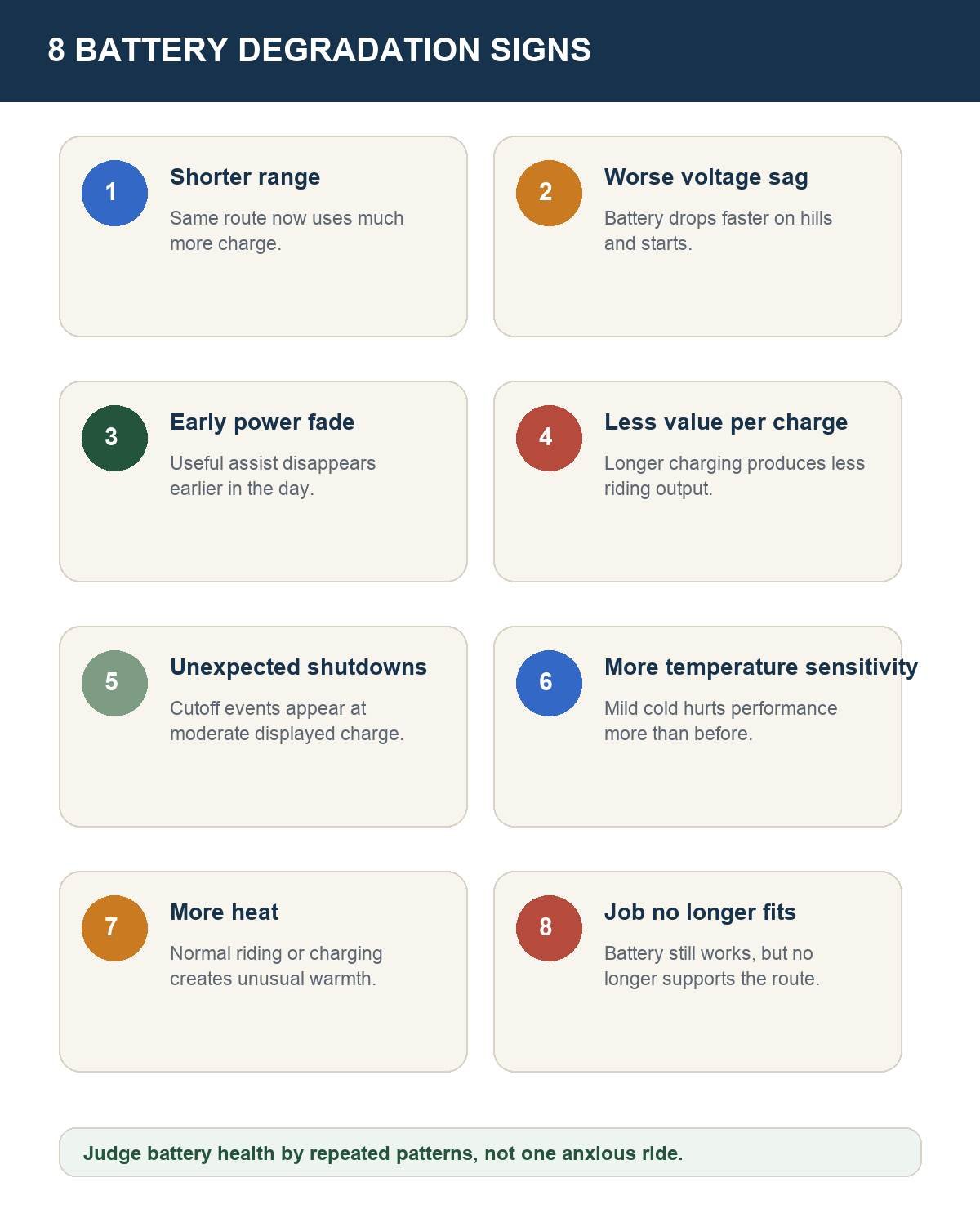
8 Segnali che la Batteria della Tua E-Cargo Bike si Sta Degradando
L'autonomia reale continua a ridursi in condizioni simili
Questo è il segnale più importante.
Se il percorso, la modalità di assistenza, il comportamento del rider, il meteo e il carico sono in gran parte simili, ma la bici ora copre una distanza notevolmente inferiore prima della ricarica, l'invecchiamento della batteria diventa un serio sospetto.
Ciò che conta non è un singolo giro eccezionale. Ciò che conta è un modello ripetuto su più giri.
Test pratico:
- Confronta tre o cinque tragitti simili.
- Registra carica iniziale, carica finale, distanza del percorso, carico approssimativo e temperatura esterna.
- Cerca un calo costante piuttosto che un calo isolato.
Se l'autonomia si riduce costantemente mentre l'uso rimane in gran parte comparabile, la batteria sta probabilmente perdendo capacità utile.
La percentuale o i segmenti della batteria crollano più velocemente sotto carico pesante rispetto a prima
Le cargo bike stressano naturalmente una batteria più delle e-bike leggere. Un certo calo di tensione temporaneo è normale. Ma quando un pacco invecchia, il calo durante l'accelerazione o la salita diventa spesso più marcato e frequente.
Reclamo tipico del rider:
- la bici inizia una salita al 60 percento
- il display scende improvvisamente molto più in basso sotto carico
- l'assistenza sembra più debole prima che la batteria si riprenda leggermente su terreno pianeggiante
Se questo comportamento peggiora nel tempo con clima mite e su percorsi noti, spesso indica una maggiore resistenza interna e prestazioni più deboli sotto carico.
La bici raggiunge la modalità a bassa potenza molto prima durante la giornata
Molti rider non notano prima la perdita di capacità. Notano che la bici diventa meno utile prima di essere completamente scarica.
Esempi:
- l'assistenza sembra debole molto prima durante un turno di consegne
- l'ultimo tratto del tragitto scolastico sembra lento rispetto ai mesi precedenti
- il rider inizia a evitare salite o modalità di assistenza più alte per preservare abbastanza carica
Questo conta perché una batteria può ancora "funzionare" tecnicamente mentre sta già fallendo lo scenario d'uso pratico.
La ricarica richiede più tempo ma offre meno tempo di guida utile
Le batterie invecchiate spesso creano la frustrante sensazione che la bici passi un tempo normale o più lungo sul caricatore ma restituisca meno output reale.
Questo può manifestarsi come:
- ricariche frequenti per lo stesso chilometraggio settimanale
- una carica completa che non supporta più il percorso abituale
- un completamento della ricarica che sembra normale sul caricatore ma non nella guida reale
Se il caricatore e la routine di ricarica sono invariati, ma l'utilità di ogni carica completa continua a calare, il problema è di solito la salute della batteria piuttosto che la percezione del rider.
La batteria si interrompe o si spegne inaspettatamente a una carica visualizzata moderata
Questo è un segnale più grave.
Se la bici si spegne, perde assistenza o attiva la protezione della batteria mentre il display suggerisce ancora una carica significativa, la batteria potrebbe non mantenere più la tensione in modo stabile sotto carico reale.
Ciò non significa sempre che il pacco batteria sia l'unica causa. Contatti, cablaggio o problemi al controller possono contribuire. Ma eventi ripetuti di spegnimento improvviso non dovrebbero mai essere liquidati come normale invecchiamento della batteria. Richiedono una diagnosi perché influiscono direttamente sulla fiducia del rider e sull'affidabilità del percorso.
Le prestazioni cambiano molto di più con la temperatura rispetto a prima
Il freddo riduce sempre le prestazioni della batteria. Il problema è quando la batteria diventa eccessivamente sensibile anche in condizioni che la bici gestiva bene in precedenza.
I segnali includono:
- calo anomalo dell'autonomia con clima fresco mite
- perdita maggiore del normale dopo che la bici resta ferma tutta la notte
- comportamento della batteria che non si stabilizza più una volta iniziata la corsa
Se gli sbalzi di temperatura producono risultati molto peggiori di prima, l'invecchiamento potrebbe ridurre il margine operativo utilizzabile della batteria.
La batteria si surriscalda più del normale durante l'uso o la ricarica
Il calore è un segnale di avvertimento perché suggerisce stress crescente all'interno del sistema.
Un po' di calore può essere normale dopo un uso intenso o la ricarica, specialmente su batterie più grandi per cargo bike. Ma se il pacco diventa notevolmente più caldo in condizioni ordinarie rispetto a prima, o la ricarica ora risulta insolitamente calda, merita un'ispezione.
Questo è particolarmente importante per le flotte perché i rider raramente segnalano "leggermente più calda del solito" finché un pacco non è già diventato un problema di affidabilità.
La batteria è sana solo sulla carta perché il percorso è cambiato attorno ad essa
Questo è il segnale della realtà aziendale, non quello del laboratorio.
A volte la batteria funziona ancora, ma l'operatività è cambiata:
- le consegne sono più lunghe
- i carichi sono più pesanti
- i rider ora hanno bisogno di più riserva per i viaggi di ritorno
- gli utenti familiari hanno bisogno di fiducia tutto l'anno con bambini a bordo
In quel caso, la batteria potrebbe non essere tecnicamente guasta, ma è commercialmente degradata rispetto al lavoro. Ciò rende comunque razionale la sostituzione.
Cosa Controllare Prima di Dare la Colpa alla Batteria
Molti apparenti problemi della batteria sono in realtà problemi di efficienza del sistema.
Prima di concludere che il pacco si sta degradando, controlla prima questi elementi:
- pressione degli pneumatici troppo bassa per il carico
- freni che strisciano
- componenti della trasmissione sporchi o asciutti
- carico insolitamente pesante
- uso ripetuto della modalità di assistenza massima
- clima più freddo del solito
- problemi del caricatore o abitudini di ricarica incomplete
- fraintendimento del cruscotto
Regen's guida a cosa significano i numeri del cruscotto della e-bike aiuta i rider a interpretare più accuratamente le letture della batteria, mentre la guida alla manutenzione di motore e batteria è utile per separare i problemi operativi prevenibili dall'effettivo invecchiamento dei componenti.
Se queste basi sono sbagliate, una buona batteria può sembrare cattiva.
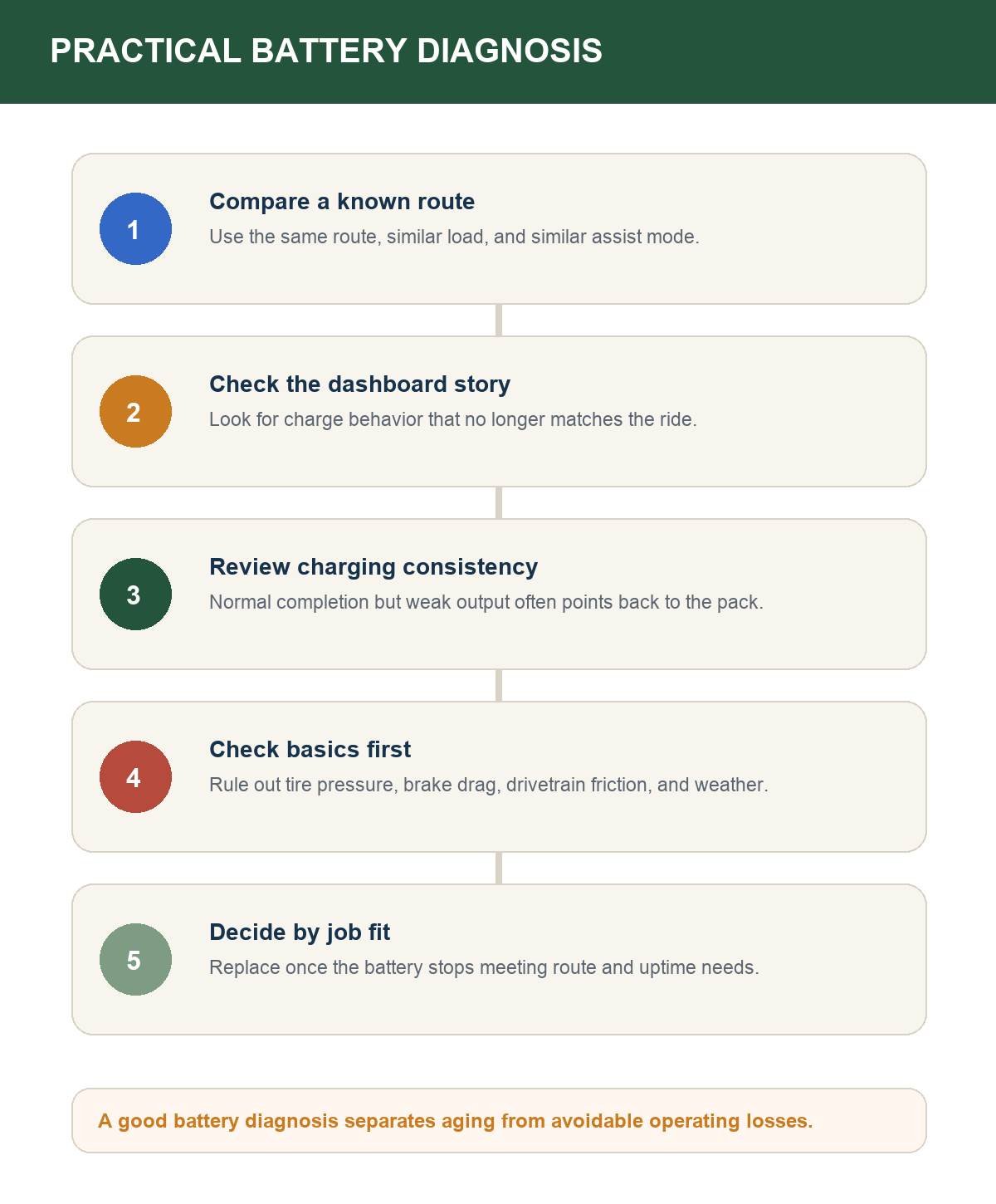
Come Diagnosticare la Salute della Batteria in Modo Pratico
La diagnosi della batteria dovrebbe essere abbastanza semplice da eseguire sul campo, non solo in officina.
Passo 1: Crea un confronto sullo stesso percorso
Usa un percorso che il rider conosce bene. Mantieni queste variabili il più stabili possibile:
- carico simile
- livello di assistenza simile
- fascia climatica simile
- rider simile
- carica iniziale simile
Se la bici ora consuma sensibilmente più batteria sullo stesso percorso rispetto a prima, il segnale è più forte.
Passo 2: Confronta la batteria con la storia del cruscotto
Chiediti se il comportamento della carica visualizzata corrisponde alla corsa.
Esempi di discrepanza:
- calo rapido iniziale seguito da recupero instabile
- stima dell'autonomia residua che crolla troppo velocemente
- carica visualizzata moderata con assistenza reale debole
Quando la storia del display e la storia della guida reale divergono ripetutamente, è giustificato un controllo più approfondito.
Passo 3: Controlla la coerenza della ricarica
Cerca:
- se il caricatore raggiunge il completamento normale
- se il tempo di ricarica è cambiato in modo significativo
- se la batteria parte piena ma si comporta come se fosse parzialmente carica
Questo aiuta a distinguere l'invecchiamento della batteria da problemi di caricatore o contatti.
Passo 4: Rivedi età, intensità dei cicli e storia di stoccaggio
Le batterie invecchiano con il tempo e l'uso.
I fattori di rischio includono:
- scarica profonda frequente
- stoccaggio prolungato con carica molto alta o molto bassa
- esposizione ripetuta al calore
- lunghi periodi di inutilizzo senza controlli di stoccaggio adeguati
- cicli commerciali ad alta intensità
Il recente articolo di Regen sullo stoccaggio invernale su come conservare la tua cargo bike elettrica per l'inverno è rilevante qui perché uno stoccaggio scarso fuori stagione accelera spesso i problemi che i rider descrivono poi come improvviso guasto della batteria.
Passo 5: Decidi in base all'idoneità operativa, non alla speranza
Questo è il passo che molti proprietari saltano.
Se la batteria ora crea ansia sul percorso, cambia come la bici può essere programmata o aumenta le interruzioni del servizio, è già un problema commerciale anche se il pacco si accende ancora.
Che Impatto Ha una Batteria in Degrado sugli Utenti
Rider familiari
Il degrado della batteria cambia quanto la bici sembri sicura e affidabile.
Il problema non è solo l'autonomia. È la fiducia:
- Può la bici completare il viaggio di andata e ritorno con bambini a bordo?
- Può il rider fare una deviazione senza ansia?
- L'assistenza resterà costante quando si parte in salita a un incrocio?
Per le famiglie, l'incertezza della batteria diventa rapidamente una barriera all'uso.
operatori di flotte
Per le flotte, una batteria in degrado è un problema di tempo operativo prima che di ricambi.
Influisce su:
- pianificazione dei percorsi
- requisiti di bici di riserva
- produttività del rider
- volume dei reclami
- programmazione dell'assistenza
Se una batteria causa un'interruzione extra a settimana su più bici, il costo operativo supera spesso il costo di una sostituzione pianificata e strutturata.
Rivenditori, OEM e acquirenti ODM
Le indicazioni sulla salute della batteria influiscono direttamente sulla soddisfazione del cliente e sulla pressione delle false garanzie.
Se i team non insegnano ai clienti come si manifesta realmente il degrado, ricevono reclami vaghi come:
- la bici sembra debole
- la batteria si scarica troppo velocemente
- l'autonomia ora è scarsa
- il motore non spinge come prima
Una logica diagnostica chiara riduce le sostituzioni inutili, ma impedisce anche ai team di lasciare in servizio troppo a lungo una batteria realmente usurata.
Logica Decisionale nel Mondo Reale: Riparare, Riutilizzare o Sostituire?
La risposta giusta dipende dal caso d'uso.
| Scenario | Logica decisionale migliore | Perché |
|---|---|---|
| Bici familiare per il tragitto scolastico | Sostituire prima se la fiducia nell'autonomia cala in modo significativo | L'affidabilità conta più che spremere gli ultimi mesi dal pacco |
| Bici per flotta di consegne | Sostituire quando il costo dell'interruzione del percorso supera il costo della sostituzione | I tempi di inattività e l'incoerenza dei rider si accumulano rapidamente |
| Bici dimostrativa del concessionario | Sostituire se prestazioni deboli potrebbero falsare un test ride di vendita | Una batteria stanca fa sembrare peggiore l'intero prodotto |
| Bici utilitaria stagionale | Ritestare dopo aver corretto problemi di stoccaggio, pneumatici e freni | Alcuni "problemi di batteria" sono in realtà problemi di trascuratezza |
| Campione OEM o flotta pilota | Registrare formalmente il comportamento della batteria prima della sostituzione | I dati aiutano a distinguere problemi di progettazione del prodotto dal normale invecchiamento |
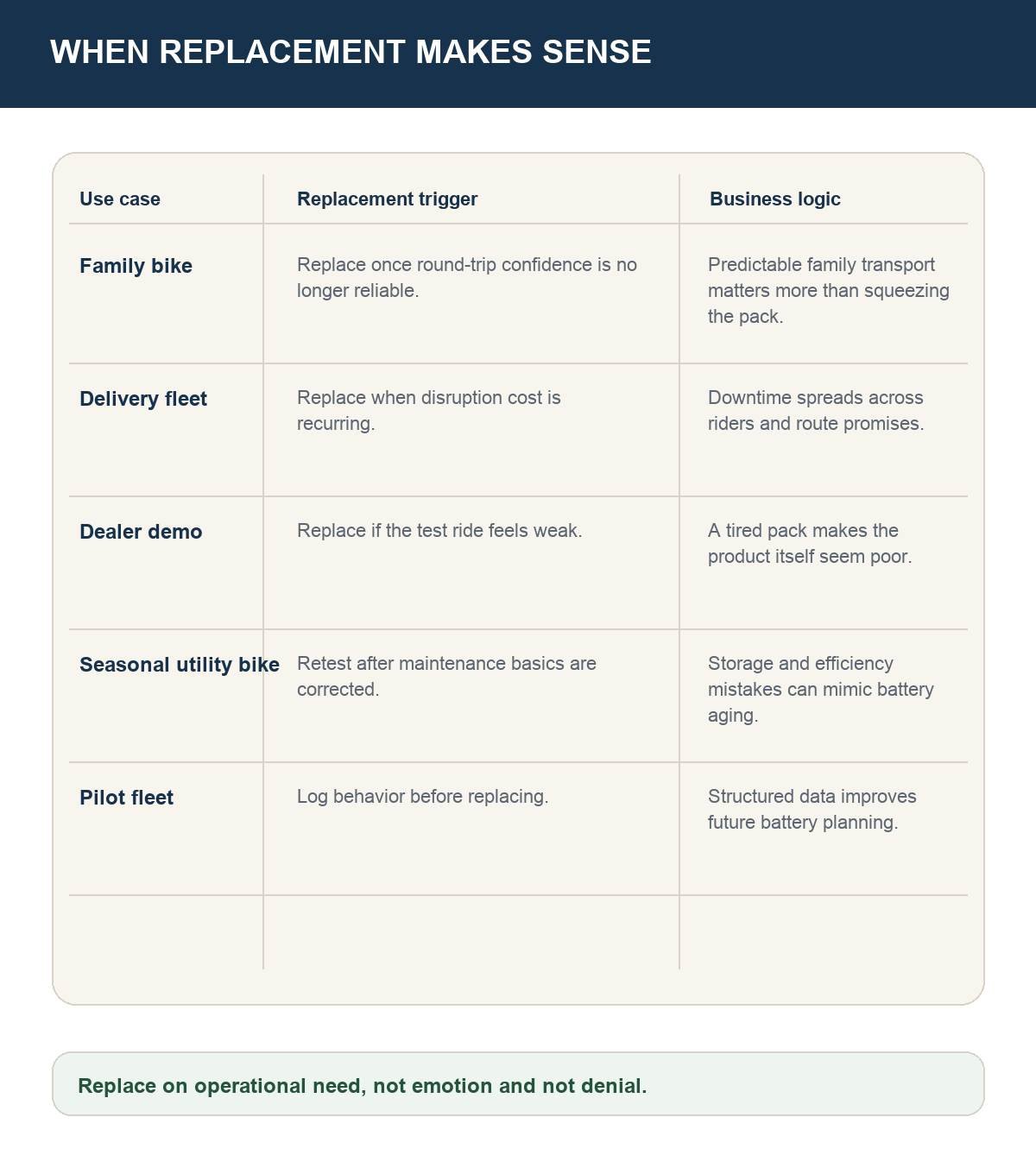
Questo è il motivo per cui "quando sostituire" non è una percentuale universale. La soglia giusta è il punto in cui la batteria non supporta più la reale promessa di servizio della bici.
Errori di lettura comuni che portano a decisioni sbagliate
"La batteria è calata rapidamente una volta, quindi deve essere difettosa."
Un singolo giro non è una tendenza. Carico pesante, salite, vento contrario, freddo o uso improprio della modalità di assistenza possono tutti distorcere la percezione della batteria.
"La batteria si accende ancora, quindi sostituirla sarebbe uno spreco."
Se non supporta più il lavoro effettivo, mantenerla in servizio potrebbe costare più che sostituirla.
"Salite deboli significano sempre un problema al motore."
Non necessariamente. L'invecchiamento della batteria può ridurre la forza con cui il sistema supporta le salite con carico anche quando il motore è a posto.
"Caricare più spesso risolve il problema."
Caricare più frequentemente può nascondere temporaneamente il problema, ma non ripristina la capacità persa o una migliore stabilità del carico.
Quando la sostituzione è di solito la mossa giusta
La sostituzione è di solito giustificata quando diverse di queste condizioni sono vere contemporaneamente:
- lo stesso percorso ora usa molta più batteria di prima
- il comportamento a bassa potenza arriva notevolmente prima
- il calo di tensione legato al carico peggiora continuamente
- i rider non si fidano più dell'autonomia residua
- la bici è mission-critical per uso familiare o di flotta
- i controlli di efficienza di base sono già stati corretti
A quel punto, la sostituzione riguarda meno la perfezione tecnica e più il ripristino di un servizio prevedibile.
Una lista di controllo pratica per la salute della batteria
Usa questa breve revisione prima di approvare la sostituzione:
- Confronta l'autonomia recente con giri simili passati.
- Controlla pneumatici, freni, trasmissione e ipotesi di carico.
- Rivedi il comportamento di ricarica e la coerenza del caricatore.
- Nota se eventi di interruzione o gravi cali di tensione sono ricorrenti.
- Valuta l'idoneità della batteria rispetto al percorso reale e al requisito di carico.
Se la batteria fallisce ripetutamente quel test, si sta degradando in un modo che conta.
Questo è lo standard pratico che rider di cargo bike, gestori di flotte e team di prodotto dovrebbero usare. Non sostituire la batteria a causa di un singolo giro ansioso, ma non continuare a difendere un pacco che invecchia quando mina chiaramente la fiducia nell'autonomia, la stabilità dell'assistenza e le operazioni nel mondo reale.